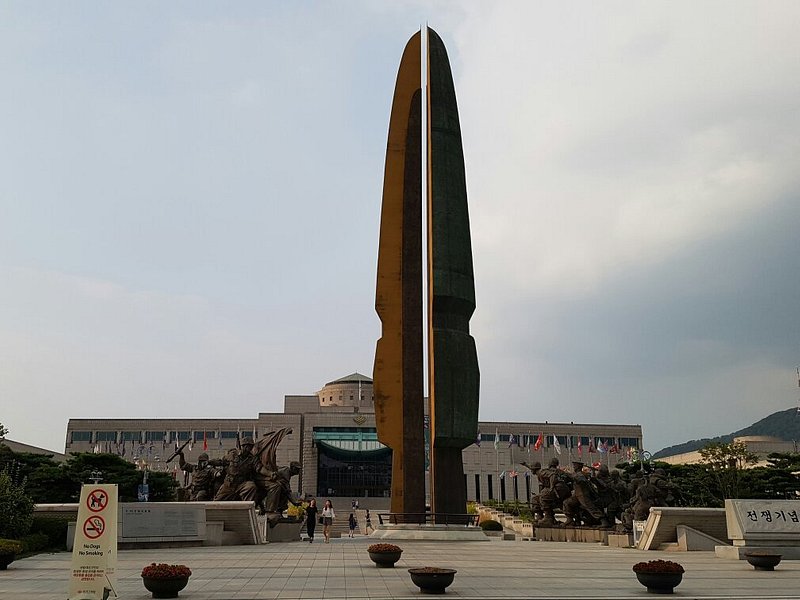
Seoul: From War Memories to Future Culture
Seoul: From War Memories to Future Culture
Seoul and Gwangju: A Journey from Memory to Future Culture
This exploration log details visits to two significant cultural institutions in South Korea: the War Memorial of Korea in Seoul and the Asia Culture Center (ACC) in Gwangju. These sites offer a compelling narrative, moving from the solemn remembrance of past conflicts to the vibrant envisioning of future cultural exchange. The War Memorial of Korea stands as a testament to the nation's history of war and its enduring hope for peace, while the ACC serves as a dynamic hub for contemporary Asian art and interdisciplinary cultural endeavors.
The War Memorial of Korea: A Site of Remembrance in Seoul
Located at 29 Itaewon-ro, Yongsan-gu, Seoul, the War Memorial of Korea is easily accessible from Samgakji Station. Opened in 1994, the museum is dedicated to educating the public about the Korean War and other conflicts in Korean history, emphasizing the importance of peace and national defense. Its vast premises include indoor exhibition halls and an extensive outdoor display area.
The museum's main focus is the Korean War, detailing its progression from the initial invasion to the armistice. Exhibits include actual weapons, uniforms, and personal effects of soldiers, providing a tangible connection to the past. The outdoor exhibition showcases large-scale military equipment such as aircraft, tanks, and naval guns, illustrating the scale and impact of warfare. The memorial also features a Peace Plaza and an 어린이 박물관 (Children's Museum) designed to instill values of peace in younger generations.
The Asia Culture Center: A Vision of Future Culture in Gwangju
The Asia Culture Center (ACC) is situated at 71-5 Gwangsan-dong, Dong-gu, Gwangju, directly connected to Culture Complex Station. Built on the historic site of the former Jeonnam Provincial Office, a significant location during the 5.18 Democratic Uprising, the ACC embodies a vision of healing the past through future-oriented cultural initiatives. It is a massive complex dedicated to fostering creative exchange and understanding across Asia.
The ACC's architecture, conceptualized as a 'Forest of Light,' is remarkable for its predominantly underground structure that ingeniously incorporates natural light through glass pyramids and sunken gardens. This design creates an open and dynamic environment, defying the typical constraints of subterranean spaces. Key facilities include the ACC Theater, a black-box venue for diverse performances, and the ACC Creative Lab, which supports experimental art in various media. The ACC serves as a vital platform for dialogue between Asian artists and global audiences, promoting interdisciplinary artistic activities and showcasing contemporary Asian art, culture, and history.
Visit Information for Both Institutions
- War Memorial of Korea: Open Tuesday to Sunday, 09:30-18:00 (last entry 17:30). Closed Mondays. Admission is free for permanent exhibitions. Accessible via Samgakji Station (Lines 4 & 6), Exit 1.
- Asia Culture Center: Closed Mondays. Open Tuesday, Thursday, Friday, Sunday 10:00-18:00; Wednesday and Saturday 10:00-20:00. Admission is free for permanent exhibitions, with special exhibitions potentially incurring a fee. Directly connected to Gwangju Subway Culture Complex Station.
Both institutions offer unique perspectives on Korea's journey, from remembering its past to shaping its future cultural landscape. They are essential destinations for anyone seeking a deeper understanding of the nation's history and its contemporary artistic endeavors.
Visitor Info
| Estimated Visit | Translating |
| Translating | Translating |
| Translating | Translating |
| Recommended Route | Translating |