Albrecht Durer House: Where a Renaissance Master Still Breathes
Albrecht Durer House: Where a Renaissance Master Still Breathes
Nuremberg: A City of Renaissance and Remembrance
On June 16-20, 2026, an expedition was conducted in Nuremberg, a city in Bavaria, Germany. Bisected by the Pegnitz River, Nuremberg served as a vital center of the Holy Roman Empire and flourished during the Renaissance, notably as home to Albrecht Dürer. This city, with its complex history, later became a significant industrial hub and the site of Nazi Party rallies. The expedition focused on three key cultural institutions: Albrecht Dürer's House, the Documentation Center Nazi Party Rally Grounds, and the Germanisches Nationalmuseum.
Albrecht Dürer's House: A Renaissance Master's Abode
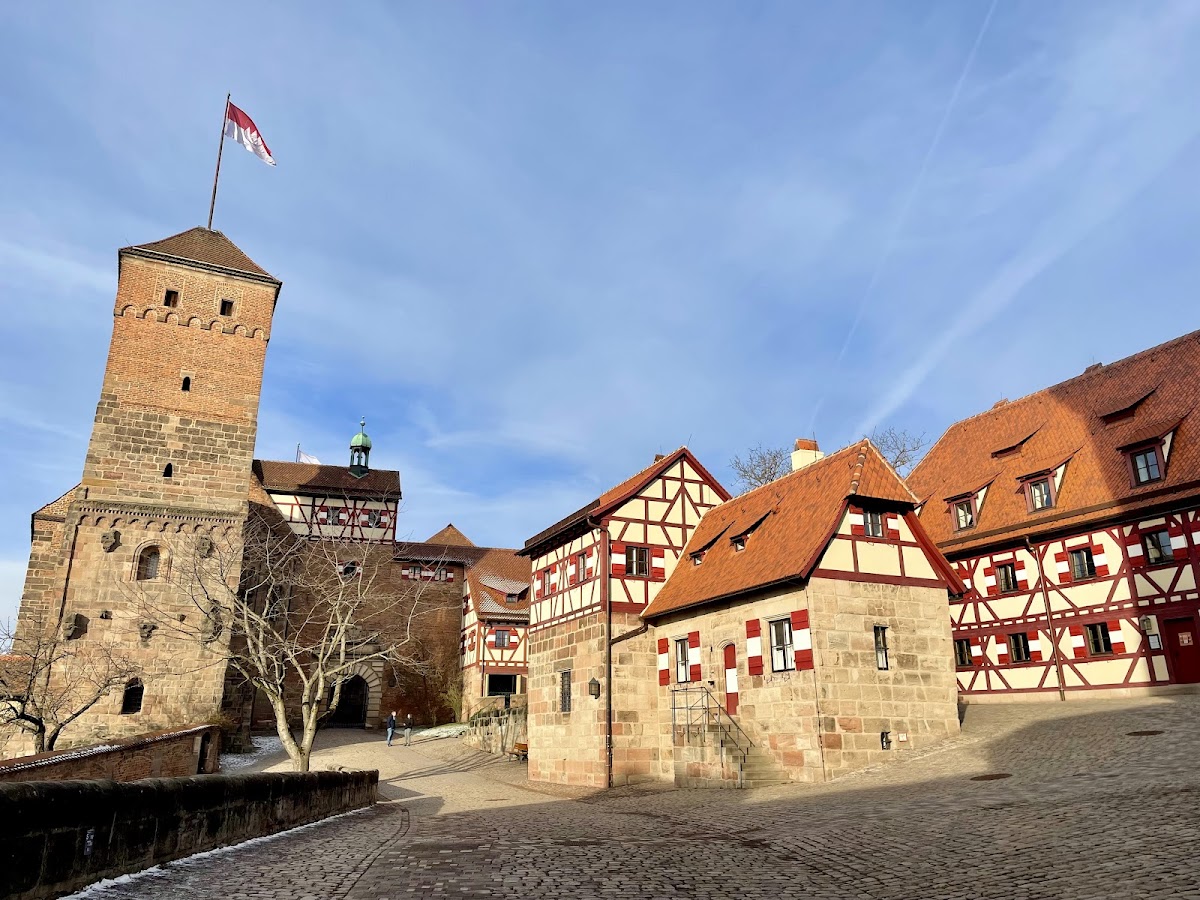
Albrecht Dürer's House, located at Albrecht-Dürer-Strasse 39, 90403 Nuremberg, stands below the Kaiserburg Castle in the old town. This 4-story timber-framed house, identifiable by its red roof, miraculously survived World War II bombings. Dürer, a pivotal figure of the German Renaissance, lived and worked here from 1509 until his death in 1528. The museum recreates his living and working environment, offering insights into 16th-century life.
The first floor showcases the kitchen and pantry, while the second floor features his living room and bedroom. The highlight is the third-floor workshop, where Dürer created many of his masterpieces. It displays his tools and a reconstructed printing press, demonstrating the printmaking process that revolutionized art dissemination. The fourth floor houses an exhibition on Dürer's life and diverse works, including self-portraits, landscapes, and religious art, highlighting his role as an artist, intellectual, and innovator.
Documentation Center Nazi Party Rally Grounds: Confronting a Dark Past
The Documentation Center Nazi Party Rally Grounds, at Bayernstraße 110, 90478 Nürnberg, is situated within the unfinished Kongresshalle, a massive, circular structure intended for Nazi Party rallies. This incomplete building itself serves as a symbol of the regime's failure. The permanent exhibition, 'Fascination and Terror,' critically examines the rise of Nazism, its propaganda mechanisms, and the role of the Nuremberg rallies.
Through historical artifacts, documents, and multimedia displays, the exhibition illustrates how the Nazi party manipulated public sentiment and consolidated power. It chronologically covers key events, including the Nuremberg Laws and the Holocaust, and concludes with the Nuremberg Trials and Germany's post-war efforts to confront its past. This center functions as a crucial educational and commemorative site, fostering historical awareness and critical thinking.
Germanisches Nationalmuseum: A Journey Through German Culture
The Germanisches Nationalmuseum, located at Kartäusergasse 1, 90402 Nürnberg, is Germany's largest museum of cultural history. Situated near Nuremberg Central Station, it houses an extensive collection spanning from prehistoric times to the present day. The museum's diverse holdings include art, crafts, and everyday objects, offering comprehensive insights into German-speaking cultures and their development.
Notable collections include medieval wood carvings and altarpieces, such as Tilman Riemenschneider's 'Adam and Eve,' and early works by Albrecht Dürer. Beyond fine art, the museum exhibits artifacts of daily life, including medieval armor, early printed books like the Gutenberg Bible, and intricate clocks and scientific instruments. These items collectively illustrate German craftsmanship, technological advancements, and the cultural evolution of the Germanic world. The museum serves as a leading institution in preserving and presenting Germany's rich cultural heritage.
Visitor Information
- Albrecht Dürer's House: Admission is 6 EUR for adults, 1.50 EUR for students. Open Tue-Fri 10:00-17:00, Sat-Sun 10:00-18:00 (closed Mon). Approximately 1-2 hours for a visit.
- Documentation Center Nazi Party Rally Grounds: Admission is 6 EUR for adults, 1.50 EUR for students. Open daily 10:00-18:00. Approximately 2-3 hours for a visit.
- Germanisches Nationalmuseum: Admission is 8 EUR for adults, 5 EUR for students. Free entry after 18:00 on Wednesdays. Open Tue 10:00-18:00, Wed 10:00-20:30, Thu-Sun 10:00-18:00 (closed Mon). Approximately 3-4 hours for a visit.
Visitor Info
| Admission | Translating |
| Hours | Translating |
| Location | Albrecht-Durer-Strasse 39, 90403 Nuremberg |
| Getting There | Translating |
| Estimated Visit | 1~2hr |