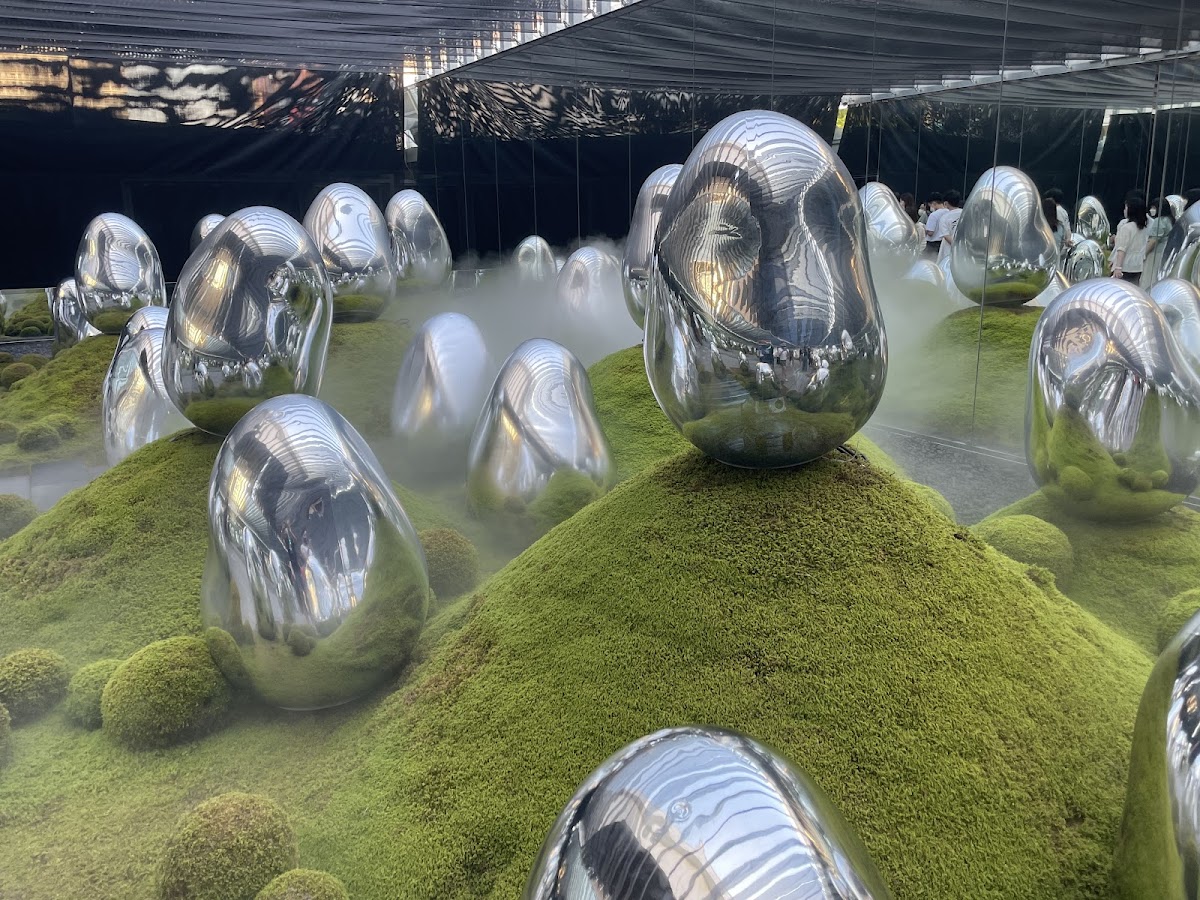
teamLab Planets: Tokyo, Immersive Water and Light
Tokyo, a city that tirelessly reinvents itself while cherishing its deep roots, always promises a tapestry of experiences. On my latest visit, I embarked on an artistic journey that perfectly encapsulated this duality: from the serene aesthetics of ancient Japan to the groundbreaking frontiers of digital immersion. The city's museums, each a world unto itself, left an indelible mark. Allow me to guide you through three distinct spaces that captured my imagination and senses.
Tokyo National Museum: A Walk Through the Soul of Japan
Nestled within the verdant embrace of Ueno Park, the Tokyo National Museum is more than a collection of artifacts; it is a profound journey through Japan's spiritual and artistic evolution. Stepping onto its sprawling grounds, I felt an immediate shift in pace, transitioning from the city's pulse to a tranquil reverence for history. The Honkan, the museum's main gallery, a magnificent edifice of Imperial Crown Style architecture, stands as a grand portal, its gabled roofs and intricate details hinting at the treasures within.
My exploration began not with a brisk walk, but a deliberate stroll, allowing each era to unfold before me. I found myself mesmerized by the delicate brushstrokes of ancient scrolls, depicting scenes of court life and mythological beasts, each line imbued with centuries of storytelling. The sheer antiquity of the Jomon pottery, with its distinct flame-like rims and earthy textures, transported me to a prehistoric Japan, connecting me to the earliest hands that shaped clay into art. Later, I paused before a collection of Buddhist sculptures, their serene expressions and intricate drapery evoking a sense of profound peace that transcended the passage of time. One particular wooden Bodhisattva, its gold leaf subtly flaking, seemed to emanate a quiet wisdom, its gaze inviting contemplation. Further on, the gleaming, formidable armor of samurai warriors, displayed with meticulous precision, spoke volumes of a bygone era of valor and craftsmanship, each piece a testament to both artistry and defense. The museum is a living chronicle, a place where the whispers of the past are not just heard, but deeply felt, fostering an intimate connection with the enduring spirit of Japan.
National Museum of Western Art: Le Corbusier's Concrete Symphony
Just a short stroll from the traditional grandeur of the Tokyo National Museum, a strikingly different architectural statement emerges from the Ueno landscape: the National Museum of Western Art. This UNESCO World Heritage site, a masterpiece of modernist design by Le Corbusier, is a powerful contrast, both in its form and its contents. Approaching the building, its raw concrete facade and minimalist lines speak of a functional elegance, a stark departure from the ornate classicism nearby. Le Corbusier envisioned a "museum of infinite growth," a spiraling progression that could be endlessly expanded, and though the full vision was never realized, the existing structure perfectly encapsulates his revolutionary ideals.
The experience begins even before entering, with Auguste Rodin's iconic sculptures, "The Thinker" and "The Gates of Hell," dramatically positioned in the forecourt. These monumental bronze figures, with their visceral power and emotional depth, serve as a fitting prelude to the European masterpieces housed within. Inside, the central atrium, with its soaring ceilings and a spiral ramp, immediately captivates. The deliberate use of natural light, filtering through carefully placed windows, illuminates the art in a dynamic, ever-changing manner, making the building itself an active participant in the viewing experience. As I ascended the ramp, I encountered Impressionist and Post-Impressionist gems: the shimmering light of Monet's water lilies, their tranquil beauty contrasting with the rough concrete walls, and the vibrant hues of Renoir's portraits. Each brushstroke seemed to resonate more powerfully within this brutalist shell, highlighting the timeless appeal of Western art. The building does not merely house art; it frames it, enhancing its narrative and offering a unique dialogue between European artistic traditions and a visionary architectural statement.
teamLab Planets TOKYO DMM: Submergence into a Digital Dreamscape
Leaving the classical and modern masters behind, my journey culminated in an utterly different realm: teamLab Planets in Toyosu. This is not merely a museum; it is an immersive, sensory pilgrimage that challenges conventional notions of art and space. Upon entering, the first instruction is to remove shoes and roll up trousers – a clear signal that this experience demands full, physical engagement. The transition from the urban sprawl outside to the darkened, ethereal pathways within is immediate and transformative.
My first encounter was with the "Water Area," a series of installations that require wading through real water. In "Koi and People – A Table Where You Dine and Share with Others," vibrant digital koi fish swim through the knee-deep water, reacting to my presence, changing direction, and blossoming into flowers upon collision. The sensation of the cool water on my skin, combined with the flowing light and sound, dissolved the boundary between myself and the art. It wasn't something to be observed; it was something I was utterly a part of. Further on, "Soft Black Hole – Your Body Becomes a Space," a room filled with giant, yielding cushions, challenged my sense of balance, forcing me to move slowly, almost crawling, as my body sank into the soft terrain. This physical discomfort was part of the art, a playful disruption of perception. The "Massless Clouds Between Sculptures and Life," a room filled with immense, glowing, pillow-like spheres that slowly changed color, invited interaction. Pushing them, watching them drift and collide, created a childlike wonder. The grand finale, the "Floating Flower Garden," was breathtaking: a vast space where thousands of living orchids hung suspended, slowly rising and falling as I walked through them, their delicate scent filling the air, mirrored by digital projections. teamLab Planets isn't just art; it's an environment that envelops you, demanding participation, blurring the lines between observer and artwork, and leaving an unforgettable impression of being truly, physically, inside a digital dream.
Practical Tips
For those eager to embark on their own artistic exploration of Tokyo, here are a few practical pointers. The Tokyo National Museum and the National Museum of Western Art are both conveniently located within Ueno Park, making it easy to visit them on the same day. Ueno Station is a major hub, accessible via several JR and subway lines. Both museums generally open around 9:30 AM and close by 5:00 PM, though specific days and exhibition schedules can vary, so always check their official websites for the most current information. Entry fees are separate for each, with special exhibition tickets often costing more. While tickets can be purchased on-site, pre-booking for special exhibitions is highly recommended.
teamLab Planets TOKYO DMM, located in Toyosu, is a different experience altogether. It's best reached via the Yurikamome line to Shin-Toyosu Station. Due to its immense popularity, booking tickets well in advance, often several weeks ahead, is absolutely essential. Walk-ins are rarely accommodated, especially on weekends or holidays. The museum has specific entry times, and it's advisable to arrive punctually. Be prepared to remove your shoes and potentially walk through water, so wear comfortable, easy-to-remove footwear and trousers that can be rolled up. Lockers are provided for belongings. Allow at least 1.5 to 2 hours to fully immerse yourself in the installations without feeling rushed.
Visitor Info
| Admission | Adult 3,800엔, 중고생 2,300엔, 초등생 1,300엔 |
| Hours | Daily 09:00-22:00 (시기별 변동) |
| Location | 6-1-16 Toyosu, Koto-ku, Tokyo 135-0061 |
| Getting There | 유리카모메 신Sat요스Stn walk 1min, Subway 유라쿠초선 도요스Stn walk 10min |
| Estimated Visit | 2~3hr |
