The Medici's Last Home Across the Arno
The Medici's Last Home Across the Arno
Palazzo Pitti — A Grand Residence in Florence's Oltrarno District
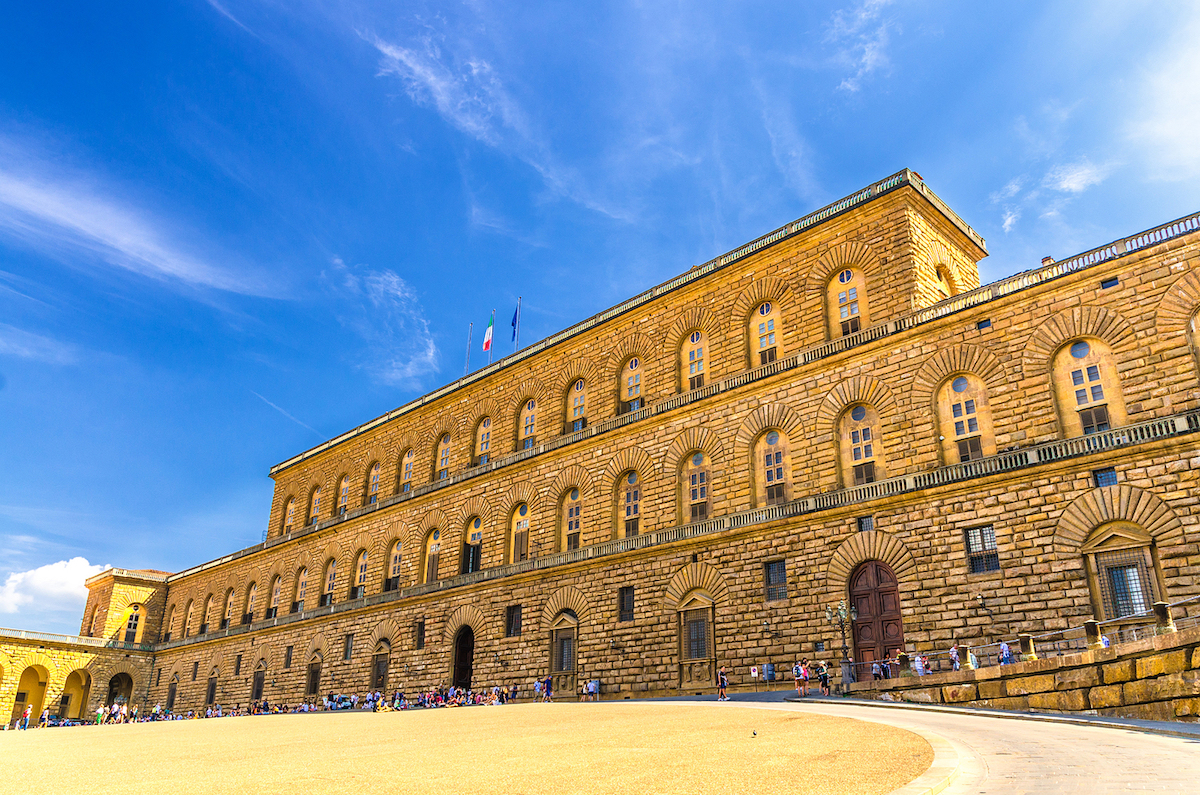
Palazzo Pitti, a monumental palace complex, stands prominently in the Oltrarno district of Florence, Italy, across the Arno River. Located at Piazza de' Pitti, 1, it is approximately a 20-minute walk from Florence's Santa Maria Novella train station and just a 5-minute walk from Ponte Vecchio. Its imposing facade distinguishes it from other Florentine structures, marking it as a significant historical site that served as a political, cultural, and artistic hub from the Renaissance to the modern era.
Today, Palazzo Pitti houses six distinct museums: the Palatine Gallery, Gallery of Modern Art, Museum of Fashion and Costume, Treasury of the Grand Dukes, Royal Apartments, and the Boboli Gardens. Each museum offers unique collections and themes, allowing visitors to tailor their experience. A comprehensive visit, including the gardens, typically requires 3 to 4 hours.
From Merchant's Ambition to Medici Grandeur
The palace's origins trace back to the mid-15th century when Luca Pitti, a wealthy Florentine merchant, commissioned its construction to rival the Medici family's influence. Designed by Luca Fancelli, a pupil of Brunelleschi, Pitti aimed to build the largest and most magnificent residence in Florence. However, his ambitious project led to financial ruin, leaving the palace unfinished.
In 1549, Eleonora di Toledo, wife of Duke Cosimo I de' Medici, acquired the incomplete palace. Dissatisfied with the dampness of Florence and the confined spaces of Palazzo Vecchio, Eleonora saw Palazzo Pitti as a more spacious and comfortable residence in the Oltrarno district. This acquisition marked a significant shift for the Medici, moving their primary residence across the Arno and initiating extensive renovations and expansions under architects like Bartolomeo Ammannati, who completed the grand facade and the central courtyard.
The Vasari Corridor — A Path of Power
With Palazzo Pitti becoming the official Medici residence, Cosimo I commissioned Giorgio Vasari in 1565 to build the Vasari Corridor. This kilometer-long secret passage connected Palazzo Pitti to Palazzo Vecchio, passing over the Uffizi Gallery and across the Ponte Vecchio. The corridor allowed the Medici family to move safely and discreetly between their residence and the seat of government, symbolizing their power and control.
Beyond its function as a private walkway, the Vasari Corridor served as a unique gallery for the Medici's portrait and self-portrait collections. Today, it is part of the Uffizi Gallery and accessible only for special exhibitions or by pre-booked small groups. This architectural marvel physically linked key Florentine landmarks, visually demonstrating the extensive influence of the Medici dynasty.
Successive Dynasties and Transformation into a Museum
After the extinction of the Medici line in 1737, Palazzo Pitti passed to the Habsburg-Lorraine Grand Dukes of Austria. They redecorated the palace interiors in Baroque and Rococo styles and expanded the Boboli Gardens, using it as the official residence of the Grand Duchy of Tuscany through the 18th and early 19th centuries.
Following Italy's unification in 1860, the palace became a property of the House of Savoy, serving as the Royal Apartments for the Italian monarchy. In 1919, King Victor Emmanuel III donated Palazzo Pitti to the Italian state, transforming it from a private royal residence into a public museum complex. This marked a pivotal moment, opening its doors to the public and preserving its rich history and art for future generations.
Diverse Collections Across Six Museums
Palazzo Pitti's six museums offer a vast array of art and history. The Palatine Gallery showcases masterpieces by Renaissance and Baroque artists such as Raphael, Titian, Caravaggio, and Rubens. The Treasury of the Grand Dukes displays precious jewels, gold, and ivory artifacts collected by the Medici. The Gallery of Modern Art features Italian paintings and sculptures from the 18th to early 20th centuries, while the Museum of Fashion and Costume explores the history of Italian fashion.
The Royal Apartments preserve the living quarters of the Medici, Lorraine, and Savoy rulers, offering insights into their opulent lifestyles through period furnishings and decorations. The Boboli Gardens, a prototype of the Italian Renaissance garden, features an amphitheater, Neptune Fountain, Buontalenti Grotto, and the Porcelain Museum, providing a magnificent outdoor museum experience. The palace complex, therefore, transcends a simple art gallery, encompassing painting, sculpture, decorative arts, fashion, and landscape design.
Palatine Gallery — Masterpieces by Raphael and Titian
The Palatine Gallery, a centerpiece of Palazzo Pitti, is built upon the Medici family's private art collection. It houses numerous works by Renaissance and Baroque masters. Notable among them are Raphael's <La Velata> and <Portrait of Maddalena Doni>, considered prime examples of his delicate coloring and nuanced portraiture in Florence.
Titian's <Portrait of Robiello Salai> and <La Bella> offer a close look at the rich colors and masterful use of light characteristic of Venetian painting. Caravaggio's <Sleeping Cupid> exemplifies his dramatic chiaroscuro technique, revealing the inner life of his subjects. Rubens' monumental allegorical painting <Consequences of War> showcases his dynamic composition and vibrant palette. The gallery's traditional hanging style, with paintings densely covering the walls, evokes the ambiance of a private Medici residence.
Boboli Gardens — A Renaissance Garden Prototype
Behind Palazzo Pitti lies the Boboli Gardens, considered the prototype of the Italian Renaissance garden. Initiated by Eleonora di Toledo and designed by Niccolò Tribolo, with later contributions from Bartolomeo Ammannati and Bernardo Buontalenti, the gardens embody the Renaissance aesthetic of imposing order and harmony on nature. Its vast expanse features fountains, sculptures, grottoes, labyrinths, and an amphitheater, all meticulously arranged.
Key attractions within the gardens include the central Amphitheater, reminiscent of the Roman Colosseum, and the majestic Neptune Fountain. The Buontalenti Grotto is a unique Mannerist artificial cave, creating a mysterious atmosphere. At the highest point, the Porcelain Museum displays a collection of European ceramics. The Boboli Gardens serve not merely as a recreational space but as an open-air museum showcasing the pinnacle of Renaissance garden art and landscape design.
Treasury of the Grand Dukes and Royal Apartments — Traces of Medici and Savoy
The Treasury of the Grand Dukes at Palazzo Pitti exhibits precious jewels, gold and silver artifacts, cameos, and ivory carvings collected by the Medici family. This collection underscores the immense wealth and artistic discernment of the Medici. These exquisite European royal crafts from the 16th to 18th centuries offer a glimpse into the superb craftsmanship and aesthetic sensibilities of the era, providing an intimate experience of Medici tastes and power.
The Royal Apartments are the actual living quarters used by successive rulers, from the Medici Grand Dukes to the Lorraine Grand Dukes and the Savoy monarchs. Lavishly decorated bedrooms, reception rooms, and ballrooms reflect the architectural styles and interior design trends of each period. The Savoy-era spaces, in particular, are adorned in Neoclassical style, with delicate furniture, tapestries, and portraits vividly recreating royal life. These rooms are crucial historical records, revealing who the palace's occupants were and how they lived.
Visiting Information — Planning an Efficient Tour
Given Palazzo Pitti's vast scale, efficient planning is essential. For those interested in paintings, prioritize the Palatine Gallery and Royal Apartments on the second floor. If Renaissance garden art and outdoor sculpture are your focus, the Boboli Gardens and the Porcelain Museum within are the recommended route. Admission fees vary for each museum; a combined ticket (Giardini + Musei) is advisable for access to both the gardens and the main palace.
Palazzo Pitti is open from Tuesday to Sunday, 8:15 AM to 6:50 PM, and closed on Mondays. The combined ticket for the Palatine Gallery and other galleries is €16, while a standalone ticket for the Boboli Gardens is €10. Visiting early in the morning or during the last two hours before closing allows for a more tranquil experience. The palace and gardens are particularly beautiful when illuminated by morning sunlight or evening glow. The Vasari Corridor, connecting to the Uffizi Gallery, operates as a special tour requiring advance reservations; check the official website for availability.
Visitor Info
| Admission | Translating |
| Hours | Tue-Sun 08:15-18:50 (Closed Mon) |
| Location | Piazza de Pitti 1, 50125 Firenze |
| Getting There | Translating |
| Estimated Visit | Translating |