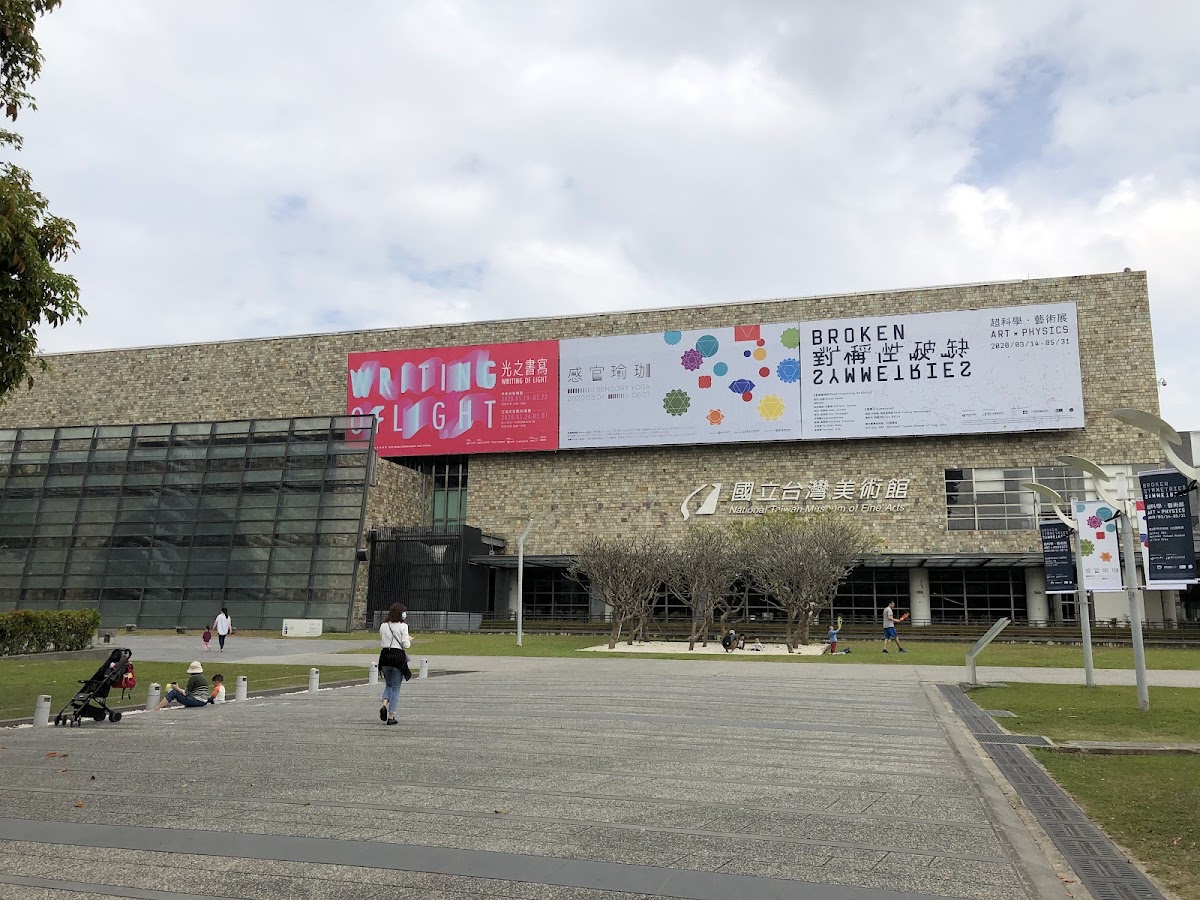
National Taiwan Museum of Fine Arts: New Horizons in Asian Contemporary Art
My first encounter with the National Taiwan Museum of Fine Arts in Taichung was under a sky blazing with a particular Taiwanese intensity, a warmth that seemed to infuse the very air with creative energy. It wasn't just another stop on my itinerary; it felt like a pilgrimage to a nexus of contemporary Asian art, an expectation that began building even before I stepped inside. The sheer scale of the institution, sprawling elegantly across its grounds, suggested a profound commitment to art that went beyond mere display.
Approaching the museum, what struck me immediately was its masterful integration into the landscape. The low-slung, rectilinear buildings, clad in materials like exposed concrete and glass, seemed less like imposing structures and more like thoughtfully placed elements in a grand, verdant composition. The expansive plaza leading up to the main entrance wasn't just a transitional space; it was an outdoor gallery in itself. Here, monumental contemporary sculptures, some whimsical, others starkly profound, punctuated the meticulously manicured lawns and reflective pools. I recall a particular piece, a series of polished metal forms mirroring the shifting clouds, that played tricks with my perception, blurring the lines between art, nature, and the urban environment. It was a prelude, a quiet overture, hinting at the innovative spirit housed within.
Stepping through the broad glass doors, the interior unfolded into vast, adaptable spaces bathed in a soft, controlled light. The curators here possess a remarkable ability to present challenging and diverse contemporary Asian art in a way that feels both accessible and deeply engaging. I remember an exhibition exploring the impact of technology on traditional craft, where intricate digital projections danced across hand-woven textiles, creating a dialogue between past and future. Another gallery housed a series of large-format paintings, vibrant and pulsating with narrative, depicting scenes of modern Taiwanese life through a kaleidoscope of cultural influences. Each brushstroke, each pixel, each installation felt carefully considered, inviting contemplation rather than dictating interpretation. The flow between galleries was seamless, encouraging a journey of discovery through various mediums and perspectives, from video art to mixed media installations that often blurred the lines of what I traditionally considered "art."
What truly resonated was the museum's role as a living, breathing entity, fostering a continuous dialogue about identity, heritage, and the globalized present. It wasn't just about admiring finished works; it was about understanding the questions artists were posing and the conversations they were sparking across Asia. The hushed reverence of some visitors, the animated discussions of others, all contributed to an atmosphere of intellectual curiosity and emotional resonance. There was a particular quiet corner near a window overlooking the sculpture park, where I lingered, absorbing the artistic energy. It was a moment of profound connection, realizing that this museum was not merely a repository but a dynamic crucible where new artistic horizons were constantly being forged and shared. It left me with a renewed appreciation for the power of art to articulate the complexities of our shared human experience, especially within the vibrant tapestry of Asian cultures.
Practical Tips
The National Taiwan Museum of Fine Arts is located at No. 2, Section 1, Wuquan W. Road, West District, Taichung City, Taiwan. Generally, the museum operates from 9:00 AM to 5:00 PM on Tuesdays to Fridays, and 9:00 AM to 6:00 PM on Saturdays and Sundays, remaining closed on Mondays. Always verify current operating hours and exhibition schedules on their official website before your visit, as these can change for holidays or special events. Admission policies vary; some permanent collections may be free, while special exhibitions typically require a ticket. The museum is easily reachable via Taichung's public bus system, with direct stops serving the facility. Taxis and ride-sharing options are also widely available. On-site parking is provided for those arriving by car. Amenities include a well-stocked gift shop, a pleasant café offering refreshments, and comprehensive accessible facilities. Plan for at least 2-3 hours to comfortably explore the expansive indoor galleries and the outdoor sculpture park.
Visitor Info
| Admission | Free (특별전 Sun부 Paid) |
| Hours | Tue-Fri 09:00-17:00, Sat~Sun 09:00-18:00 (Closed Mon) |
| Location | No. 2, Sec. 1, Wuquan W. Rd., West District, Taichung |
| Getting There | 타이중Stn from Bus 300번, 미술관Stn 하차 |
| Estimated Visit | 2~3hr |