A Civilian View of the War, From Gdańsk
A Civilian View of the War, From Gdańsk
The Museum of the Second World War: A Civilian View from Gdańsk
The Museum of the Second World War (Muzeum II Wojny Światowej) is located on the edge of Gdańsk's Old Town, across the canal, at pl. Wladyslawa Bartoszewskiego 1, 80-862 Gdansk, Poland. It stands approximately 20 minutes on foot or a short tram ride from Gdańsk Główny (Central Station). This location is symbolically significant, being about 10 km from Westerplatte, where the first shots of WWII were fired on September 1, 1939.
Opened in 2017: A Monument to Peace
Opened in March 2017, the museum was initiated by then-Polish Prime Minister Donald Tusk in 2008. It took nine years to complete. With a total area of approximately 43,000 m², including 5,000 m² of underground exhibition space, it is one of Europe's largest contemporary history museums. Its collection comprises about 40,000 objects, dedicated to exploring the war's causes, progression, and consequences, emphasizing peace and the immense suffering endured, particularly by Poland.
Architecture: A Tilted Tower and a Descent into History
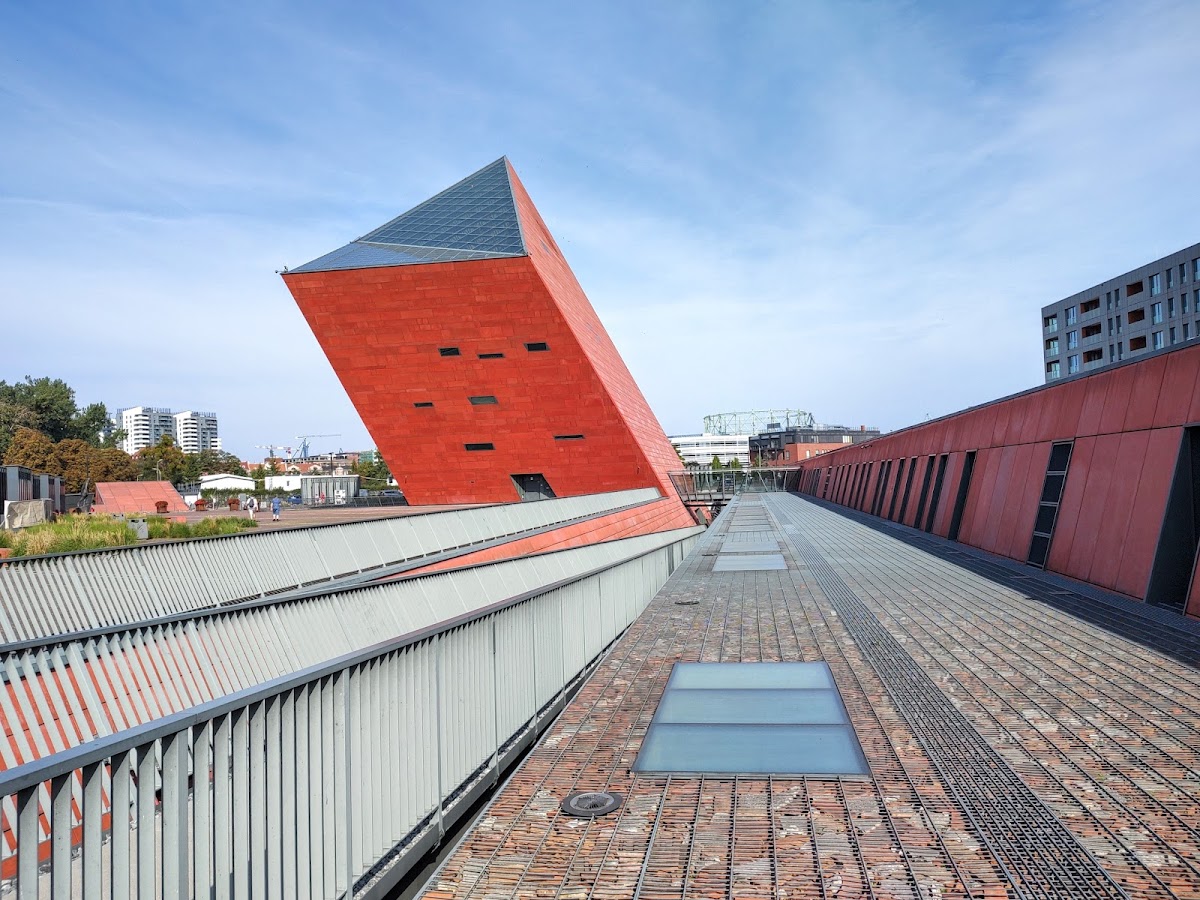
Designed by Polish architectural firm Kwadrat, the museum's most striking feature is its 45-degree tilted red tower, symbolizing the past, present, and future. This architectural element reflects the turbulent history of the war. The main exhibition space is located 14 meters underground, offering visitors a symbolic 'descent' into history as they take a long escalator down. This contrast between the visible tower and the submerged exhibition powerfully conveys the war's depth and gravity.
Exhibition Focus: The Civilian Experience
The museum's permanent exhibition, shaped by debates between a Western human rights perspective and Polish nationalism, ultimately centers on the 'individual (civilian) experience' rather than state-to-state conflict. This approach aims to foster universal empathy by illustrating how the war impacted ordinary lives. The exhibition is structured into 18 chronological thematic sections, covering the pre-war period to the beginning of the Cold War, and includes both European and Asian fronts.
Key Highlights of the Exhibition
- Reconstructed Warsaw Ghetto Room: A meticulously recreated room of a Jewish family from the 1940s, based on actual records, vividly depicting the harsh living conditions.
- Auschwitz and Majdanek Artifacts: A room filled with personal items such as clothing, bags, and original letters from concentration camp prisoners, conveying the individual tragedies of the Holocaust.
- Full-scale M4 Sherman Tank: Placed centrally in the underground exhibition, this tank anchors the vast space and symbolizes the physical brutality and destructive power of war.
- Asia Section: A unique segment dedicated to the Asian theater, covering events in Nanjing, the Philippines, and colonial Korea (Chosun), offering a global perspective beyond Eurocentric narratives.
Visitor Information and Recommendations
A visit to the museum typically requires 3 to 4 hours for a thorough experience, with a minimum of 2 hours. Audio guides are available in Polish, English, German, and Russian, and English captions accompany almost all exhibits. Due to the dark lighting and emotionally heavy subject matter, it is recommended to visit in the morning or early afternoon, with a break at the ground-floor café.
For a more comprehensive understanding, combining the museum visit with a trip to Westerplatte (a 10-minute drive away) is highly recommended. Westerplatte, the site where WWII began, offers a direct connection to the historical context presented in the museum. The museum is open Tuesday to Sunday from 10:00 to 18:00 (closed Mondays), with extended hours during peak season. Admission is 29 PLN for adults and 21 PLN for students, with free admission on Tuesdays. For the latest schedule, visitors should check the official website: https://muzeum1939.pl/.
Visitor Info
| Admission | Adult 29 PLN, Student 21 PLN (Tue Free) |
| Hours | Translating |
| Location | pl. Wladyslawa Bartoszewskiego 1, 80-862 Gdansk |
| Getting There | Translating |
| Estimated Visit | 3~4hr |