National Museum Prague: Czech Treasury
National Museum Prague: Czech Treasury
National Museum Prague: Czech History and Culture
The National Museum in Prague, located at Václavské nám. 68, 110 00 Nové Město, Prague, stands majestically at the upper end of Wenceslas Square. Established in 1818, it serves as a pivotal institution for preserving and documenting Czech history, culture, and scientific development. The museum's founding by local nobles and intellectuals aimed to foster Czech national identity and cultural pride during a period of foreign rule. Its strategic location is directly accessible from the Muzeum Metro station (Lines A and C), making it a prominent and easily reachable landmark in the city.
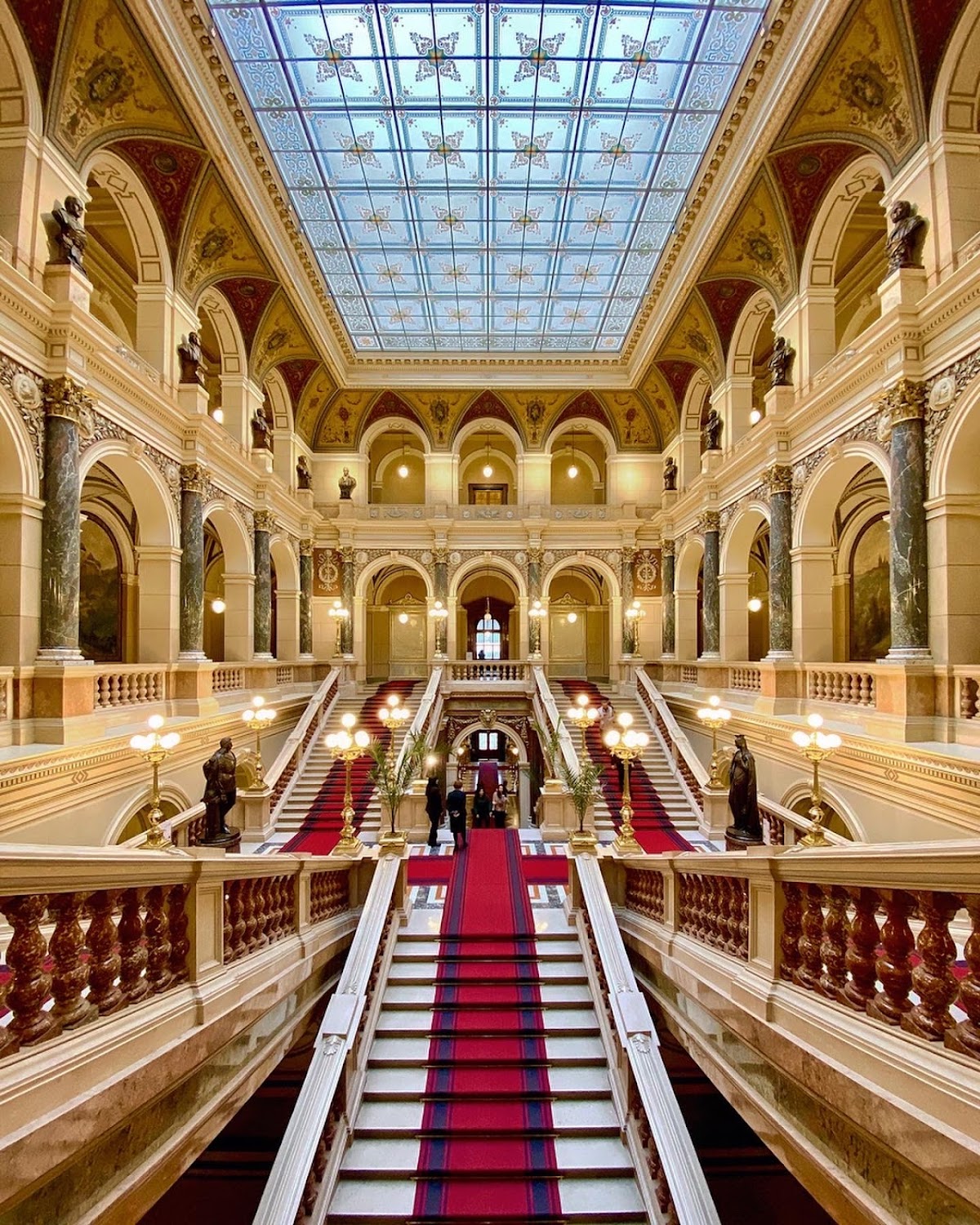
The main building, a grand Neo-Renaissance structure, was designed by architect Josef Schulz and completed between 1885 and 1891. Its imposing facade, adorned with sculptures and massive columns, evokes the grandeur of ancient Roman temples, symbolizing the nation's resilience and artistic prowess. Inside, the central hall features a magnificent dome, gilded decorations, and intricate frescoes that narrate Czech historical events and myths. The museum houses over a million artifacts, encompassing vast collections in natural history, history, and music, offering a comprehensive overview of the Czech Republic's past, present, and future.
Jewish Museum in Prague: A Complex of Historical Sites
The Jewish Museum in Prague is not a single entity but a complex of six historic synagogues and Jewish community buildings spread across the Josefov (Jewish Quarter) at U Staré školy 141/1, 110 00 Josefov, Prague. Established in 1906, it plays a crucial role in preserving the rich and complex history and culture of Czech Jews. The museum's collection, exceeding 100,000 artifacts, chronicles the Jewish community's life and struggles from the 10th century onwards, including periods of persecution, a golden age under Rudolf II in the 16th century, and the devastating impact of the Holocaust.
Key sites within the museum complex include the Pinkas Synagogue, which serves as a memorial to 80,000 Holocaust victims with their names inscribed on its walls, and the Old Jewish Cemetery, where centuries of Jewish life and death are represented by stacked gravestones. The Klausen Synagogue displays traditional Jewish attire, daily items, and religious artifacts like Torah scrolls, while the Spanish Synagogue is renowned for its ornate interior, showcasing the beauty of Jewish art. The museum provides a profound journey through a history of resilience, faith, and remembrance.
Museum Kampa: Modern Art on the Vltava River
Museum Kampa is situated on Kampa Island, nestled within the picturesque Sova Mills building on the banks of the Vltava River. It is accessible via Charles Bridge or a short walk from the Újezd tram stop, offering a scenic approach. This museum focuses on modern Central European and Czech art, highlighting significant artists such as František Kupka, a pioneer of abstract art, and Otto Gutfreund, a leading Czech Cubist sculptor.
Kupka's works, like his renowned Cathedral, explore visual rhythm and harmony through color and form, drawing inspiration from music to create a sense of sacred space. Gutfreund's Cubist sculptures, such as Anxiety, deconstruct the human form to convey multiple perspectives and reflect the turbulent psyche of his era. Museum Kampa offers a unique artistic experience, blending the beauty of its riverside setting with a deep dive into the innovative currents of Czech modern art.
Visitor Information
- National Museum Prague: Admission for adults is 250 CZK (free on the first Monday of each month). Open daily from 10:00 to 18:00, with extended hours until 20:00 on Wednesdays. Located at Václavské nám. 68, 110 00 Prague 1, directly at the Muzeum Metro station (A/C lines). A visit typically takes 2-3 hours.
- Jewish Museum in Prague: Adult admission is 600 CZK. Open Sunday to Friday from 9:00 to 18:00 (April-October) or 9:00 to 17:00 (November-March). Closed on Saturdays and Jewish holidays. Located at U Staré školy 141/1, 110 00 Josefov, Prague, accessible via Staroměstská Metro station (Line A).
- Museum Kampa: Adult admission ranges from 250-300 CZK. Generally open daily from 10:00 to 18:00 (check official website for current hours). Located on Kampa Island, accessible by walking across Charles Bridge or from the Újezd tram stop.
Visitor Info
| Admission | Adult 250 CZK (monthly 1st Mon Free) |
| Hours | Translating |
| Location | Vaclavske nam. 68, 110 00 Prague 1 |
| Getting There | Translating |
| Estimated Visit | 2~3hr |