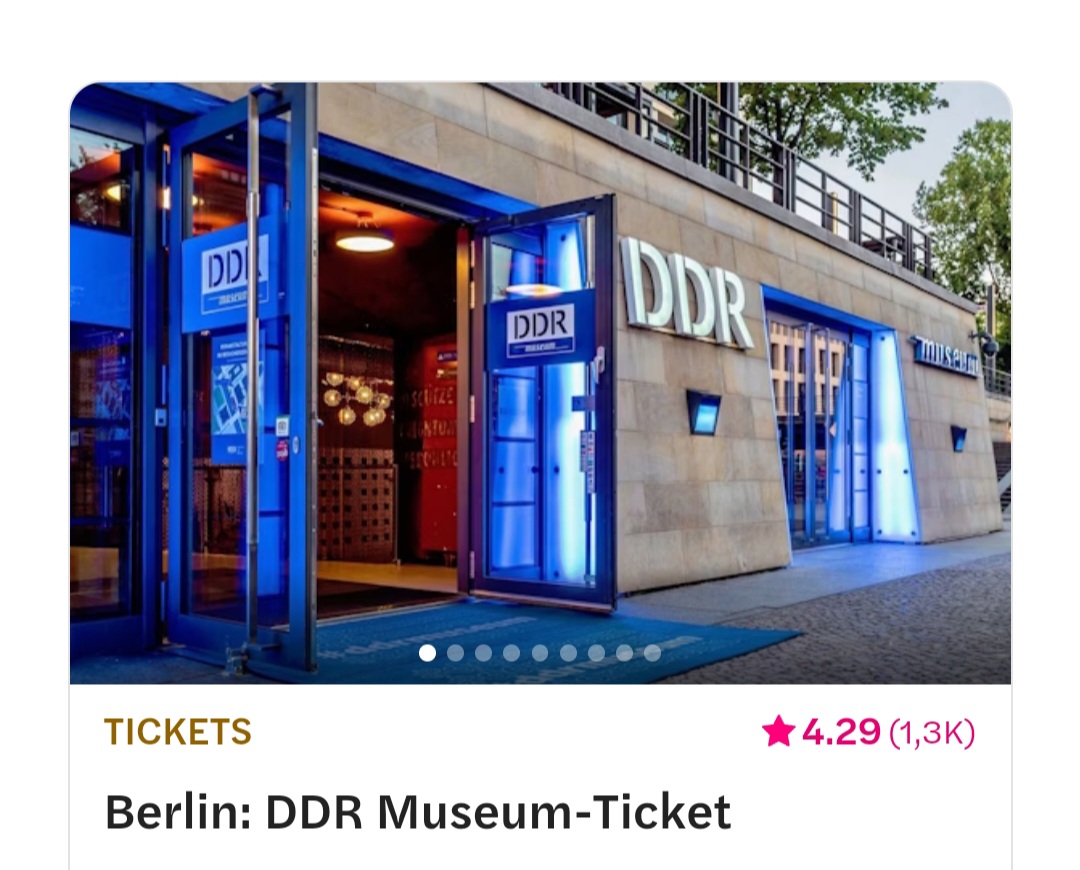
DDR Museum Berlin: Recreating East German Daily Life
DDR Museum Berlin: Recreating East German Daily Life
Berlin's Historical Landscape: An Expedition Log (June 2026)
From June 16th to 20th, 2026, an expedition was conducted to three significant historical sites in Berlin. The city itself functions as a vast historical document, where the past and present coexist. Traces of the Cold War and the stories of those who lived through it reveal history not merely as a chronology but as a living narrative. This survey focused on museums and memorials that encapsulate triumph and tragedy, destruction and reconstruction, and the vivid recreation of daily life in Berlin.
Soviet War Memorial: A Place of Remembrance in Tiergarten Park
Located within Berlin's expansive Tiergarten Park, the Soviet War Memorial stands at Str. des 17. Juni 4, 10557 Berlin. It is approximately a 15-minute walk from S-Bahn Potsdamer Platz station and a 20-minute walk from U-Bahn Mohrenstraße station. This monumental site commemorates Soviet soldiers who liberated Berlin from Nazi Germany in 1945. Its grandeur and solemnity command respect from visitors.
The memorial features a towering bronze statue of a Soviet soldier, holding a sword and shield, cradling a child, and standing atop a shattered swastika, symbolizing victory over Nazism. Below, the names of over 2,000 fallen Soviet soldiers are inscribed. T-34 tanks and howitzers flank the entrance, visually representing the intensity of the battle. Constructed from granite and bronze, the memorial's robust materials underscore the tragic history it embodies. It serves as a constant reminder of the human cost of war and the value of peace. The memorial is open 24 hours a day with no admission fee.
Neues Museum: Architectural Dialogue of Destruction and Reconstruction
The Neues Museum, situated on Berlin's Museum Island (Bodestraße 1-3, 10178 Berlin), is renowned for its ancient Egyptian and prehistoric collections. Originally opened in 1855, the museum was severely damaged during World War II. It reopened in 2009 after a meticulous reconstruction led by British architect David Chipperfield. Chipperfield's approach involved clearly distinguishing between the original structure and new additions, preserving bullet-scarred walls and damaged brickwork alongside smooth concrete and modern elements. This design choice allows the building to openly display its historical wounds while embracing renewal.
The interior showcases high, majestic ceilings and restored frescoes, juxtaposed with contemporary staircases and passageways that flood the space with light. This interplay of old and new enhances the experience of viewing artifacts like the bust of Nefertiti. The museum itself is a testament to how architecture can bear witness to history and embody a process of healing. Admission is 12 Euros for adults, with free entry for children under 18. It is generally closed on Mondays, open Tuesday to Sunday from 10:00 to 18:00, and until 20:00 on Thursdays. Online booking is recommended.
DDR Museum: Immersive Recreation of East German Daily Life
Located on the Spree River, directly opposite the Berlin Cathedral (Karl-Liebknecht-Str. 3, 10178 Berlin), the DDR Museum offers an immersive experience of daily life in East Germany (German Democratic Republic, 1949-1990). It is a short 5-minute walk from U-Bahn Museumsinsel or Rotes Rathaus stations. The museum focuses on the everyday lives of ordinary people rather than grand political narratives, utilizing over 100,000 artifacts.
Key exhibits include a Trabant car, where visitors can sit in the driver's seat and experience a simulated drive, offering insight into the limited choices available to East Germans. A recreated DDR apartment, complete with living room and kitchen, allows visitors to open drawers, explore cupboards, and examine period-specific items, providing a tangible sense of the era's living conditions and consumer culture. Sections on Stasi surveillance, featuring bugging devices and secret cameras, reveal the darker aspects of the regime, while other displays highlight how people found happiness and built community despite restrictions. The museum provides a balanced perspective on a unique historical period. Admission is 12.50 Euros for adults and 8 Euros for students. It is open daily from 09:00 to 21:00, with extended hours on weekends and holidays. Online reservation is essential due to its popularity.
Visitor Info
| Admission | Translating |
| Hours | Daily 09:00-21:00 |
| Location | Karl-Liebknecht-Str. 1, 10178 Berlin |
| Getting There | Translating |
| Estimated Visit | 2~3hr |