Kelvingrove Art Gallery: Meeting Salvador Dali in Glasgow
Kelvingrove Art Gallery: Meeting Salvador Dali in Glasgow
Kelvingrove Art Gallery: A Victorian Landmark in Glasgow
The Kelvingrove Art Gallery and Museum, located on Argyle Street in Glasgow, Scotland, stands as a magnificent Victorian red sandstone edifice. Opened in 1901 as part of the Glasgow International Exhibition, it quickly became a cultural cornerstone of the city. Situated by the River Kelvin and surrounded by Kelvingrove Park, the museum offers a harmonious blend of urban architecture and natural beauty.
Kelvingrove is more than just an art gallery; it functions as a comprehensive museum, housing over 8,000 diverse items. Its vast collection spans fine art, natural history, ancient artifacts, and Scottish history, providing visitors with a rich and varied cultural experience. A particular highlight is Salvador Dalí's iconic painting, 'Christ of St John of the Cross'.
Dalí's 'Christ of St John of the Cross': A Bold Acquisition
Salvador Dalí's 1951 masterpiece, 'Christ of St John of the Cross', is the most celebrated artwork at Kelvingrove. The Glasgow City Council controversially acquired this painting in the 1950s for £8,200, a significant sum at the time. This bold decision ultimately elevated Glasgow's status as a global art destination.
Dalí's unique perspective, depicting Christ from an overhead viewpoint, offers a profound and transcendent experience. The absence of nails or wounds emphasizes divine sacrifice over physical suffering, while the serene expression and interplay of light and shadow create a powerful sense of peace and mystery. The painting's lower section, featuring a tranquil lake, further contrasts the sacred with natural beauty.
Diverse Collections: From Scottish Art to Ancient Egypt
Beyond Dalí, Kelvingrove boasts an impressive collection of Scottish paintings, including works by the Scottish Colourists, which capture the region's distinctive landscapes and cultural spirit. The museum also features French Impressionist works, Renaissance art, and ancient Egyptian artifacts, offering a journey through various eras and cultures.
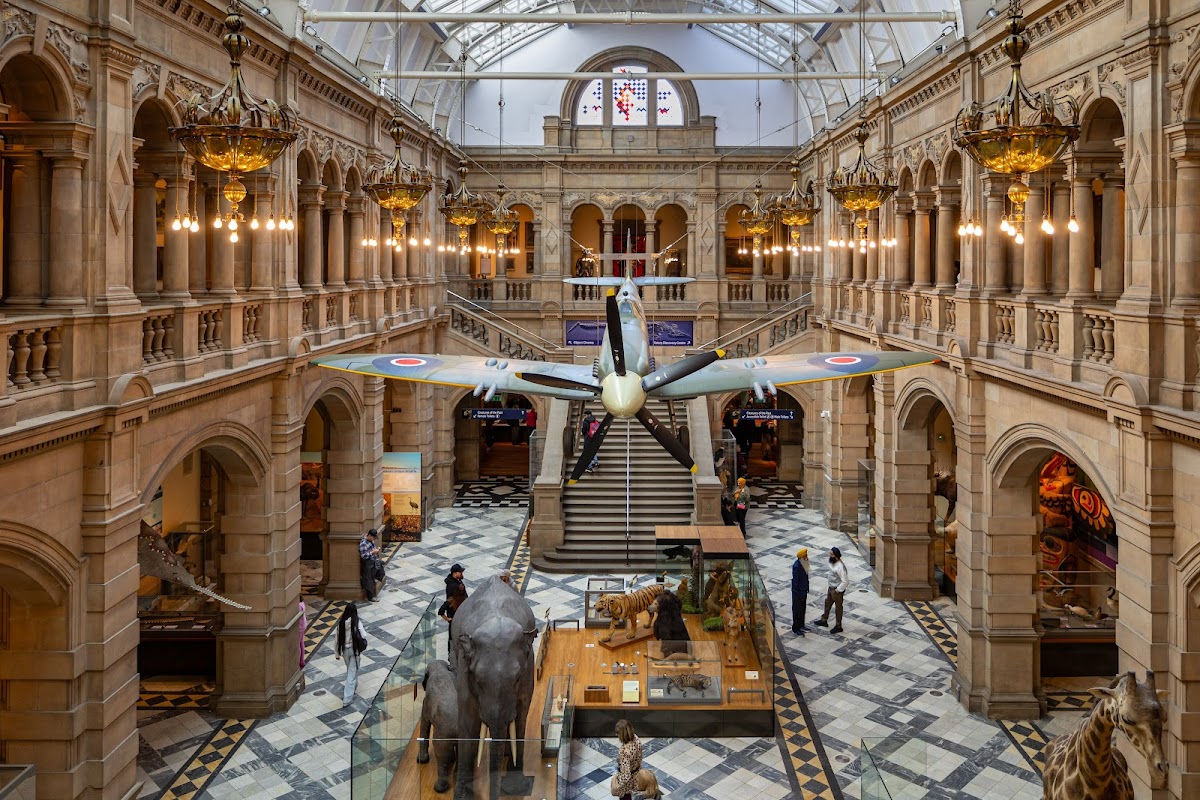
The grand central hall, with its suspended elephant skeleton and historic aircraft, visually represents the museum's broad scope. Visitors can explore a wide array of exhibits, from prehistoric artifacts to contemporary art, making for an engaging and educational visit. The museum's layout encourages a seamless exploration of human history and the natural world.
The Burrell Collection: Art in Pollok Country Park
Located within the expansive Pollok Country Park, approximately 5 km south of Glasgow city center, the Burrell Collection is a modern architectural marvel designed to blend with its natural surroundings. The museum houses over 9,000 artworks collected by Sir William Burrell (1861-1958), a Scottish businessman and art enthusiast.
Sir William bequeathed his entire collection to the City of Glasgow in 1944, with the museum officially opening in 1983. Following extensive renovations, the Burrell Collection reopened in 2022, offering an enhanced visitor experience within its light-filled, nature-integrated spaces.
A Collector's Vision: Medieval to Impressionist Art
The Burrell Collection is renowned for its remarkable diversity, reflecting Sir William's eclectic taste. It features a strong emphasis on medieval European art, including stained glass, tapestries, and armor. Additionally, the collection includes significant works by French Impressionists such as Renoir, Cézanne, and Degas, showcasing the artistic movements of the late 19th century.
Further enriching the collection are ancient Chinese ceramics, bronzes, and jade, alongside Islamic carpets, textiles, and pottery. This East-meets-West approach highlights the collector's global perspective and deep appreciation for art across different cultures and periods. The museum's setting within Pollok Country Park allows for a unique experience, combining art appreciation with tranquil natural walks.
Visitor Information for Both Museums
Both the Kelvingrove Art Gallery and Museum and the Burrell Collection offer free admission. Kelvingrove is open Monday-Thursday and Saturday from 10:00 to 17:00, and Friday-Sunday from 11:00 to 17:00. The Burrell Collection is open daily from 10:00 to 17:00. Both are easily accessible by public transport in Glasgow.
Visitor Info
| Admission | Free |
| Hours | Translating |
| Location | Argyle St, Glasgow G3 8AG |
| Getting There | Translating |
| Estimated Visit | 2~3hr |