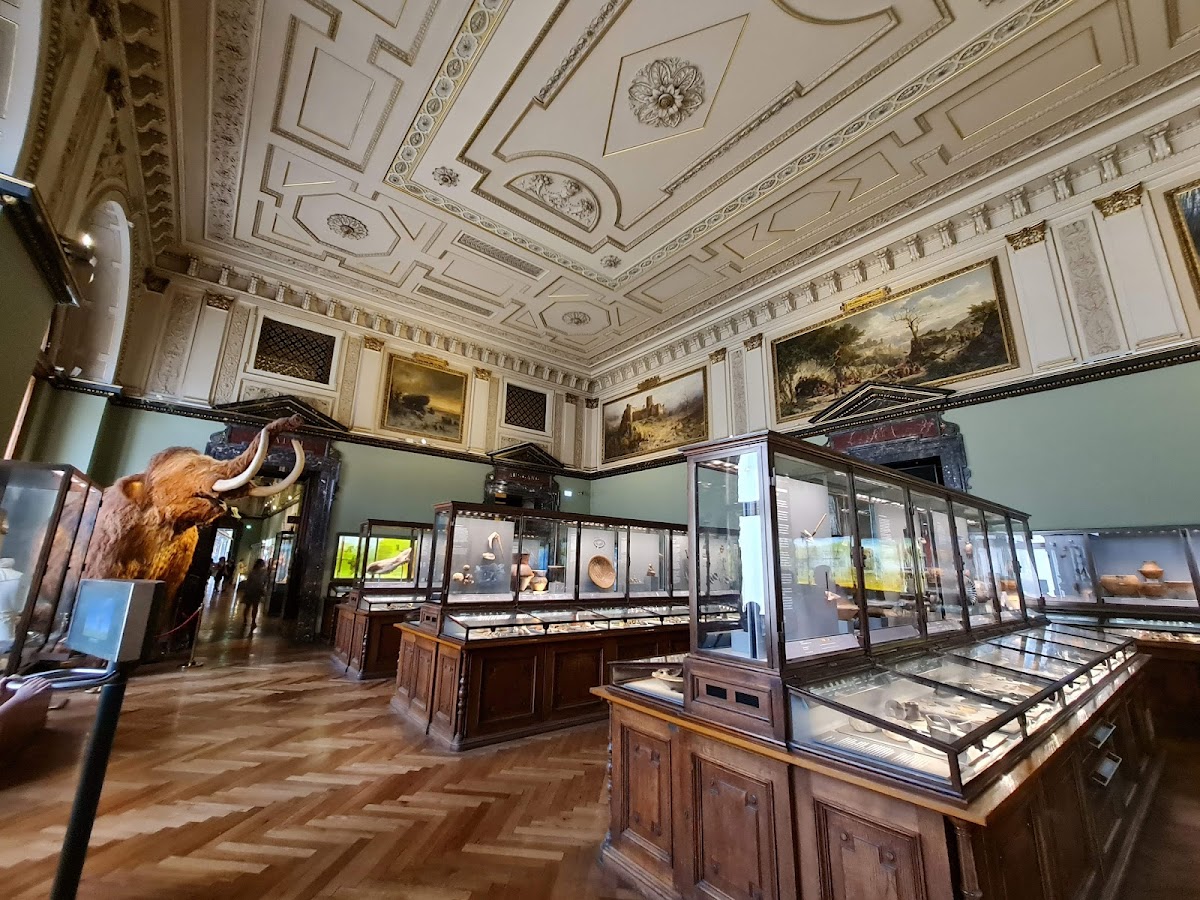
Natural History Museum Vienna: Finding the Venus of Willendorf
Natural History Museum Vienna: Finding the Venus of Willendorf
Natural History Museum Vienna: A Central Hub of Science and Culture
The Natural History Museum Vienna (Naturhistorisches Museum Wien) is located at Burgring 7, 1010 Wien, in the Innere Stadt. It stands prominently on Maria-Theresien-Platz, directly opposite the Kunsthistorisches Museum, forming a symmetrical architectural ensemble. This central location is easily accessible, approximately a 3-5 minute walk from U2 Museumsquartier or U3 Volkstheater stations.
Opened in 1889, the museum was established by the Habsburg monarchy to house and display their extensive natural history collections, reflecting centuries of scientific inquiry and a profound appreciation for the natural world. Its grand Renaissance Revival architecture, designed by Gottfried Semper and Carl von Hasenauer, mirrors that of its twin art museum, symbolizing the Habsburgs' dedication to both art and science.
Vast Collections: Earth's History and Biodiversity
The museum boasts over 30 million objects, covering a comprehensive range of natural sciences including mineralogy, geology, paleontology, zoology, botany, and anthropology. These collections vividly illustrate Earth's history and the immense diversity of life.
Key highlights include dinosaur fossils from the Jurassic period, exquisite gemstones and minerals, and invaluable artifacts tracing human evolution. Among its most significant treasures is the Venus of Willendorf, a small, reddish figurine approximately 11 cm tall, dating back to around 25,000 BCE. Found in Willendorf, Austria, this Paleolithic artifact is believed to symbolize fertility, abundance, and the miracle of birth, offering a rare glimpse into the worldview of early humans.
Exploring the Galleries: From Prehistory to Contemporary Art
Beyond the Natural History Museum, Vienna's Innere Stadt hosts a vibrant gallery scene. Galerie Konzett, located at Gartenpark Anninger, Spiegelgasse 21, offers a journey into contemporary art. Established in 1955, it showcases diverse modern art, with a particular focus on Austrian contemporary movements like Viennese Actionism. The gallery presents works across various media, including painting, sculpture, and installation art, in a minimalist and intimate setting.
Nearby, Galerie Kovacek at Spiegelgasse 12 specializes in historical artworks, particularly 19th and early 20th-century Austrian art. This gallery is a repository for antique maps, prints, and original artworks, featuring masterpieces from the Biedermeier period to Art Nouveau and Expressionism. Visitors can encounter works by renowned Austrian artists such as Gustav Klimt, Egon Schiele, and Oskar Kokoschka, tracing the evolution of Austrian art through different eras.
Visitor Information
- Natural History Museum Vienna:
- Admission: 16 EUR for adults, free for visitors under 19.
- Opening Hours: Mon 09:00-18:00, Tue Closed, Wed 09:00-20:00, Thu-Sun 09:00-18:00.
- Location: Burgring 7, 1010 Wien, Austria.
- Transportation: 3-5 minute walk from U2 Museumsquartier or U3 Volkstheater stations.
- Recommended Visit Duration: Approximately 3 hours.
- Galerie Konzett:
- Admission: Free, or paid for special exhibitions.
- Opening Hours: Mon Closed, Tue-Fri 11:00-18:00, Sat 10:00-14:00, Sun Closed. Check official website for current information.
- Location: Gartenpark Anninger, Spiegelgasse 21, 1010 Wien, Austria.
- Transportation: Walkable from U1/U3 Stephansplatz or U3 Herrengasse stations.
- Recommended Visit Duration: 30 minutes to 1 hour.
- Galerie Kovacek:
- Admission: Free, or paid for special exhibitions.
- Opening Hours: Mon-Fri 10:00-18:00, Sat 10:00-14:00, Sun Closed. Check official website for current information.
- Location: Spiegelgasse 12, 1010 Wien, Austria.
- Transportation: Walkable from U1/U3 Stephansplatz or U3 Herrengasse stations.
- Recommended Visit Duration: 30 minutes to 1 hour.
Visitor Info
| Admission | Translating |
| Hours | Translating |
| Location | Burgring 7, 1010 Wien |
| Getting There | Translating |
| Estimated Visit | 3~4hr |