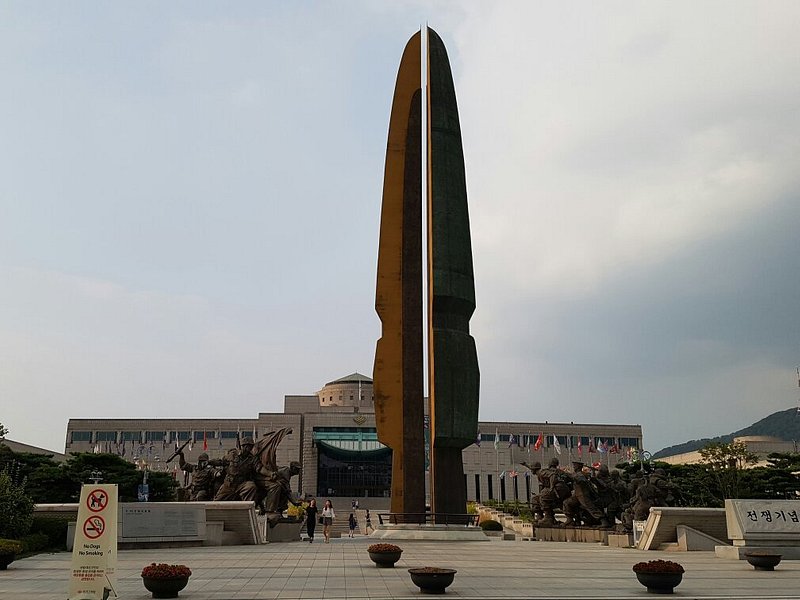
War Memorial of Korea: Remembering the Cost of Freedom in Seoul
Dongdaemun Design Plaza (DDP): Seoul's Curving Vision of Tomorrow
Stepping out into Dongdaemun, I was immediately struck by a monumental form that seemed to defy gravity and conventional architecture. Was it a colossal spaceship that had gently touched down in the heart of Seoul? Or perhaps the pulsating core of a city plucked from a distant future? From my very first encounter, the Dongdaemun Design Plaza, affectionately known as DDP, utterly captivated me. Conceived by the visionary Zaha Hadid, this architectural marvel has sculpted a breathtaking new horizon for Seoul, seamlessly blending its past with an audacious future.
I’ve returned to DDP multiple times, each visit offering a fresh perspective on its fluid geometry. From the outside, a continuous flow of smooth, undulating curves embraces you, a stark absence of sharp lines or abrupt angles. It’s as if the building itself is a liquid form, eternally in motion. The thousands of silvery aluminum panels that clad its surface shimmer and shift with every change in sunlight, reflecting the sky and the city in a constantly evolving spectacle. As dusk falls and the lights ignite, DDP transforms into a living sculpture of ethereal glow, casting fantastical shadows that dance across its expansive exterior. Walking around its perimeter, it’s almost impossible to believe this futuristic edifice stands on the very ground that once hosted the venerable Dongdaemun Stadium, a testament to Seoul’s relentless pursuit of innovation.
The experience continues indoors, where the curvilinear aesthetic flows effortlessly from exterior to interior. Vast, open spaces spiral upwards, bathed in natural light filtering through strategically placed skylights. I remember wandering through the Design Pathway, a labyrinthine exhibition space that felt less like a corridor and more like a journey through an organic form. Here, cutting-edge fashion exhibitions rub shoulders with design markets showcasing local talent, and immersive digital art installations invite you to step into another dimension. DDP isn’t just a building; it’s a vibrant cultural complex, a living laboratory where creativity flourishes, design is celebrated, and the future feels remarkably tangible. It challenges your perceptions of what a public space can be, urging you to explore, to interact, and to simply be present within its magnificent, flowing embrace. It’s a place that doesn’t just house design; it embodies it.
War Memorial of Korea: Echoes of Sacrifice and the Price of Peace
The air shifts, grows heavy, as you approach the War Memorial of Korea. Gone are the futuristic curves of DDP; here, a solemn gravity commands attention. My first visit was an emotionally profound experience, a necessary journey into the heart of conflict and remembrance. Set against the backdrop of Seoul, this sprawling memorial is more than just a collection of artifacts; it is a meticulously curated narrative of sacrifice, resilience, and the enduring human cost of war, particularly the Korean War.
I recall the impactful outdoor exhibits first: the towering Statue of Brothers, depicting a poignant embrace between two soldiers from opposing sides, a searing symbol of division and reconciliation. Then there are the meticulously preserved aircraft, tanks, and artillery pieces, silent giants that once roared across battlefields. Walking amongst them, I felt the sheer scale of the conflict begin to sink in. But it was inside the vast museum halls where the stories truly came alive, moving beyond statistics to individual experiences.
The exhibits guide you chronologically, from the origins of the Korean Peninsula to the brutal three-year conflict and its aftermath. I vividly remember the incredibly detailed dioramas and immersive displays, some recreating trenches and battle scenes with chilling realism. The section dedicated to the United Nations forces, highlighting the international solidarity that came to South Korea’s aid, was particularly moving. Countless names of the fallen are etched into walls, a stark and endless reminder of lives cut short. Perhaps the most poignant moment for me was in the Children's Room, where drawings and letters from children affected by the war offered a heartbreaking glimpse into innocence shattered. The museum doesn't shy away from the brutality, yet it balances this with a powerful message of hope and the importance of striving for lasting peace. It’s a place that compels deep reflection, urging visitors to not only remember the past but to actively work towards a future where such sacrifices are never again necessary. It’s a powerful testament to the human spirit and the enduring quest for freedom.
Art Sonje Center: Contemporary Whispers in a Historic Nook
Leaving the grand narratives of history behind, my path led me to Samcheong-dong, a charming neighborhood where traditional hanok roofs peek over modern cafes and galleries. Here, tucked away amidst this delightful blend of old and new, lies the Art Sonje Center. It offers a distinctly different pace and a more intimate encounter with art than the expansive DDP or the solemn War Memorial. My visits here have always felt like stepping into a hushed conversation, a space dedicated to the often-challenging, always thought-provoking world of contemporary art.
Unlike museums that might present established masterpieces, Art Sonje excels at showcasing cutting-edge, experimental works by both Korean and international artists. I remember one particular exhibition where a multi-media installation filled an entire room, its shifting lights and ambient sounds creating an immersive, almost dreamlike environment. Another time, a series of conceptual sculptures challenged my understanding of everyday objects, transforming them into profound statements on consumerism and identity. The beauty of Art Sonje lies in its willingness to push boundaries, to present art that often asks more questions than it answers, inviting personal interpretation rather than dictating it.
The building itself, while not as overtly dramatic as DDP, possesses a quiet elegance. Its clean lines and thoughtful use of space allow the art to take center stage, creating a serene backdrop for contemplation. Walking through its galleries, I’ve often found myself lingering, allowing the art to slowly unfurl its meaning, or sometimes, simply appreciating the aesthetic challenge it presented. It’s a refreshing departure from the grandiosity, offering instead a focused, almost meditative experience. Art Sonje isn't just a place to see art; it's a place to engage with it on a deeply personal level, to explore the forefront of artistic expression, and to discover new ways of seeing the world, all within the charming, contemplative embrace of one of Seoul’s most artistic districts.
Practical Tips
For Dongdaemun Design Plaza (DDP), take Seoul Metro Line 2, 4, or 5 to Dongdaemun History & Culture Park Station. Exit 1 is ideal. Allow at least 2-3 hours to explore the architecture, design shops, and any temporary exhibitions. Evening visits are magical when the lights illuminate the facade. The surrounding Dongdaemun area offers extensive shopping and dining options, especially at night.
The War Memorial of Korea is best accessed via Samgakji Station (Seoul Metro Line 4 or 6), Exit 12. Plan for a minimum of 3-4 hours, as the museum is vast, with both indoor galleries and extensive outdoor exhibits. Wear comfortable shoes and be prepared for a deeply moving experience. Photography is generally allowed, but check specific exhibit rules.
To reach Art Sonje Center, take Seoul Metro Line 3 to Anguk Station, Exit 1. From there, it’s a pleasant 10-15 minute walk through the scenic Samcheong-dong neighborhood. This area is perfect for combining your art visit with exploration of traditional hanoks, charming cafes, and boutique shops. Check their website for current exhibition schedules and admission fees, as these can vary. The center is relatively small, so 1-2 hours is usually sufficient.
Visitor Info
| Admission | Free |
| Hours | Tue-Sun 09:30-18:00 (Closed Mon) |
| Location | 서울특별시 용산구 이태원로 29 |
| Getting There | Subway 6 Line 삼각지Stn 12번 Exit |
| Estimated Visit | 3~4hr |
