Asia Culture Center: From Democratization to Culture's Future
Asia Culture Center: From Democratization to Culture's Future
Asia Culture Center: A Subterranean Hub in Gwangju
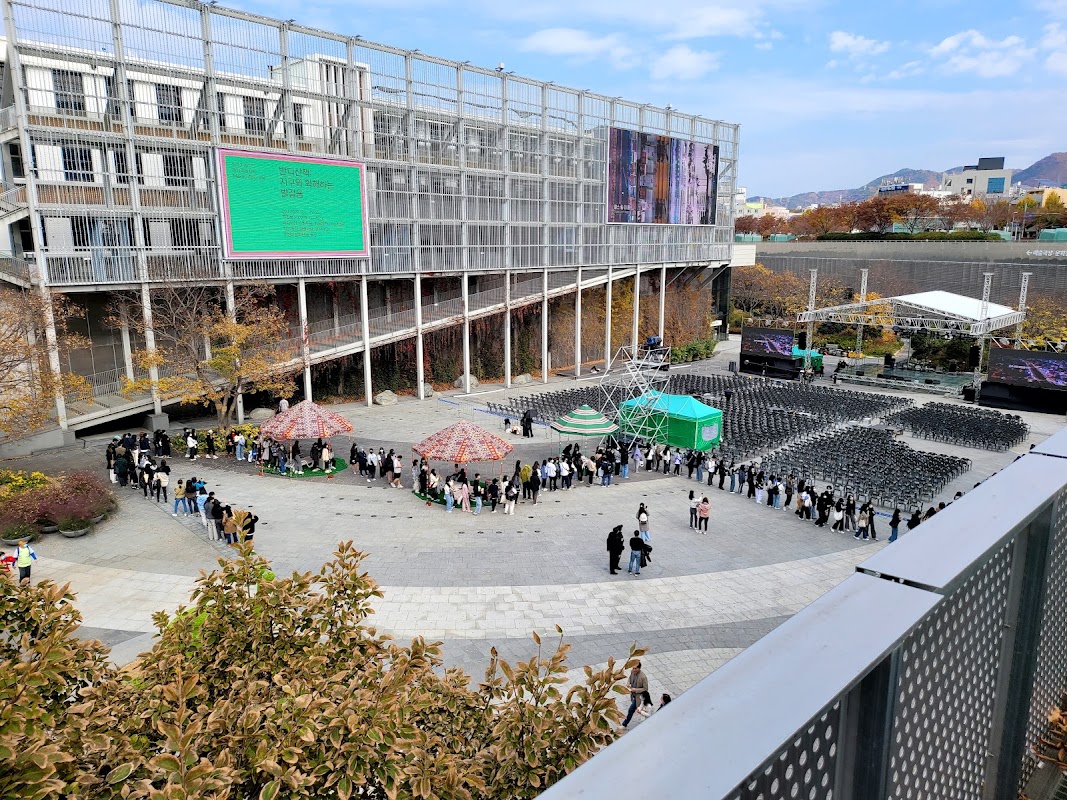
The Asia Culture Center (ACC) stands at 38 Munhwajeondang-ro, Dong-gu, Gwangju, directly connected to Gwangju Subway Line 1's Culture Complex Station. This massive cultural complex is built on the historic site of the former Jeollanam-do Provincial Office, a significant location during the 5·18 Democratization Movement. The ACC, largely subterranean, features a vast 'Forest of Light' plaza on the surface, beneath which extensive cultural facilities are housed. This architectural approach respectfully integrates the past with a forward-looking vision for Asian cultural exchange.
Established to foster creative exchange and understanding across Asia, the ACC presents diverse exhibitions, performances, and educational programs focusing on contemporary Asian art, culture, and history. It serves as a vital platform for dialogue between Asian artists and global audiences, promoting interdisciplinary artistic endeavors. Its construction, initiated in 2004 and officially opened in 2015, transformed a site of historical significance into a dynamic center for cultural creation and interaction.
Gwangju Museum of Art: Serenity Amidst Nature
Located within Jungoe Park, at 31-5 Unam-dong, Buk-gu, Gwangju, the Gwangju Museum of Art offers a tranquil escape. Situated at the foot of Mount Mudeungsan, it provides a contemplative setting for engaging with art, distinct from the urban energy of the ACC. The museum, opened in 1992, focuses on promoting contemporary art from the Gwangju and Honam regions, supporting local artists, and showcasing the broader trends in modern and contemporary Korean art.
The exhibition spaces are designed for clarity and focus, with high ceilings and ample lighting that highlight the intrinsic qualities of each artwork. The museum's serene atmosphere, complemented by views of lush greenery from its windows, encourages visitors to pause and reflect. It serves as a crucial institution for establishing the region's artistic identity and contributing to the wider discourse on contemporary art.
Gwangju Biennale Exhibition Hall: Art as a Voice for Humanity
The Gwangju Biennale Exhibition Hall, located at 111 Biennale-ro, Buk-gu, Gwangju, is positioned near the Mangwoldong Cemetery, a symbolic site of the 5·18 Democratization Movement. This proximity underscores the Biennale's profound historical context and its mission to commemorate the spirit of the Uprising through art. Founded in 1995 to mark the 15th anniversary of the movement, the Gwangju Biennale emerged with the motto 'The Leap of Third World Art,' challenging Western-centric art narratives.
As a globally recognized platform for contemporary art, the Biennale showcases innovative artistic practices from international and Korean artists. Each edition explores pressing global issues such as war, environment, inequality, and human rights, interpreting the 'Gwangju Spirit' in diverse artistic forms. The exhibition hall itself is functionally designed to allow the powerful messages of the artworks to take center stage, fostering critical dialogue and promoting universal values of peace and human rights through artistic expression.
Visitor Information
Asia Culture Center (ACC)
- Admission: Free for basic exhibitions. Special exhibitions or performances may have separate fees.
- Operating Hours: Tue-Sun 10:00-18:00, Wed-Sat 10:00-20:00. Closed on Mondays.
- Transportation: Directly connected to Gwangju Subway Line 1, Culture Complex Station.
- Recommended Visit Duration: 2-3 hours.
Gwangju Museum of Art
- Admission: Free for permanent exhibitions. Special exhibitions may have fees.
- Operating Hours: Tue-Sun 10:00-18:00. Closed on Mondays.
- Transportation: Approximately 20-30 minutes by bus from Gwangju Station.
- Recommended Visit Duration: 1-2 hours.
Gwangju Biennale Exhibition Hall
- Admission: Varies by exhibition. During the Biennale period, integrated tickets are typically charged.
- Operating Hours: Varies depending on the Biennale schedule. Generally 10:00-18:00, often closed on Mondays.
- Transportation: Approximately 15-20 minutes by bus from Gwangju Subway Line 1, Culture Complex Station.
- Recommended Visit Duration: 1.5-2 hours.
Visitor Info
| Admission | Translating |
| Hours | Translating |
| Location | Translating |
| Getting There | Translating |
| Estimated Visit | 2~3hr |