Budapest's Archive of Two Dictatorships
Budapest's Archive of Two Dictatorships
The House of Terror — A Budapest Landmark of Remembrance
The House of Terror Museum, located at Andrássy út 60 in Budapest, serves as a powerful testament to Hungary's 20th-century totalitarian regimes. This historic building first housed the Arrow Cross Party (a Nazi-aligned fascist group) from 1937-1944, then the Communist secret police (ÁVO/ÁVH) from 1945 until the 1956 Hungarian Revolution. It stands as a physical archive of oppression, torture, and execution, making the building itself a central exhibit.
Architectural Transformation and Symbolic Design
Originally a bourgeois apartment block from 1880, its purpose dramatically shifted during World War II and the subsequent Communist era. In 2002, the Public History Research Foundation transformed it into a museum, with architect Attila F. Kovács overseeing the renovation. A prominent feature is the 3.7-meter-high "TERROR" letters on the black cornice encircling the roof, casting a stark shadow across the facade, a poignant symbol of the museum's mission and Hungary's grim past.
Key Exhibits — Witnessing History
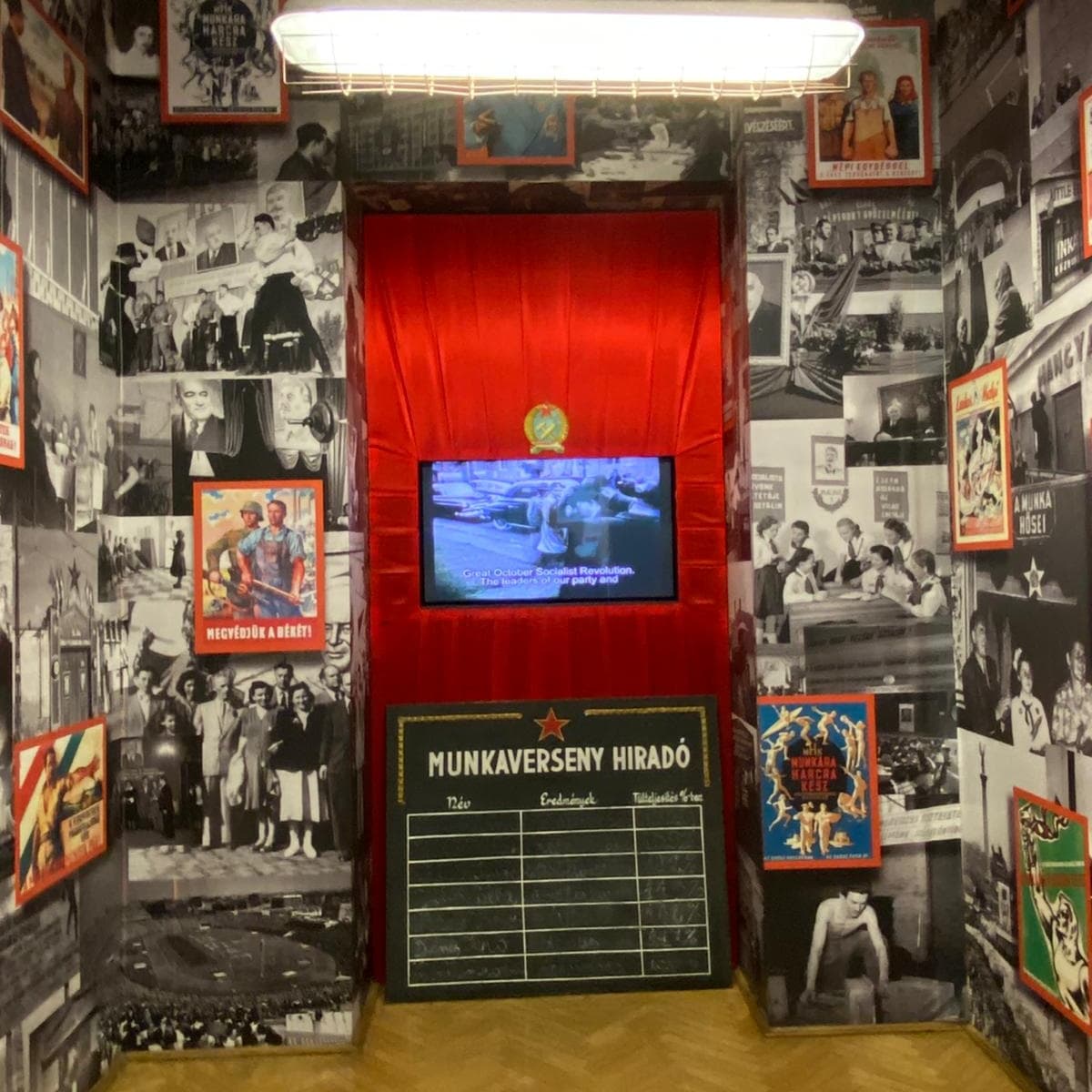
Upon entering, visitors encounter a Soviet T-54 tank in the central atrium, symbolizing foreign intervention and domestic repression. Walls are covered with photographs of countless victims. Exhibitions detail the Arrow Cross Party's atrocities during the German occupation in 1944, including the Budapest Jewish ghetto, through photos, documents, and personal artifacts.
Another section focuses on the Gulag and forced deportations, documenting the fate of Hungarians sent to Soviet labor camps, with survivor interviews providing direct emotional connection. The museum's basement houses reconstructed solitary cells, a water-torture chamber, and an execution room, meticulously preserved to convey horrific conditions. The elevator descent to the basement is an integral part of this immersive, emotionally challenging experience.
The museum also dedicates space to the 1956 Hungarian Revolution, detailing the trial and execution of leaders like Imre Nagy, and their eventual reburial in 1989. This narrative highlights Hungary's struggle for freedom and its path from totalitarianism to democracy.
Visitor Information
The House of Terror Museum is on Andrássy Avenue, a UNESCO World Heritage site, a 5-minute walk from Vörösmarty utca M1 metro station. A visit typically takes 2 to 3 hours. Audio guides are available in multiple languages, including English, with English captions throughout. Given the emotionally heavy nature, an morning visit is advisable. Nearby cultural landmarks like the Liszt Ferenc Academy of Music and the Hungarian State Opera House offer a contrast, allowing visitors to experience both the "light and shadow" of Budapest.
- Address: Andrássy út 60, Budapest 1062
- Operating Hours: Tuesday-Sunday, 10:00-18:00. Closed on Mondays.
- Admission: Please check the official website.
- Transportation: M1 (yellow line) to Vörösmarty utca station.
Visitor Info
| Translating | Translating |
| Area | Translating |
| Address | Andrássy út 60, Budapest 1062 |
| Official Site | https://www.terrorhaza.hu |