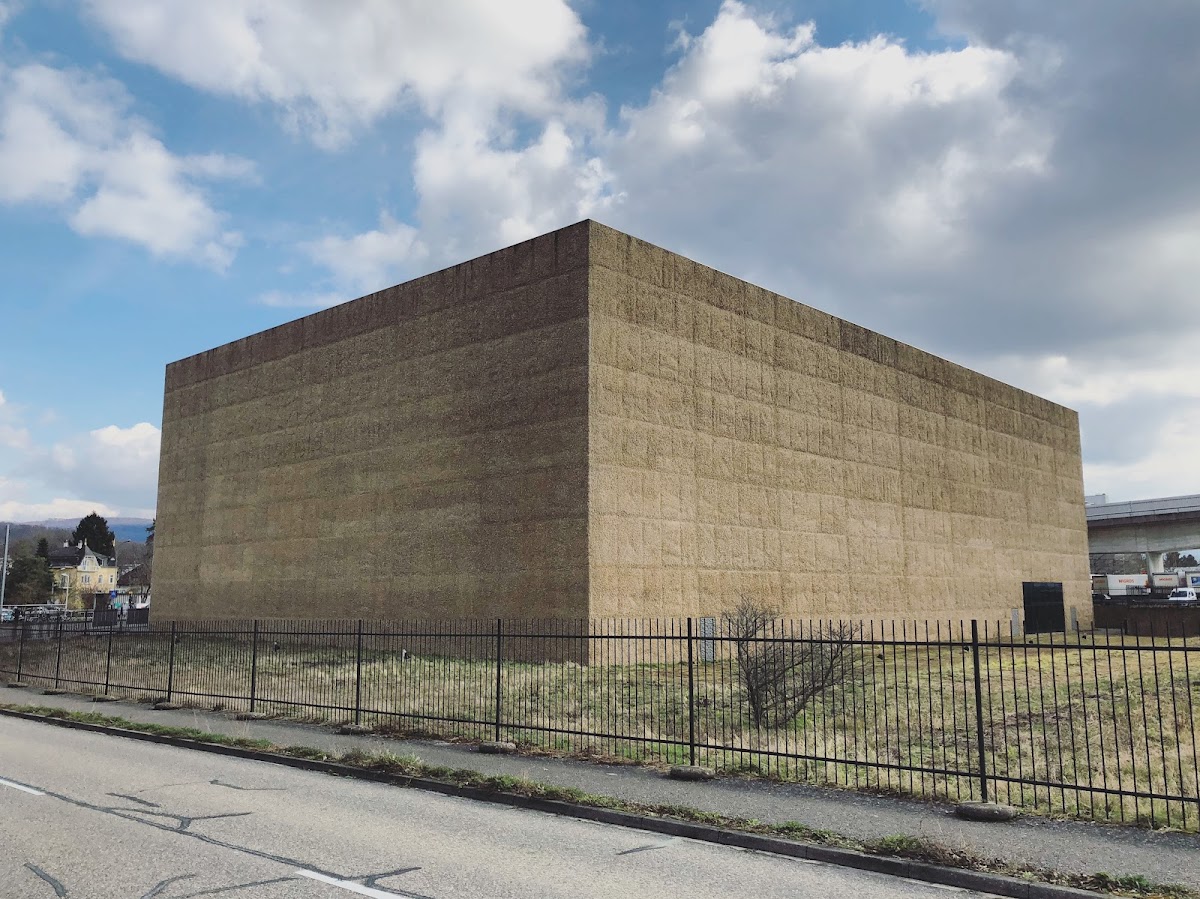
Herzog & de Meuron's "Visible Storage" in Basel
Herzog & de Meuron's "Visible Storage" in Basel
Schaulager in Münchenstein — Basel's Unique Visible Storage Facility
Schaulager, located at Ruchfeldstrasse 19 in Münchenstein, a suburb of Basel, Switzerland, is a hybrid facility for the storage and exhibition of contemporary art. Its name, meaning 'Show-Warehouse' in German, reflects its unique function that blurs the lines between a traditional museum and a storage vault. It is easily accessible by tram 10 or 11 from Basel SBB central station, taking approximately 20 minutes to reach the Schaulager stop directly in front of the building.
Designed by Basel-based architects Jacques Herzog and Pierre de Meuron, Schaulager was their first major public building unveiled after winning the Pritzker Prize in 2003. It stands as a significant cultural landmark in the Basel area, forming a crucial part of the 'Basel's Top 4 Contemporary Art Route' alongside the Beyeler Foundation, Museum Tinguely, and Kunstmuseum Basel.
Established in 2003 — The Vision of the Emanuel Hoffmann Foundation
Schaulager was founded in 2003 by the Emanuel Hoffmann Foundation, a cultural institution in Basel. The foundation's vision was to make its collection of approximately 860 contemporary artworks continuously accessible to researchers and students. This initiative arose from a critical stance against the common museum practice of exhibiting only a small fraction of their holdings while keeping the rest in storage.
The foundation established the principle that 'all works should always be available for research and educational purposes.' To realize this, Schaulager introduced a unique 'Schaulager model,' functioning as an intermediate form between a museum and a warehouse. While public viewing periods are limited annually, research visits are always possible, opening new avenues for contemporary art studies.
Herzog & de Meuron's Architecture — The Language of Raw Materials
The architecture of Schaulager, conceived by Jacques Herzog and Pierre de Meuron, clearly demonstrates their signature architectural language of 'raw material expression.' The building's exterior features a rough finish where gravel is embedded directly into the concrete walls. This approach serves as an archetype for their subsequent works, including the Tate Modern in London and the 'Bird's Nest' Beijing Olympic Stadium.
The building's facade is intentionally asymmetrical and tilted without load-bearing walls, conveying to passersby that it is 'not a typical museum.' This design choice underscores Schaulager's unconventional nature and its departure from traditional institutional aesthetics, reflecting its innovative approach to art exhibition and storage.
Transforming the Concept of Storage — Realizing the 'Visible Warehouse'
Schaulager challenges the conventional museum practice of displaying only 5-10% of their collection while storing the rest. The Emanuel Hoffmann Foundation's core principle dictates that 'all works should always be available for research and educational purposes,' driving the creation of Schaulager's unique model.
The five-story structure serves as both a high-density storage facility and a research space. Each floor's layout, walls, and lighting are custom-designed to accommodate large-scale installations by various artists, optimizing conditions for preservation and display. This setup transforms the storage facility into a 'visible warehouse' that actively promotes research and critical engagement with the artworks.
The Emanuel Hoffmann Foundation Collection — A Survey of 20th-Century Art
At the heart of Schaulager is the Emanuel Hoffmann Foundation's collection of approximately 860 contemporary artworks. This collection comprehensively covers major movements in contemporary art from the 20th to the 21st century, including Surrealism, American Abstract Expressionism, Minimalism, and Video Art.
Notable artists represented include Salvador Dalí, Max Ernst, and Yves Tanguy for Surrealism; Jackson Pollock and Mark Rothko for American Abstract Expressionism; Donald Judd and Dan Flavin for Minimalism; and Bruce Nauman and Rosemarie Trockel for Video Art. This extensive collection provides invaluable resources for contemporary art researchers, showcasing pivotal moments in art history.
Collection Highlights — Robert Gober's Long-Term Installation and Early Jeff Koons
Among Schaulager's significant holdings is a long-term installation by American sculptor Robert Gober. His human body objects and a wall installation with the sound of flowing water occupy an entire floor, a scale rarely seen outside Basel. This immersive experience allows visitors to deeply engage with Gober's artistic universe, emphasizing Schaulager's commitment to profound artwork engagement.
The collection also features early works by Jeff Koons, including his 1980s series 〈Luxury and Degradation〉 and the vacuum cleaner object series 〈New Shelton Wet/Dry...〉. These works are crucial for understanding Koons' initial artistic explorations, where he critiqued consumer society and blurred the lines between art and commodity by elevating everyday objects to art status. Schaulager thus preserves and supports research into the foundational stages of these influential artists.
Annual Exhibitions and Online Archive — Expanding Access
Schaulager hosts major solo exhibitions annually from April to August, coinciding with its public viewing period. These exhibitions feature immersive, large-scale installations by renowned artists such as Paul McCarthy, Matthew Ronay, and Yayoi Kusama. These events offer a rare opportunity to see works of a scale not typically found in other museums, attracting international collectors and curators to Basel during this time.
Beyond its physical space, Schaulager supports contemporary art research through its online open archive. High-resolution images and detailed research materials for all 860 works in the collection are freely available on its website. This digital initiative enhances accessibility for researchers worldwide, fulfilling Schaulager's founding principle of making all works continuously available for study and education.
Visitor Information — Limited Access and Research Appointments
Public access to Schaulager is limited to an annual period, typically from April to August. Admission is 5-8€ for adults. Operating hours are Tuesday to Sunday, 10:00 to 18:00, with Mondays closed. A visit duration of approximately 2 hours is recommended.
During Art Basel in mid-June, special exhibitions are always held, making Schaulager one of the most visited venues by international art professionals. For visits outside the public opening period, research appointments can be requested in advance via Schaulager's official website, allowing guided access to the collection. This unique operational model is a defining characteristic of Schaulager, emphasizing its role as a research institution.
Visitor Info
| Translating | Translating |
| Area | Translating |
| Admission | Adult 5-8€ |
| Hours | Tue-Sun 10:00-18:00. Closed Mon |
| Address | Ruchfeldstrasse 19, 4142 Münchenstein, Switzerland |
| Official Site | https://www.schaulager.org |