The World's First National Museum, London
The World's First National Museum, London
The British Museum — London's First National Museum
Located in Bloomsbury, London, the British Museum stands as the world's first national public museum. Established in 1753 by an Act of Parliament, it was founded on the principle of being "open to all curious persons of all ranks" for free. Its origins trace back to Sir Hans Sloane's extensive collection of 71,000 objects, which he bequeathed to the nation. Today, the museum houses over 8 million artifacts, making it one of the largest and most comprehensive collections of human history and culture globally.
Architecture and Evolution
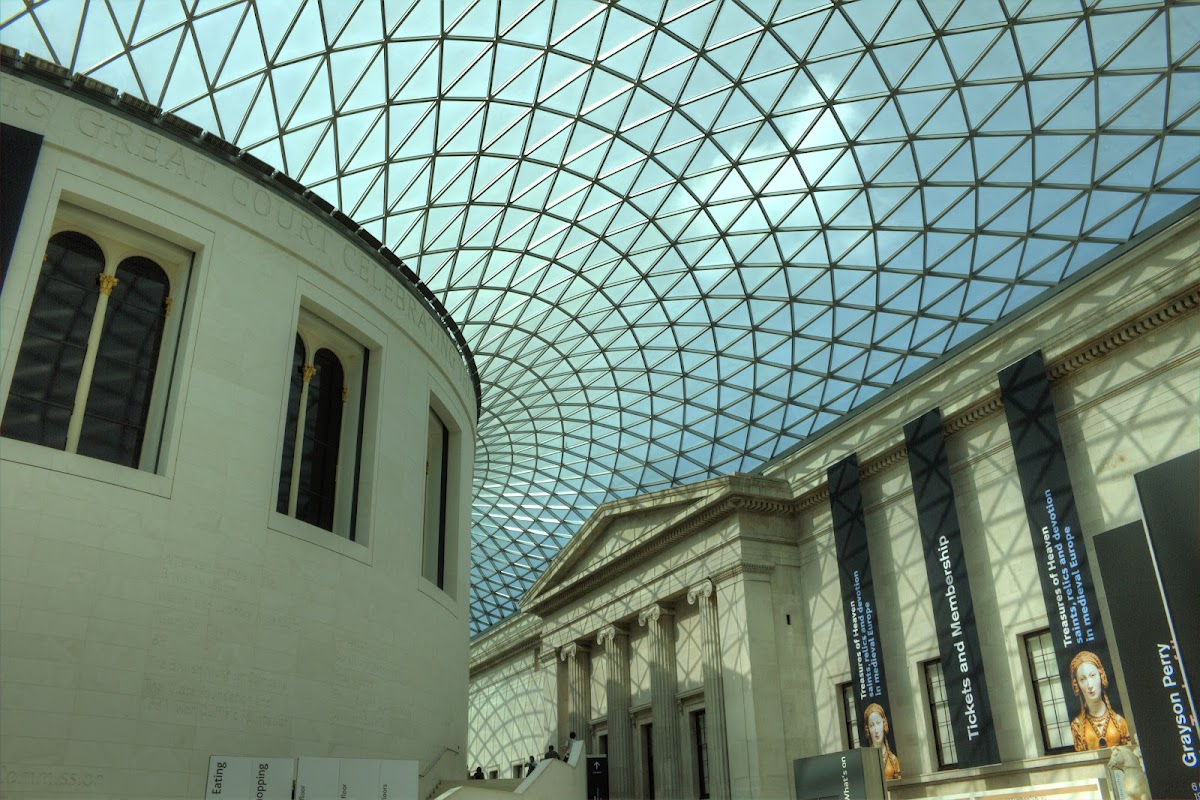
The museum's iconic main building, completed in 1852, features a grand Greek Revival facade with 44 Ionic columns, designed by Sir Robert Smirke. This architectural masterpiece has become a landmark in London. In 2000, the central courtyard, formerly the British Library's Round Reading Room, was transformed into the Great Court by architect Norman Foster. This vast, glass-roofed indoor piazza is now Europe's largest covered public square and serves as a central hub connecting various galleries.
A Collection Spanning Millennia
The British Museum's collection reflects over 250 years of history, often intertwined with the expansion of the British Empire. Its holdings include artifacts from ancient civilizations across the globe, offering a panoramic view of human achievement. Key exhibits, such as the Rosetta Stone, the Parthenon Marbles, and the Assyrian palace reliefs, are central to understanding ancient cultures. However, the provenance of some objects, particularly the Parthenon Marbles, remains a subject of ongoing international debate regarding their return to their countries of origin.
Must-See Highlights
- The Rosetta Stone (196 BC): A black granite slab inscribed with the same decree in three scripts—hieroglyphic, Demotic, and ancient Greek—which proved crucial to deciphering Egyptian hieroglyphs in 1822.
- The Parthenon Marbles (5th Century BC): Sculptures from the Parthenon in Athens, representing a pinnacle of classical Greek art. They are displayed in a dedicated gallery, despite ongoing calls for their repatriation to Greece.
- Assyrian Palace Reliefs: Massive limestone carvings from the palaces of Assyrian kings in Nimrud and Nineveh (modern-day Iraq), depicting scenes of royal power, warfare, and mythical creatures like the Lamassu.
- Egyptian Mummies: One of the world's most extensive collections of ancient Egyptian funerary artifacts, featuring over 140 mummies and sarcophagi, offering insights into ancient Egyptian beliefs about the afterlife.
- The Sutton Hoo Treasure (7th Century AD): A collection of Anglo-Saxon artifacts discovered in Suffolk, England, including a magnificent ship burial with gold and garnet jewelry, often referred to as Britain's "Rosetta Stone" for early medieval history.
- Hoa Hakananai'a Moai: An Easter Island statue, brought to the museum in 1868, notable for its intricate carvings on the back, representing a significant piece of Rapa Nui cultural heritage.
Visiting Information
Admission to the British Museum is free, though donations are welcome and special exhibitions may have a charge. The museum is open daily from 10:00 to 17:00, with extended hours until 20:30 on Fridays. It is closed on December 24-26 and January 1. Visitors can expect to spend 3-5 hours exploring the highlights, or a full day to see everything. Weekday evenings, especially Thursdays and Fridays, offer a quieter experience. The museum is easily accessible via Holborn, Russell Square, or Tottenham Court Road tube stations, all within a 5-minute walk. For the latest information, visitors are encouraged to check the official website: http://britishmuseum.org/.
Visitor Info
| Translating | Translating |
| Area | Translating |
| Admission | Free (Special exhibitions extra). Donations welcome |
| Hours | Translating |
| Getting There | Translating |
| Address | 41 Russell Sq, London WC1E 7JW, UK |
| Official Site | http://britishmuseum.org/ |