Munich's 125-Year Temple of Science and Technology
Munich's 125-Year Temple of Science and Technology
Location and Overview
The Deutsches Museum, one of the world's largest science and technology museums, stands on Museumsinsel (Museum Island), an artificial island in the Isar River in central Munich, Germany. Located in the Ludwigsvorstadt-Isarvorstadt district, its address is 4HHM+X8 Munich. It is easily accessible via public transport, a 5-minute walk from S-Bahn Isartor station and a 10-minute walk from U-Bahn Fraunhoferstraße station.
Founding and Early History
Founded in 1903 by engineer and entrepreneur Oskar von Miller (1855–1934), the museum aimed to gather and present "masterpieces of science and technology to the general public." Miller, a pioneer in Germany's electrical industry, was inspired by the London Science Museum after successfully organizing the 1891 Frankfurt Electrical Exhibition. With support from the Bavarian King, the Imperial Parliament, and industry, the museum rapidly built its collection through donations of real machines and instruments. The main building was completed in 1925, with its opening ceremony attended by scientific luminaries like Albert Einstein, Max Planck, and Fritz Haber, who celebrated it as a "symbol of the democratization of science."
Collections and Interactive Exhibits
Spanning approximately 73,000 square meters, the Deutsches Museum houses around 28,000 exhibits across more than 50 thematic galleries. A key feature is its over 1,000 interactive experimental setups, allowing visitors to engage directly with scientific principles. This hands-on approach has made it a global model for museum education, attracting 1.5 million visitors annually.
Wartime and Renovation
The museum suffered significant damage during World War II, with 80% of its main building destroyed. Reconstruction began in 1948, gradually restoring the museum to its former glory. Since 2020, a major, 10-year, €800 million renovation project called "Zukunftsinitiative" (Future Initiative) has been underway to modernize facilities and exhibits. The museum is expected to fully reopen in a new form by 2028. Visitors are advised to check the official website for currently open sections.
Key Exhibition Highlights
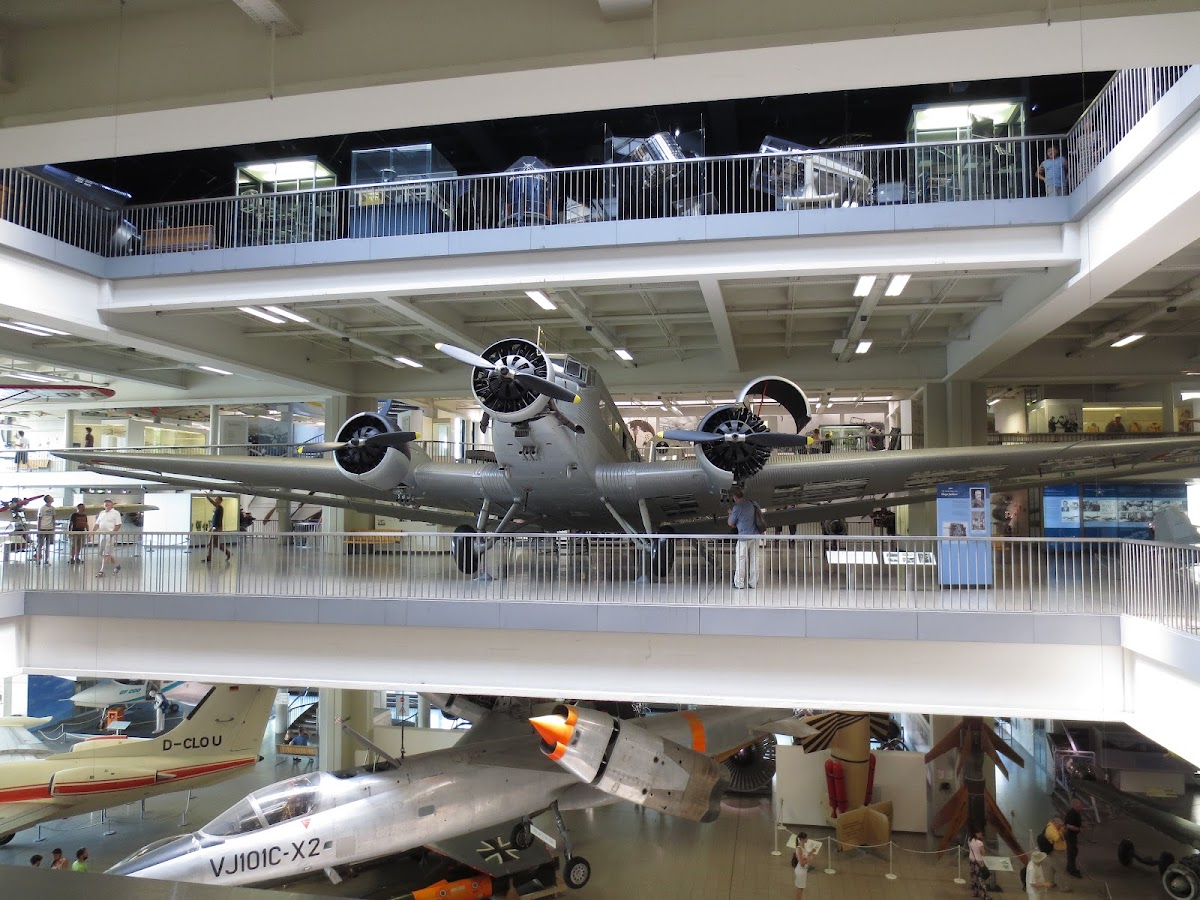
- Aerospace Hall: Features historical aircraft like the 1909 Etrich Taube monoplane, the 1917 Junkers J9 (world's first all-metal aircraft), the 1944 Me 262 (world's first operational jet fighter), and a loaned NASA Gemini 4 spacecraft.
- Maritime Hall: Displays the original 1906 U-1, Germany's first military submarine, which visitors can walk through.
- Planetarium: The world's oldest continuously operating modern planetarium, built in 1928, hosts daily star shows.
- Energy Hall: Showcases the world's first AC generator (1891), reconstructed early nuclear experiment setups, and a popular hourly lightning show in the high-voltage laboratory.
- Mining Exhibition: A 1:1 scale recreation of coal, iron, and salt mine tunnels across two underground levels, offering a 600-meter immersive experience of mining history.
Visitor Information
Admission is €15 for adults and €8 for students; children under 6 enter free. The museum is open daily from 09:00 to 17:00, closed on December 24, 25, 31, and January 1. A minimum of 4-5 hours is recommended for a core visit, with a full day needed for comprehensive exploration. The nearby Isar River offers pleasant walks, and the Deutsches Museum Verkehrszentrum (Transport Centre) is a 10-minute walk away, featuring collections of German cars and locomotives.
Visitor Info
| Translating | Translating |
| Area | Translating |
| Admission | Translating |
| Hours | Daily 09:00-17:00 |
| Getting There | Translating |
| Address | 4HHM+X8 Munich, Germany |
| Official Site | https://www.deutsches-museum.de/ |