London's 1852 Temple of Applied Arts
London's 1852 Temple of Applied Arts
At a Glance
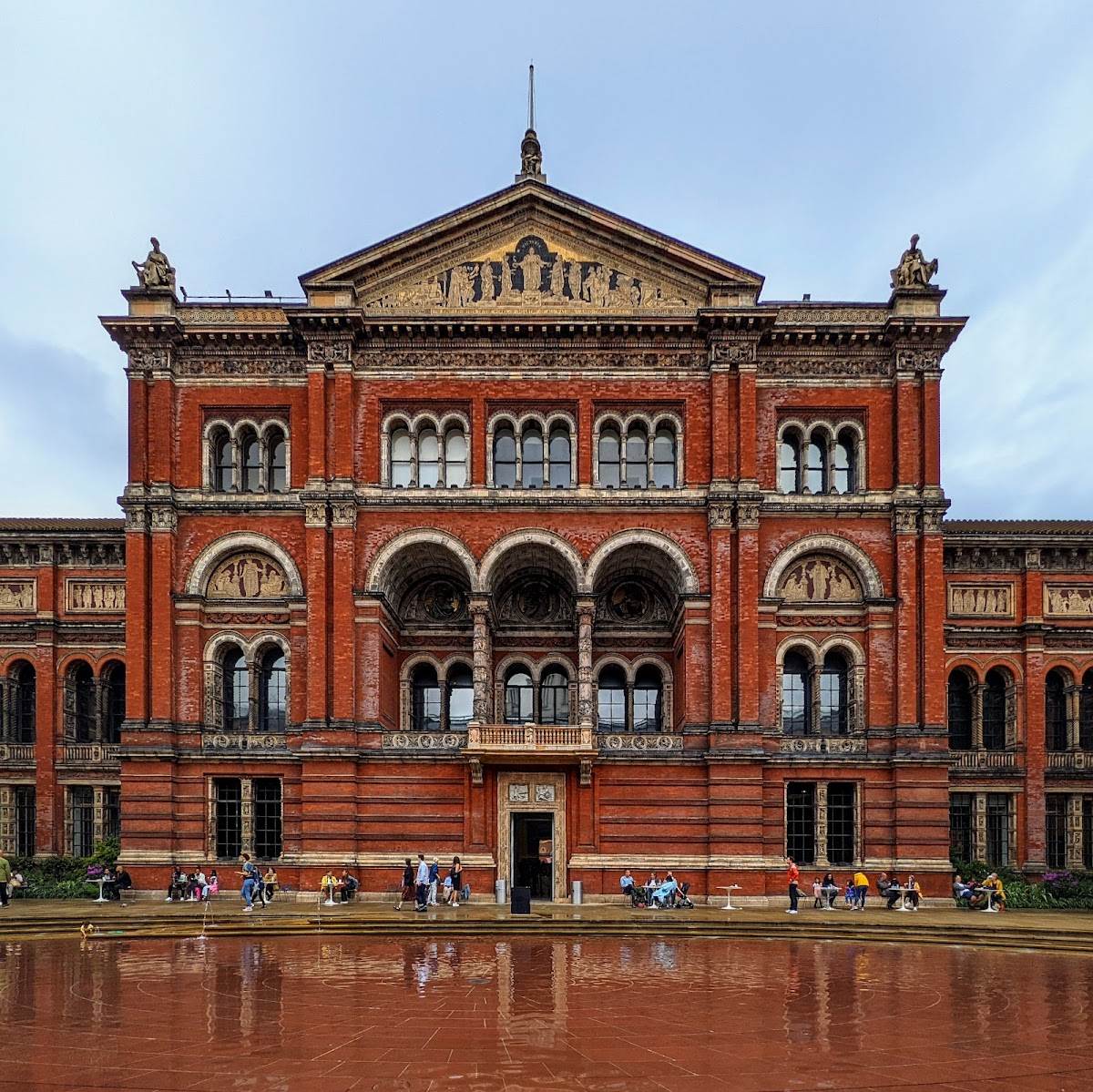
The Victoria and Albert Museum (V&A) in London's South Kensington cultural district is the world's largest museum of applied arts and design. Founded in 1852 from the profits of the 1851 Great Exhibition, it houses over 2.27 million objects across 150 galleries. Permanent exhibitions are free.
From Exhibition to Institution
Prince Albert championed the V&A's creation from Great Exhibition profits to elevate British design. Initially the "Museum of Manufactures" under Henry Cole, it was renamed by Queen Victoria in 1899, who also laid the cornerstone for the main building. Designed by Aston Webb in Italian Renaissance style, it was completed in 1909. The Sackler Courtyard, a new entrance with 11,000 ceramic tiles, opened in 2017.
Key Collections
- Cast Courts: 19th-century plaster replicas of masterpieces like Michelangelo's David.
- Fashion Gallery: Over 500 garments from the 16th century to present, featuring Dior, Westwood, McQueen, Issey Miyake.
- Raphael Cartoons: Seven monumental tapestry designs by Raphael (1515), commissioned by Pope Leo X.
- Asian and Islamic Art Galleries: Diverse artifacts including a 13th-century gilded bronze griffin, Qing porcelain, and Joseon celadon.
- Design Collection: British design artifacts post-Industrial Revolution, linked to V&A Dundee.
Visiting Tips
Access the V&A via South Kensington Tube station (3-min walk). Permanent entry is free. Open daily 10:00-17:45, with "V&A Late" on Fridays until 22:00 for a quieter experience with programs. It shares a cultural block with the Natural History and Science Museums, both also free, making it ideal for a combined visit.
Visitor Info
| Translating | Translating |
| Area | Translating |
| Admission | Translating |
| Hours | Translating |
| Getting There | Translating |
| Address | Victoria and Albert Museum (Stop M), London SW7 2RZ, UK |
| Official Site | https://www.vam.ac.uk/ |