Frankfurt's 200-Year Civic Art Museum
Frankfurt's 200-Year Civic Art Museum
Städel Museum: Frankfurt's 200-Year Civic Art Institution
The Städel Museum, officially known as the Städelsches Kunstinstitut und Städtische Galerie, is located on Holbeinstraße on the south bank of the Main River in Frankfurt am Main, Germany. It is a central institution within the Museumsufer (Museum Embankment), a cluster of museums along the river. The museum is approximately a 15-minute walk or a short tram ride (Tram 16) from Frankfurt Central Station, crossing the Holbeinsteg bridge.
Founded in 1815 by Johann Friedrich Städel (1728–1816), a wealthy banker and merchant, the museum originated from his will to donate his extensive art collection and entire fortune to the citizens of Frankfurt. This act established Germany's first civic art museum and served as a pioneering model for public art institutions across Germany, influencing the establishment of museums in Berlin, Munich, and Cologne. It stands today as one of Europe's oldest civic foundation museums.
A Comprehensive Collection Spanning 700 Years of Western Art
The Städel Museum boasts one of Germany's most significant art collections, encompassing 700 years of Western art history from Gothic to contemporary periods. Its holdings include 3,100 paintings, 660 sculptures, over 4,600 photographs, and more than 100,000 drawings and prints. The museum features approximately 7,000 m² (75,000 ft²) of exhibition space and a library with 115,000 books, underscoring its role as both a public gallery and a research institution.
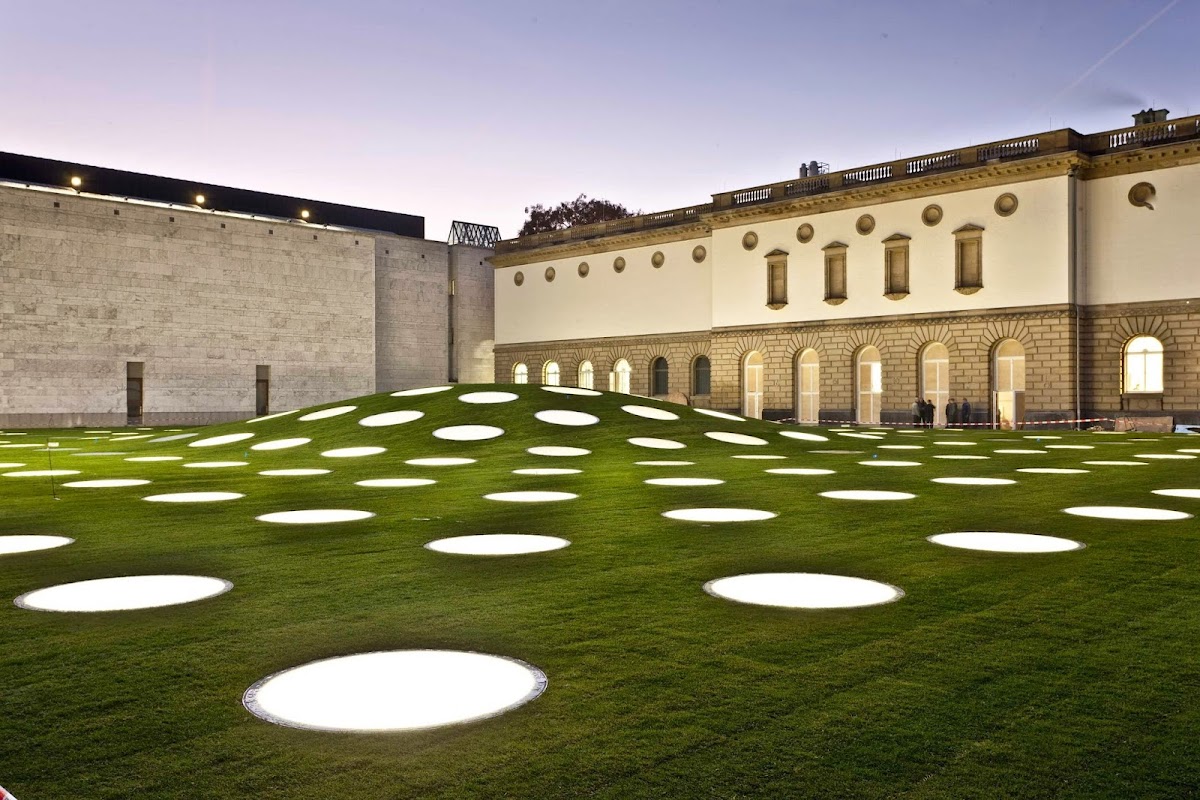
The main building, constructed in 1878 in the Neo-Renaissance style, houses the historical collections. In 2012, a contemporary art extension, designed by Schneider+Schumacher, opened beneath the museum garden. This underground wing features 195 circular skylights that allow natural light to illuminate its 3,000 m² exhibition space, creating a unique atmosphere for viewing modern and contemporary works.
Highlights of the Collection and Visitor Experience
Key masterpieces in the Städel collection include Johannes Vermeer's 〈The Geographer〉 (1669), a prime example of 17th-century Dutch painting, and Johann Heinrich Wilhelm Tischbein's 〈Goethe in the Campagna〉 (1787), an iconic image in German literature and art. The museum also holds a substantial collection of Albrecht Dürer's prints, including the 〈Dresden Altarpiece〉, alongside works by Flemish masters like Jan van Eyck and Rogier van der Weyden.
The chronological arrangement of works, from medieval to Baroque masters such as El Greco, Raphael, and Caravaggio, allows visitors to trace 500 years of Western painting. The contemporary wing showcases large-scale installations by artists like Gerhard Richter, Sigmar Polke, On Kawara, and Jenny Holzer. A visit typically takes 2.5 to 3 hours.
Visitor Information and Cultural Events
The Städel Museum is open Tuesday to Sunday. Hours are 10:00-18:00 on Tuesday, Wednesday, Thursday, Saturday, and Sunday, with extended hours until 21:00 on Friday. It is closed on Mondays. Admission to the permanent collection is free, while special exhibitions may have a fee. For specific pricing, checking the official website is recommended.
As part of the Museumsufer, the Städel is surrounded by other cultural institutions. The Museumsufer Ticket (€22) offers two-day access to all participating museums. Annually, the Museumsuferfest, one of Europe's largest cultural festivals, takes place along the Main River, and the Städel Museum's Night offers late-night openings with special programs in the autumn. The museum's digital platform, Städel Digital, provides free access to high-resolution images, audio guides, and documentaries, including an Online Emmy-winning film on Vermeer.
Visitor Info
| Translating | Translating |
| Area | Translating |
| Admission | Free or Special exhibitions paid |
| Hours | Tue-Sun 10:00-18:00. Closed Mon |
| Address | Holbeinsteg, Holbeinstraße, 60596 Frankfurt am Main, Germany |
| Official Site | https://www.staedelmuseum.de |