Berlin's Station Turned Contemporary Art Museum
Berlin's Station Turned Contemporary Art Museum
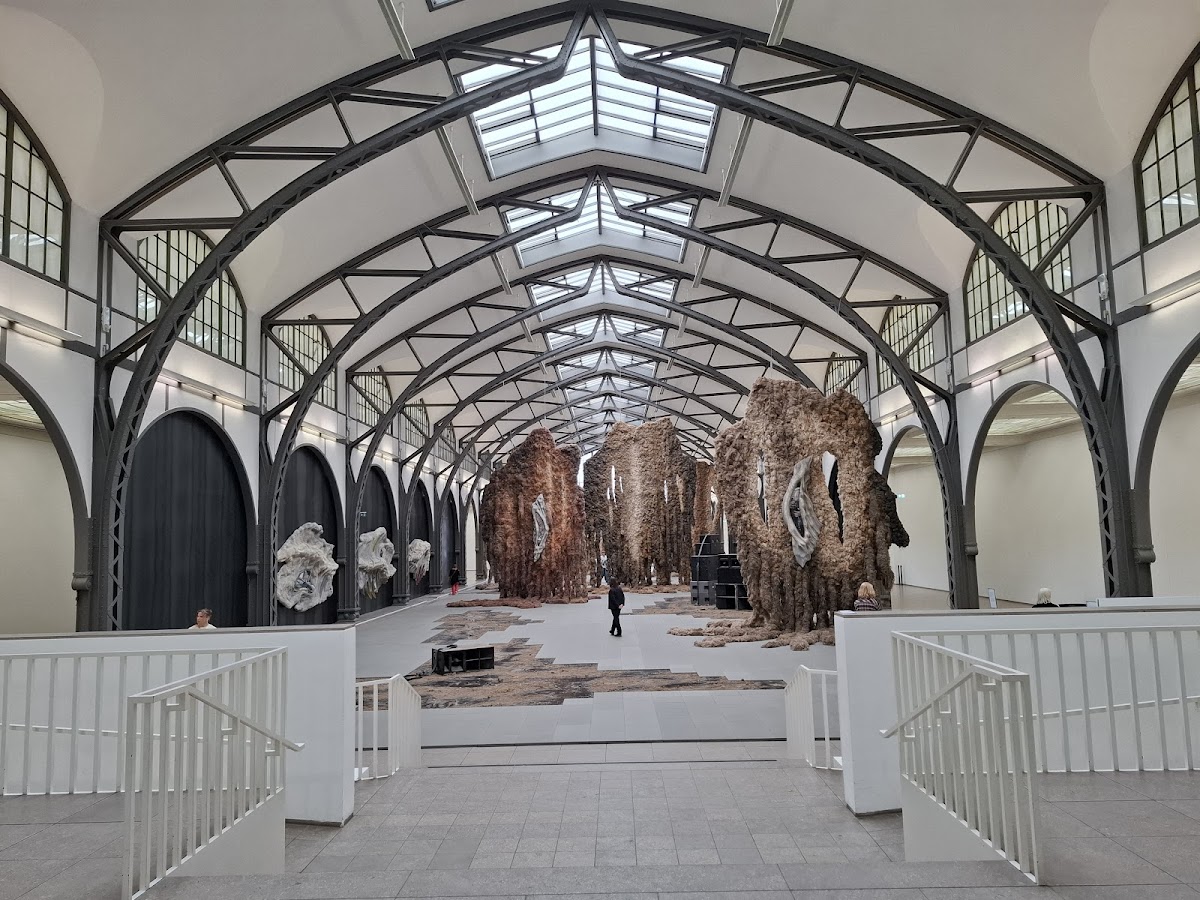
Hamburger Bahnhof – Nationalgalerie der Gegenwart is a prominent contemporary art museum located at Invalidenstraße 51, 10557 Berlin, Germany. Situated a 5-minute walk northwest of Berlin Hauptbahnhof (Central Station), it occupies the former terminus of the Berlin-Hamburg Railway, originally built in 1847. This historic building, one of Germany's oldest surviving railway stations, was transformed into a museum and officially opened in 1996.
From 19th-Century Railway Hub to Modern Art Center
Constructed in 1847, Hamburger Bahnhof served as a vital connection between Berlin and Hamburg. After its closure in 1906, the building saw various uses, including a traffic museum, before suffering damage during World War II. Following German reunification, the need for a major contemporary art institution in Berlin led to its renovation, beginning in 1989. Architect Josef Paul Kleihues spearheaded the project, carefully preserving the 19th-century steel framework and the iconic arched platform roof, intentionally retaining some war scars as a historical testament.
Key Collections and Architectural Evolution
The museum houses approximately 1,500 works and is a key venue for contemporary art within the Staatliche Museen zu Berlin. It prominently features the 'Sammlung Marx' (Marx Collection) and the 'Flick Collection.' The Marx Collection includes significant works like Andy Warhol's large-scale 'Mao' silkscreen series. The 'Flick Collection,' a private collection of around 2,500 works, has been on long-term loan since 2004, showcasing large-scale installations by artists such as Bruce Nauman and Paul McCarthy.
In 2004, the 'Rieck Hall,' a former freight warehouse, was added, extending the exhibition space by over 300 meters. This expansion allowed for even larger installations and diverse exhibitions. The main platform hall frequently hosts monumental, single-installation exhibitions (Hall for Contemporary Art) by renowned artists like Olafur Eliasson, Doris Salcedo, and Hito Steyerl, leveraging the building's unique architectural volume.
Highlights: Beuys, Warhol, Richter, Kiefer
- Joseph Beuys Archive: A permanent exhibition featuring hundreds of works, drawings, and objects by the influential German conceptual artist.
- Andy Warhol's 'Mao' Series: Large silkscreens from 1972-1973, a highlight of the Marx Collection.
- Gerhard Richter and Sigmar Polke: Works by these pillars of post-war German art, including Richter's '1024 Colors' (1973) and Polke's raster paintings.
- Anselm Kiefer's 'Wolkenstum': A monumental lead and ash installation situated in the central platform hall, reflecting themes of German history and mythology.
Visitor Information and Unique Experiences
Hamburger Bahnhof is easily accessible, located a 5-minute walk from Berlin Hauptbahnhof. Recommended viewing time is 2.5 to 3 hours. The museum is closed on Mondays. Operating hours are Tuesday-Friday 10:00-18:00 (Thursday until 20:00), and Saturday-Sunday 11:00-18:00. Admission is 14€ for adults and 7€ for students, with free entry on the first Sunday of each month. A Berlin State Museums pass (29€) allows access to five museums.
A unique annual event is the 'Long Night of the Museums' in August, where Hamburger Bahnhof, due to its railway station character, becomes a central hub. The main platform transforms into a vibrant space with performances, video installations, and DJ sets, offering a dynamic cultural experience. The museum's proximity to Museum Island (a 15-minute walk) allows visitors to combine classical and contemporary art experiences within Berlin.
Visitor Info
| Translating | Translating |
| Area | Translating |
| Admission | Translating |
| Hours | Translating |
| Getting There | Translating |
| Address | Invalidenstraße 51, 10557 Berlin, Germany |
| Official Site | https://www.smb.museum/museen-einrichtungen/hamburger-bahnhof |