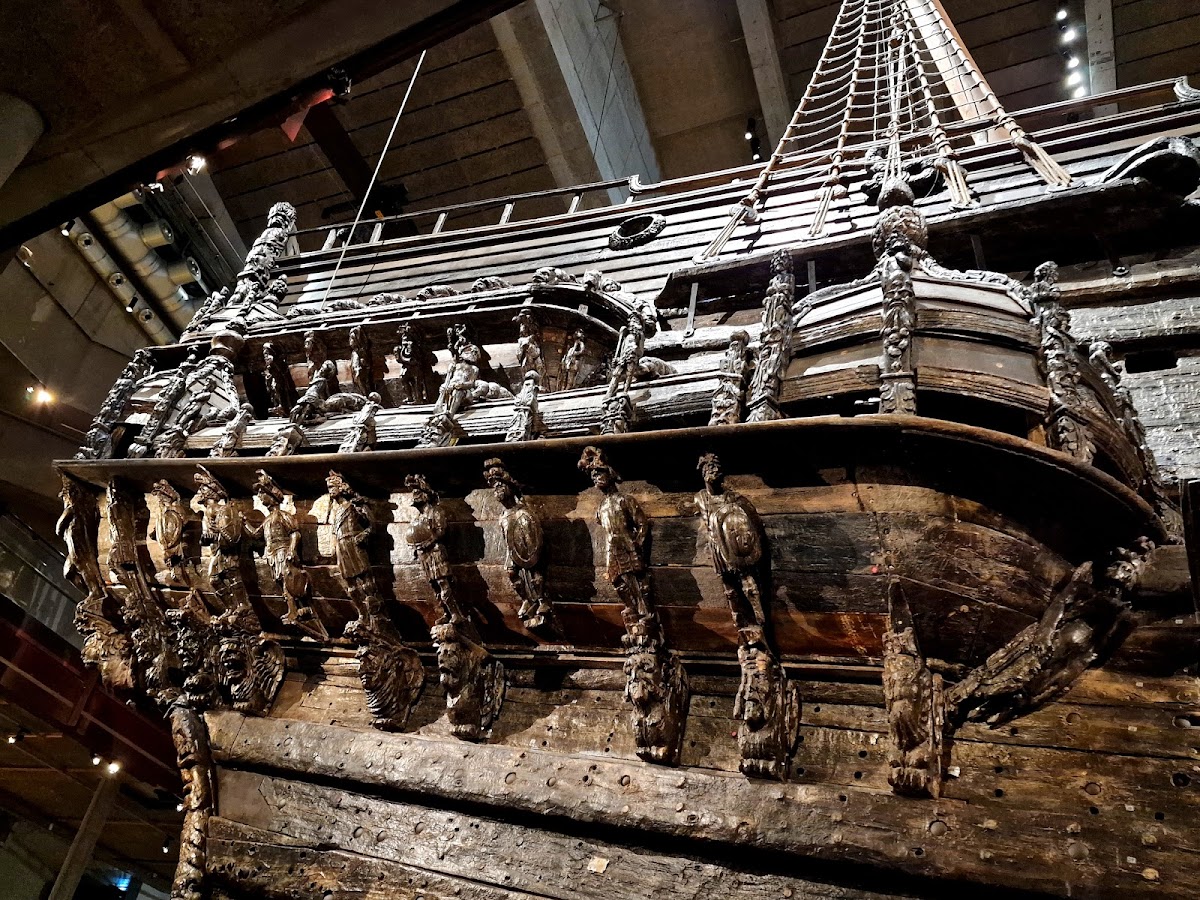
Stockholm's Raised 17th-Century Warship
Stockholm's Raised 17th-Century Warship
The Vasa Museum: A 17th-Century Warship's Revival
Located on Djurgården island in Stockholm, Sweden, the Vasa Museum houses the remarkably preserved 17th-century warship, Vasa. This unique maritime museum opened in 1990, 333 years after the Vasa sank on its maiden voyage in 1628. The museum building itself is distinctive, with three masts piercing its roof, hinting at the grand vessel within. It is Sweden's most visited museum, attracting approximately 1.3 million visitors annually, and is celebrated as a triumph in marine archaeology.
A King's Ambition, A Tragic Maiden Voyage
The Vasa was built under the command of King Gustav II Adolf, intended to be a symbol of Sweden's naval power in the Baltic Sea. Despite its impressive size—69 meters long, 52 meters high, and weighing about 1,200 tons with 64 cannons—the ship suffered from critical design flaws, being too tall and narrow for stability. On August 10, 1628, the Vasa set sail from Stockholm harbor but capsized after traveling only 1.3 kilometers due to a sudden gust of wind, resulting in the loss of about 30 lives among the 450 people on board.
333 Years Underwater: A Miraculous Preservation
The Vasa lay submerged in the cold, brackish waters of the Baltic Sea for 333 years. This unique environment, lacking shipworms and oxygen, allowed the wooden hull to be preserved to an astonishing 95% of its original state. In 1956, amateur marine archaeologist Anders Franzén located the wreck, leading to a monumental salvage operation on April 24, 1961, which was broadcast globally. Following its recovery, the ship underwent 17 years of pioneering conservation treatment using polyethylene glycol (PEG) to replace the water in its timber, a process crucial for its long-term survival.
Key Exhibitions and Ongoing Conservation
The museum's main hall offers six viewing levels around the colossal Vasa hull, allowing visitors to appreciate its scale and intricate details. Over 500 original wooden sculptures, including lions, monsters, and royal crests, adorn the ship, providing a vivid glimpse into 17th-century artistry and royal grandeur. Other significant exhibits include the remains and personal effects of the crew members, offering intimate insights into the daily lives of ordinary people from that era. A 1:10 scale model, restored to its original vibrant colors, allows comparison with the ship's current muted appearance.
The Vasa's preservation is an ongoing scientific endeavor. The "Vasa Project 2020" continuously monitors and treats the 8,500 tons of timber, which faces micro-acidic corrosion. Visitors can observe this work through a glass partition at the Conservation Lab on the third floor, highlighting the museum's role not just as an exhibition space but as an active research and preservation site.
Visitor Information and Surrounding Attractions
The Vasa Museum is open daily from 10:00 to 17:00, with extended hours until 20:00 on Wednesdays. Admission is 190 SEK for adults, and children under 18 enter free. A visit of approximately two hours is recommended. The museum's location on Djurgården island makes it an ideal part of a day trip, easily combined with nearby attractions such as the ABBA Museum, Skansen Open-Air Museum, and the Nordic Museum, with the ABBA Museum and Skansen just a 5-minute walk away.
Visitor Info
| Translating | Translating |
| Area | Translating |
| Admission | Translating |
| Hours | Translating |
| Getting There | Translating |
| Address | Galärvarvsvägen 14, 115 21 Stockholm |
| Official Site | https://www.vasamuseet.se |