A Savoy Palace Turned Italy's First Contemporary Museum
A Savoy Palace Turned Italy's First Contemporary Museum
Castello di Rivoli — A Savoy Palace Transformed into Italy's First Contemporary Art Museum
Castello di Rivoli Museo d'Arte Contemporanea is located in Rivoli, approximately 15 km west of Turin, Italy. Situated on the Rivoli hill, the castle offers panoramic views of the Po Valley and the Alps. Originally a 10th-century Lombard military fortress, it was expanded into a grand residence for the House of Savoy between the 17th and 18th centuries. Today, it stands as one of the 12 UNESCO World Heritage 'Residences of the Royal House of Savoy'. In December 1984, it reopened as Italy's first national contemporary art museum, creating a unique dialogue between historical Baroque architecture and modern art.
A History of Grandeur and Abandonment
The castle suffered significant damage during the War of the Spanish Succession in 1693. In the early 18th century, Vittorio Amedeo II of Savoy commissioned Filippo Juvarra, a leading Baroque architect, to rebuild and expand the castle into a magnificent palace. Juvarra's ambitious plans included the 'Manica Lunga', a 147-meter-long wing intended for royal stables and galleries. However, due to financial constraints and political shifts, the expansion was halted in 1734, leaving much of the palace, including the Manica Lunga, in an unfinished state. By the early 20th century, the castle was largely abandoned and fell into disrepair.
From Ruin to Contemporary Art Hub
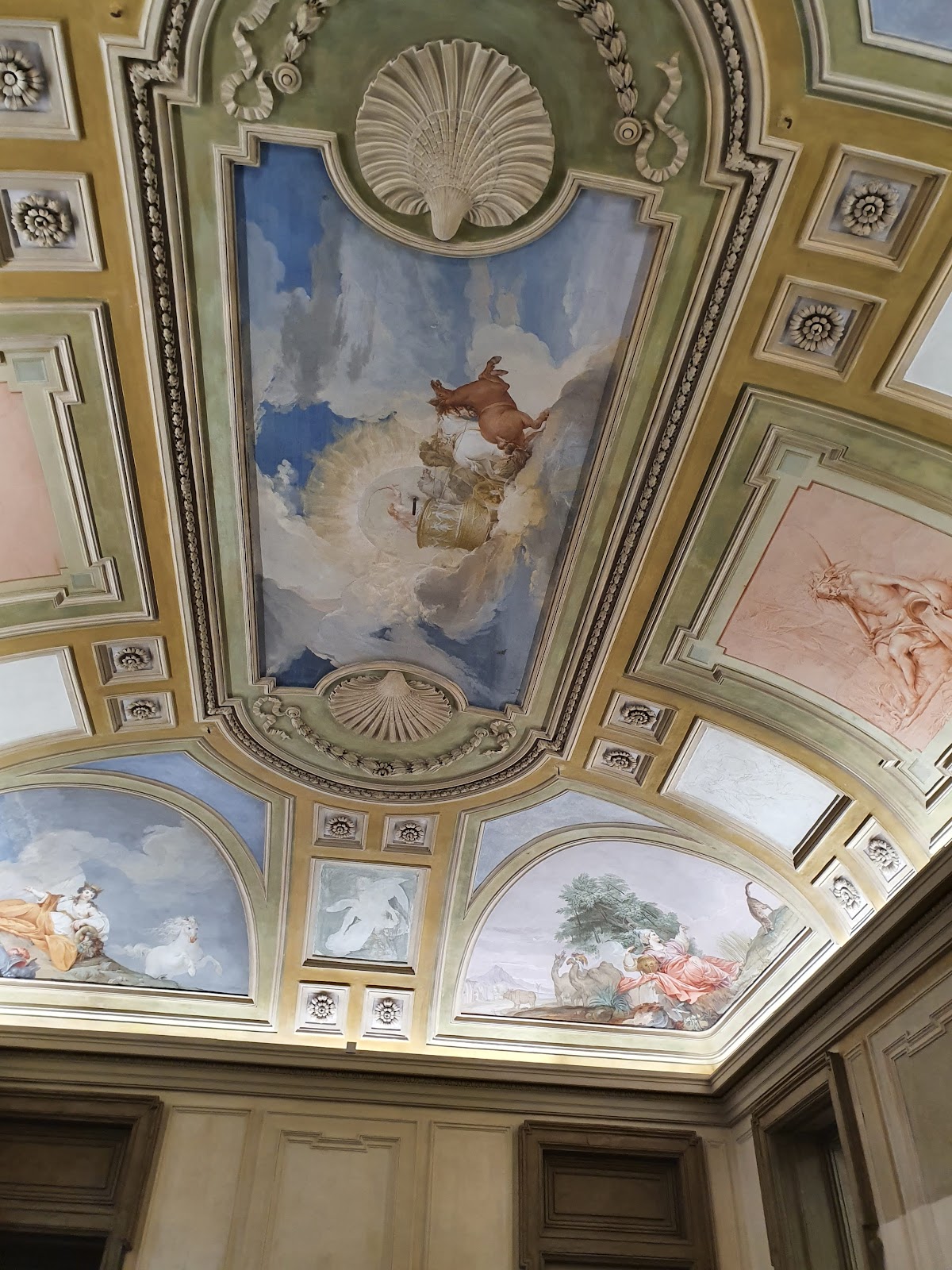
In 1978, the Piedmont Region and the Italian Ministry of Culture decided to transform the historical ruin into a contemporary art museum. Architect Andrea Bruno undertook the renovation from 1979 to 1984, adhering to a 'minimal intervention' principle. This approach preserved the castle's original Baroque frescoes and marble decorations while subtly integrating modern exhibition functionalities. The result is a striking visual contrast where 21st-century installation art coexists with 17th-century royal ceilings, defining the museum's identity.
Home to Arte Povera and Key Collections
Castello di Rivoli quickly became a pivotal center for Arte Povera, an Italian art movement of the late 1960s that challenged consumerism by using everyday, 'poor' materials like earth, stone, and wood. Founding director Rudi Fuchs and subsequent director Ida Gianelli fostered strong relationships with Arte Povera artists, encouraging them to create site-specific installations within the historical palace rooms. The museum's collection comprises approximately 1,100 works, with a strong focus on Arte Povera artists such as Giovanni Anselmo, Michelangelo Pistoletto, Mario Merz, and Giuseppe Penone, whose works often incorporate natural materials that change over time.
Highlights and Unique Spaces
- Maurizio Cattelan's 〈Novecento〉 (1997): A taxidermied horse suspended from the main hall's Baroque ceiling, offering a powerful commentary on life, death, and history.
- Manica Lunga: This 147-meter-long unfinished wing now serves as a dedicated space for large-scale solo exhibitions, having hosted works by artists like Louise Bourgeois, Sophie Calle, and Anish Kapoor.
- CRAA (Cerruti Baraggia Collection): Housed in the separate Villa Cerruti, this private collection, acquired in 2019, features around 300 works ranging from 16th-century paintings to 20th-century modernism. Viewing is by appointment for small groups.
- Gian Milani Open Pavilion: The palace gardens feature eight outdoor sculptures, accessible to the public free of charge, blending art with the natural landscape.
Visitor Information
The museum is located at Piazzale Mafalda di Savoia, 2, 10098 Rivoli TO, Italy. It can be reached from Turin Porta Susa station by Bus 36 (approx. 40 minutes) or taxi (approx. 30 minutes). Admission is €10 for adults and €6.50 for students. The museum operates from Wednesday to Friday (10:00 AM - 5:00 PM) and Saturday to Sunday (11:00 AM - 6:00 PM), remaining closed on Mondays and Tuesdays. A visit of approximately 2 hours is recommended. For the latest information, including details on the Villa Cerruti collection (which requires prior booking), visitors should consult the official website: https://www.castellodirivoli.org. The eastern balcony of the main castle offers breathtaking panoramic views, allowing visitors to appreciate the strategic choice of this royal residence.
Visitor Info
| Translating | Translating |
| Area | Translating |
| Admission | Adult 10€ / Student 6.50€ |
| Hours | Translating |
| Getting There | Translating |
| Address | Piazzale Mafalda di Savoia, 2, 10098 Rivoli TO, Italy |
| Official Site | https://www.castellodirivoli.org |