Naoshima Deep Dive — Lee Ufan, Benesse House, Chichu and Ando's Island
Naoshima Deep Dive — Lee Ufan, Benesse House, Chichu and Ando's Island
Naoshima's Location — An Art Island in the Seto Inland Sea
Naoshima, a small island of approximately 14.22 km² in Japan's Kagawa Prefecture, is situated in the Seto Inland Sea, about 13 km south of Takamatsu City. It serves as a hub for contemporary art, often referred to as an "Art Island." The island's west coast hosts Miyanoura Port, connecting it to Uno Port in Okayama Prefecture and Takamatsu Port in Kagawa Prefecture via ferry. Major museums are dispersed across the island's hillsides and coastlines, roughly 2-3 km east of Miyanoura Port.
Benesse Art Site Naoshima — Fukutake Foundation's Vision
The transformation of Naoshima into an art destination began in the early 1990s with the 'Benesse Art Site Naoshima' project, spearheaded by the Fukutake Foundation. This initiative aimed to revitalize the island's landscape by integrating nature, architecture, and art. Architect Tadao Ando designed most of the key facilities, earning Naoshima the moniker "open-air museum of Ando architecture." His signature use of exposed concrete, geometric forms, and natural light defines the island's artistic identity.
Lee Ufan Museum — Mono-ha Philosophy in Underground Architecture
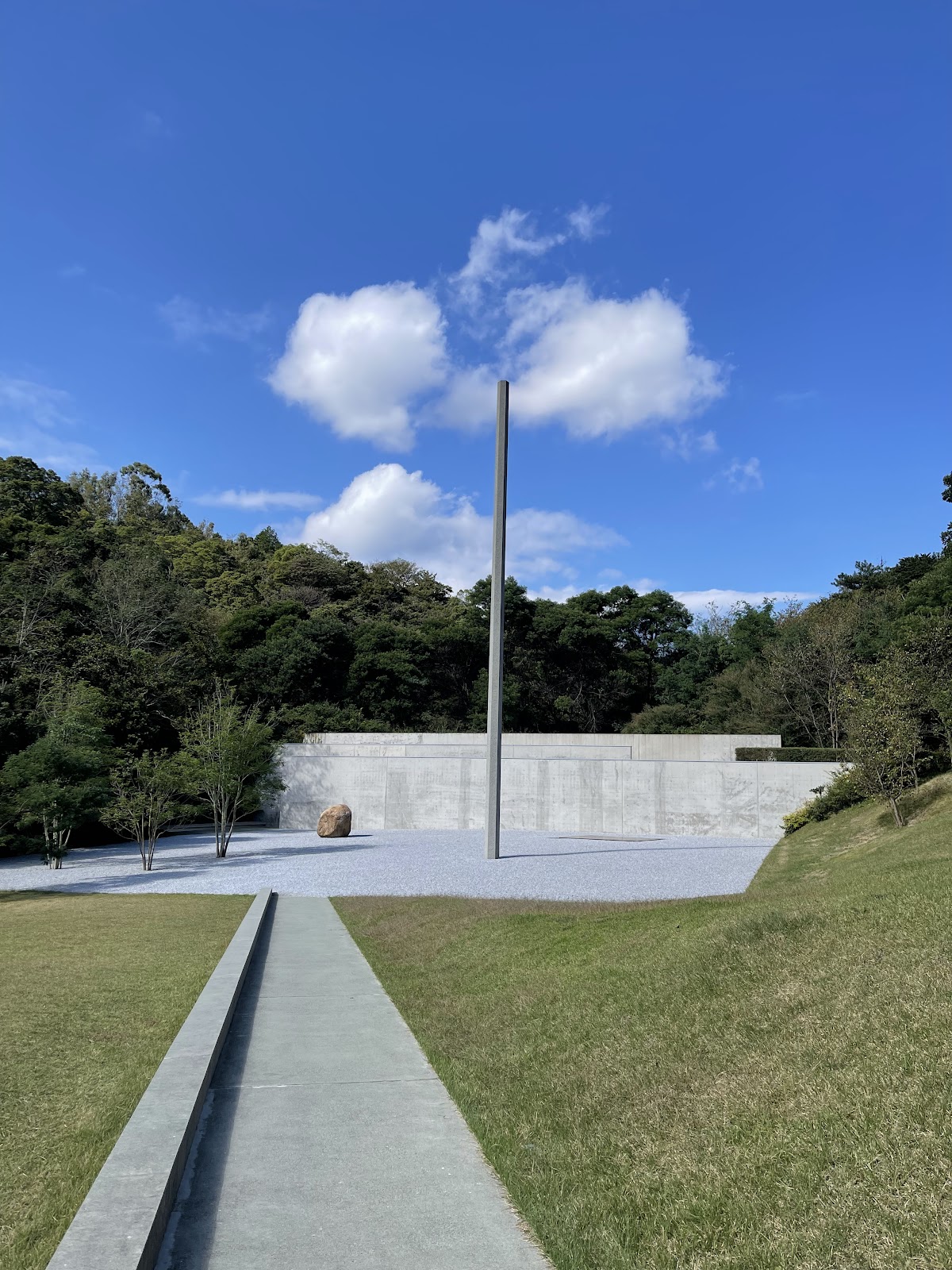
Opened in 2010, the Lee Ufan Museum is dedicated to the works of Korean artist Lee Ufan, a central figure in the Mono-ha movement. Designed by Tadao Ando, the museum is largely subterranean, engaging minimally with the external environment. This design choice highlights Lee Ufan's philosophical approach to materials, space, and relationships, particularly showcased in his "Relatum" series of sculptures and paintings. Admission is ¥1,050 for adults, free for those under 15, and the museum is open Tuesday to Sunday from 10:00 AM to 5:00 PM.
Benesse House Museum — A Hotel-Museum Hybrid
The Benesse House Museum, which opened in 1992, marked the beginning of the Naoshima project. This unique facility combines a hotel with a museum, offering guests the privilege of experiencing art privately after midnight. Its collection features permanent installations by artists such as Claude Monet, Jackson Pollock, and Hiroshi Sugimoto. Beyond the museum walls, various outdoor sculptures are integrated into the surrounding coastline and walking paths. Admission to the museum is ¥1,300.
Chichu Art Museum — Subterranean Art Illuminated by Nature
The Chichu Art Museum, opened in 2004 and also designed by Tadao Ando, is entirely subterranean, blending seamlessly into the island's natural topography. The museum's name, meaning "in the earth," reflects its design, which relies solely on natural light to illuminate its collection. This creates a dynamic viewing experience where the appearance of the artworks changes with the time of day and weather conditions. The museum primarily exhibits works by Claude Monet (including four large "Water Lilies" paintings), James Turrell, and Walter De Maria.
Located at FX2M+44 Naoshima, Kagawa, Japan, the Chichu Art Museum operates Tuesday to Sunday from 10:00 AM to 5:00 PM, with Mondays closed. Admission is ¥2,100, and online reservation specifying date and time is mandatory due to high demand, especially during peak seasons. A visit typically takes 1.5 to 2 hours, with early morning often recommended for optimal viewing of Turrell's light installations.
Art House Project and Outdoor Sculptures — Art Across the Island
Beyond the main museums, Naoshima's art extends to the Honmura district, where the 'Art House Project' transforms six traditional houses into unique art installations. Visitors can explore these renovated homes, discovering art integrated into everyday spaces. Additionally, Yayoi Kusama's iconic outdoor sculptures, the "Red Pumpkin" near Miyanoura Port and the "Yellow Pumpkin" along the path to Benesse House Museum, serve as popular photo spots and symbols of Naoshima's artistic identity.
Planning Your Visit — Recommended Itinerary and Essential Information
A minimum of a 2-day, 1-night itinerary is recommended to fully experience Naoshima. Ferries from Takamatsu (50 min) or Uno (20 min) arrive at Miyanoura Port. On-island transportation includes shuttle buses and bicycle rentals (approx. ¥500/day), which are convenient given the 2-3 km distances between major art sites. There is no combined ticket; individual reservations are required for each institution. The best times to visit are spring (April-May) and autumn (October-November) for pleasant weather. The Setouchi Triennale, held every three years, significantly increases visitor numbers, but 2025 is a non-Triennale year, offering a quieter experience. Combining Naoshima with nearby Teshima and Inujima islands creates a comprehensive "Seto Inland Sea Art Island 3-day course."