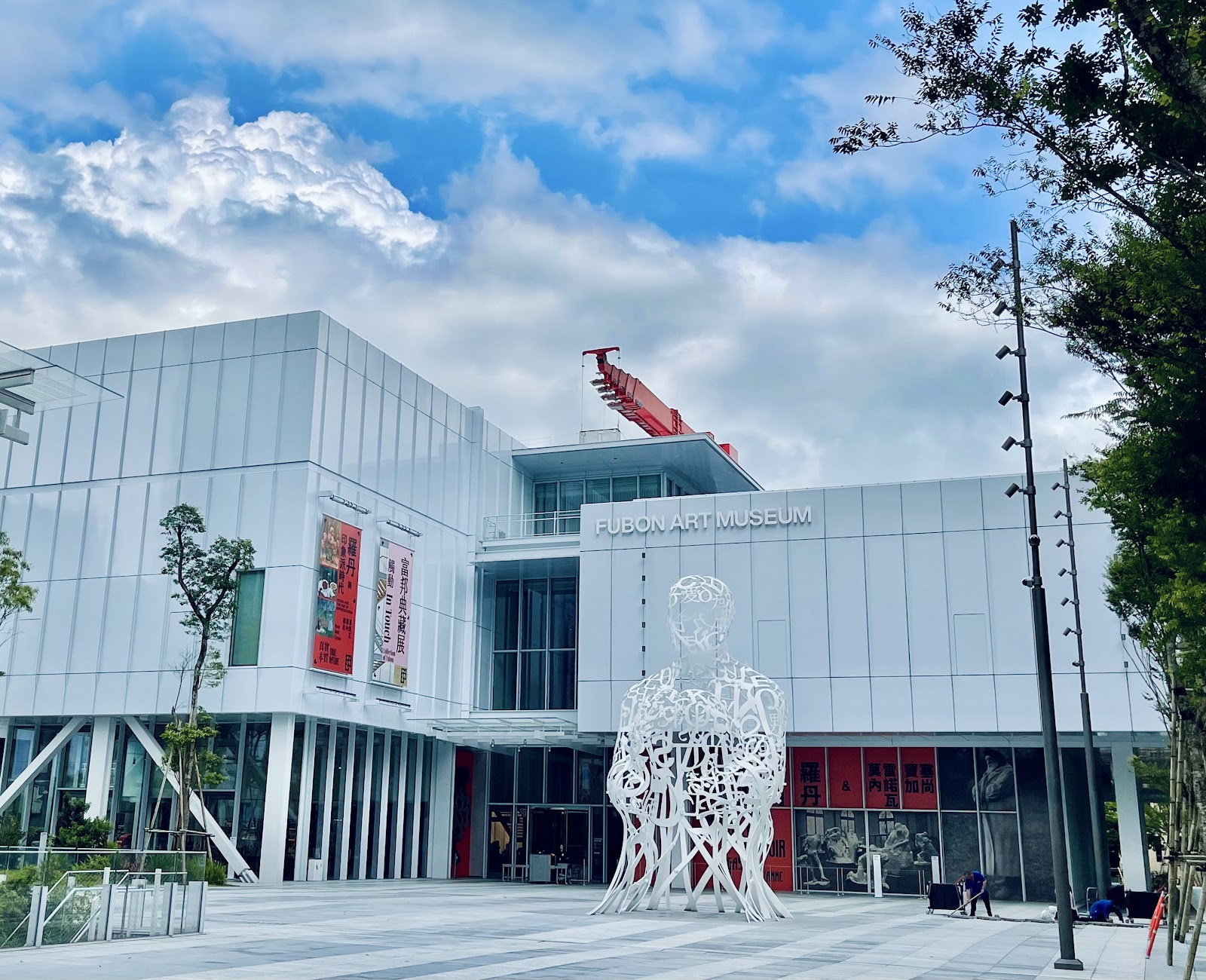
White Light Settling in an Urban Forest
White Light Settling in an Urban Forest
Fubon Art Museum in Taipei's Xinyi District
Fubon Art Museum opened in 2024 in Xinyi, the Taipei district known for Taipei 101, civic buildings, shopping centres, and dense high-rise development. The museum does not compete through height. A low white structure sits among trees, water, and pedestrian space, creating a pause within one of the city's busiest commercial areas.
The museum forms part of the Fubon A25 complex but addresses the street as a public cultural destination. Visitors cross the landscape before reaching the entrance, so art begins outside with changing reflections, shade, and outdoor sculpture.
Renzo Piano's First Project in Taiwan
The building was designed and supervised by Renzo Piano Building Workshop together with Taiwanese architect Kris Yao's firm, KRIS YAO | ARTECH. It is RPBW's first completed project in Taiwan. The collaboration had to connect Piano's long experience with museums to Taipei's strong sun, rain, vegetation, and urban intensity.
Rather than presenting architecture as a monument, the design gives priority to art, visitors, and public space. Light materials, glass, and slender structural elements reduce the visual weight of the building. Its calm horizontal profile offers a deliberate contrast to the towers around it.
An Urban Forest Around the Museum
RPBW described the landscape as an urban forest. Large areas were left for trees, greenery, water, and places where people can remain without an exhibition ticket. The museum therefore begins as part of the city rather than behind a controlled threshold.
This landscape will change as trees mature. A newly opened museum often looks complete in architectural photographs, but a garden needs seasons and time. Fubon's public identity will be shaped not only by exhibitions but also by how the surrounding space becomes part of daily life in Xinyi.
Six-Metre Galleries Without Columns
Inside, major galleries rise about six metres and avoid columns that would interrupt the floor. Large paintings, sculpture, and installations can be arranged with flexible walls and routes. One exhibition may divide the hall into concentrated rooms, while another can open long views across several works.
This flexibility is not empty spectacle. Different media demand different distances, light levels, and environmental controls. The architecture provides a stable framework, while curators repeatedly change walls, circulation, and density to fit each project.
Daylight Filtered from Above
Layered skylights bring softened daylight into the third-floor galleries. Direct sun must be controlled to protect art, yet the building does not erase the weather outside. Bright and cloudy days leave subtle differences in the walls and floor, giving time a place inside the museum.
Glass curtain walls reconnect visitors with trees, nearby buildings, and people crossing the plaza. Looking outside between works releases visual concentration and restores a sense of location. The gallery is protected from the city without becoming detached from it.
The Red Crane on the Roof
A bright red mechanical crane sits above the otherwise restrained building. It may look like unfinished construction, but it is an intentional architectural signal. The crane recalls the movement, lifting, and technical labour required to bring changing exhibitions into a museum.
Art museums depend on loading, rigging, conservation, climate control, and installation teams that visitors rarely see. By allowing a piece of this industrial language to remain visible, the building presents itself as a working institution rather than a static white monument.
The Fubon Collection and International Exchange
The museum opened with a major presentation of the Fubon Collection, bringing works gathered over time into a public setting. Artists such as Sanyu, Zao Wou-ki, and Yun Gee help trace modern Chinese and diasporic painting across Paris, the United States, and East Asia. Their work resists a simple division between Eastern and Western art.
Fubon also began an institutional relationship with the Los Angeles County Museum of Art. Its inaugural international exhibition drew on LACMA holdings to connect Rodin with Impressionism. Such cooperation can support loans, research, education, and new comparisons between Taiwan's art history and international collections.
Art Begins in the Plaza
Spanish artist Jaume Plensa's large outdoor sculpture Light and Love stands in the public area. The approximately eight-metre figure can be encountered without entering the galleries. From different angles, its surface and openings frame towers, trees, and sky.
Outdoor art expands the museum beyond ticketed rooms. It can be seen during a commute, shopping trip, or evening walk, allowing repeated familiarity rather than a single formal visit. The sculpture, urban forest, and museum facade form one changing composition.
Planning a Taipei Art and Architecture Visit
Fubon Art Museum is accessible from Taipei City Hall and Taipei 101/World Trade Center MRT stations. Current opening hours are 11:00 to 18:00, with final admission at 17:30 and closure on Tuesdays. Ticket prices vary by exhibition and should be confirmed on the official site.
Allow ninety minutes to two hours for the galleries and more time for the plaza. The museum fits naturally into a Xinyi architecture walk. Its value lies not only in a new Renzo Piano building or a high-profile exhibition, but in watching a young art institution establish relationships with Taiwanese artists, international museums, and the surrounding city.
Visit Info
- Address: No. 79, Songgao Road, Xinyi District, Taipei City 110, Taiwan
- Hours: 11:00-18:00, 입장·발권 마감 17:30. 화요일 휴관
- Fee: 전시별 상이, 공식 온라인·현장 티켓 안내 확인
- Transport: 타이베이 MRT 시정부역 또는 타이베이101·세계무역센터역에서 신이구 방향 도보
- Time needed: 약 1시간 30분-2시간, 신이구 건축·공공미술 산책과 함께 보면 반나절
- Website: https://www.fubonartmuseum.org/
Visitor Info
| Address | No. 79, Songgao Road, Xinyi District, Taipei City 110, Taiwan |
| Hours | Translating |
| Admission | Translating |
| Getting There | Translating |
| Duration | Translating |
| Translating | https://www.fubonartmuseum.org/ |