Where Tadao Ando Folded Light into a Triangle in Taichung
Where Tadao Ando Folded Light into a Triangle in Taichung
Asia University Museum of Modern Art in Taichung
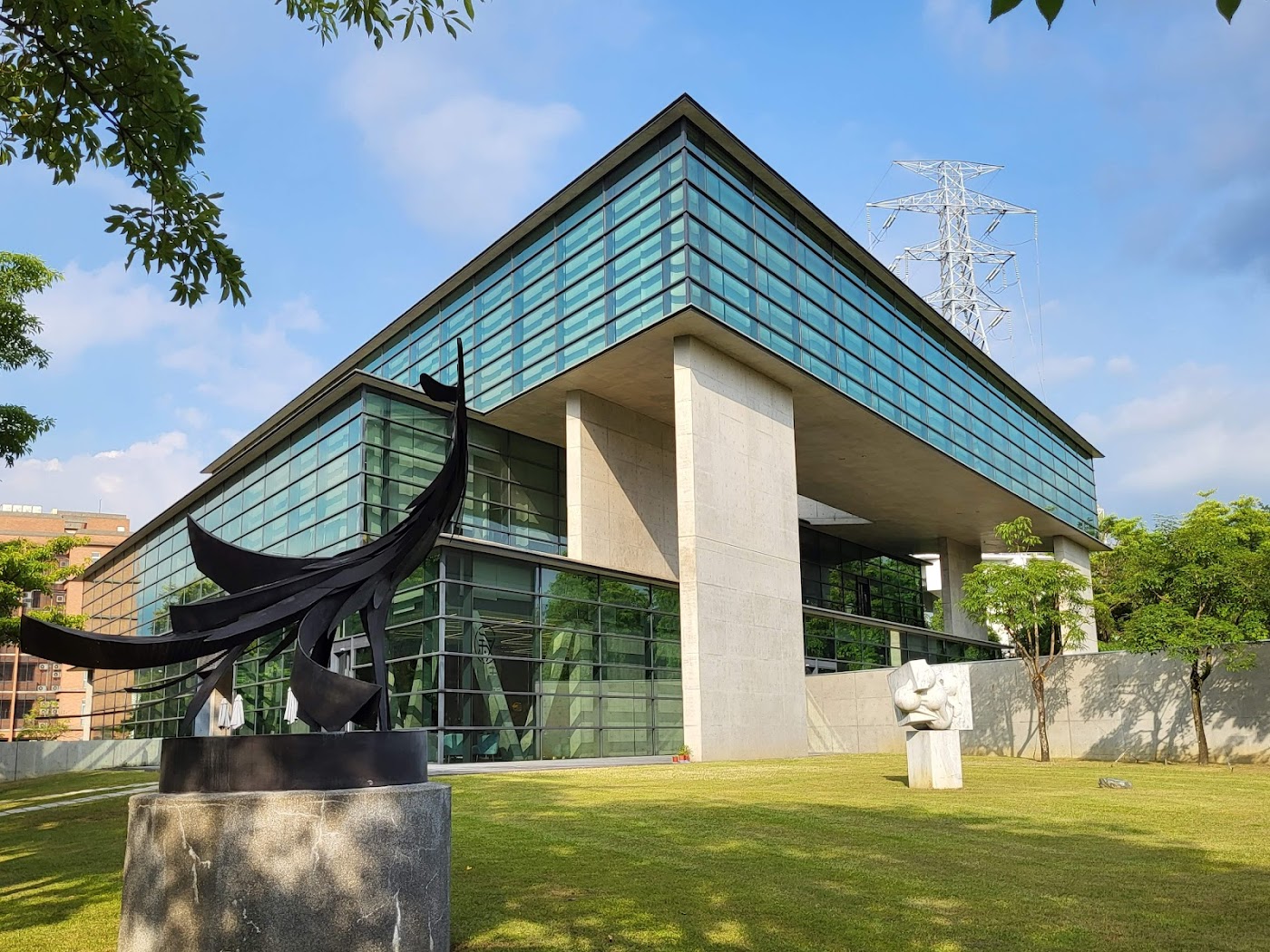
Asia University Museum of Modern Art stands inside the university campus in Wufeng, south of central Taichung. A long band of glass first makes it resemble a floating rectangular box, but walking around the corners reveals shifted triangular plans and sharply different profiles. It is a building that must be assembled through movement.
The museum places art within daily campus life rather than isolating it in a separate cultural district. Students pass sculpture, shadow, glass, and concrete on the way to classes. Residents, architecture visitors, and specialist audiences share the same galleries, turning the institution into a common room for disciplines that might otherwise remain apart.
Tadao Ando's First Building in Taiwan
Asia University commissioned Tadao Ando in May 2007, and the museum opened in 2013 after a development period of roughly six and a half years. It is Ando's first completed architectural work in Taiwan. His familiar vocabulary of exposed concrete, controlled light, and carefully paced circulation responds here to a university setting and Taiwan's climate.
Concrete walls appear heavy and opaque, while glass curtain walls reflect trees and reveal V-shaped structural columns. During the day the building borrows sky and landscape; after dark, interior light exposes the triangular framework. The same surface shifts between wall, window, mirror, and lantern.
Three Stacked Equilateral Triangles
The basic unit is an equilateral triangle. Instead of repeating one plan vertically, Ando displaced and stacked triangles across three floors. The museum describes the geometry as a relationship among humanity, environment, and architecture. Misalignment creates cantilevers, terraces, an atrium, shaded entrances, and gaps through which air and light move.
From a pointed corner the building can look almost flat; from a long side it becomes a substantial volume of concrete and glass. No single facade explains the whole. This changing scale turns geometry from a diagram into a sequence experienced by the body.
V-Shaped Columns and a Spiralling Route
V-shaped columns respond to the seismic demands of Taiwan while extending the triangular language into the elevations. They distribute structural forces, free wider interior zones, and remain visible behind glass. Engineering is not hidden after solving the problem; it helps visitors understand how the building stands.
Inside, the atrium connects galleries through a route described as spiralling. Stairs, corridors, and outdoor terraces offer repeated views from new heights. Bright common areas alternate with controlled exhibition rooms, giving the eye time to adjust and making the journey between artworks part of the museum experience.
Concrete, Glass, Sculpture, and The Thinker
Natural light is directed rather than simply maximized. Concrete receives light as shadow and texture, while glass reflects the campus and opens selected public zones. The position of the sun redraws corners and cantilevers throughout the day, so an architectural visit benefits from moving slowly and looking back.
The museum's official introduction highlights Auguste Rodin's The Thinker as an important work available to its educational mission. Displays can change, so visitors should treat the current exhibition, outdoor sculpture, and architecture as one evolving program. Seeing an original object in scale and space can turn an image learned in a classroom into physical knowledge.
An Art Museum as an Open University Lesson
Sculptures on the surrounding lawn remain accessible within ordinary campus circulation. Their colour and silhouettes reflect in the glass, connecting art to trees, students, and the changing weather. The threshold between ticketed gallery and public campus is therefore deliberately porous.
This openness explains the museum better than a record-setting label. A campus museum can begin conversations among art, engineering, design, medicine, and the humanities, while also welcoming people with no academic reason to visit. Its purpose is not to store answers but to create a place where looking starts a question.
Planning a Visit to Wufeng
The museum is open Tuesday through Sunday from 09:30 to 17:00, with final admission at 16:30. It closes on Mondays, Lunar New Year's Eve and New Year's Day, and during some exhibition changeovers. Official notices should be checked before making the journey from central Taichung.
Buses connect the museum with Taichung Station and the high-speed rail station. Allow at least ninety minutes for the galleries and more time to walk around the campus sculptures. The final image is not one perfect triangle, but three displaced levels completed by light, structure, art, and the paths of the people using them.
Visit Info
- Address: No. 500, Lioufeng Rd., Wufeng District, Taichung City 41354, Taiwan
- Hours: 화요일-일요일 09:30-17:00, 입장 마감 16:30. 월요일·설 전날·설날 휴관, 전시 교체 기간은 공식 공지 확인
- Fee: 성인 250 대만달러, 우대 220 대만달러, 단체 200 대만달러. 적용 조건과 전시별 변동은 공식 안내 확인
- Transport: 타이중역에서 108·200번 또는 6322번, 고속철도 타이중역에서 151번 버스로 아시아대학교 안도미술관 정류장 하차
- Time needed: 약 1시간 30분-2시간, 캠퍼스 야외조각과 함께 천천히 관람
- Website: https://asiamodern.asia.edu.tw/?locale=en
Visitor Info
| Address | No. 500, Lioufeng Rd., Wufeng District, Taichung City 41354, Taiwan |
| Hours | Translating |
| Admission | Translating |
| Getting There | Translating |
| Duration | Translating |
| Translating | https://asiamodern.asia.edu.tw/?locale=en |