One Floor Below Ginza, a Century of Experiment Continues
One Floor Below Ginza, a Century of Experiment Continues
A Gallery One Floor Below Ginza
Shiseido Gallery is easy to pass without noticing. It occupies the basement of the red Tokyo Ginza Shiseido Building at Ginza 8-chome, amid restaurants, shop windows, and a dense flow of signs. Descending from the street into the white gallery creates an abrupt change of pace. The room is underground, yet its ceiling rises about five metres, the tallest exhibition hall in Ginza.
The venue is operated by a cosmetics company but functions as a nonprofit gallery with free admission. It is neither a brand showroom nor a conventional commercial gallery centred on sales. Its identity comes from a long commitment to exhibitions, emerging artists, and experiments that can transform the entire basement.
Shinzo Fukuhara Opens an Exhibition Room in 1919
The gallery began on 13 December 1919 on the second floor of Shiseido's cosmetics shop at Takekawa-cho 11, now part of Ginza 7-chome. Shinzo Fukuhara, the founder's third son and later Shiseido's first president, led the cultural initiative. He was also a photographer whose ideas about design and modern life extended well beyond product manufacture.
Young artists were given a public platform from the beginning. Riichiro Kawashima, associated with the gallery's first exhibition, returned to Paris and sent reports on European culture that appeared in Shiseido publications. Gallery, magazine, photography, advertising, and urban life became connected channels through which new visual ideas entered Tokyo.
Exhibitions Through Earthquake, War, and Reconstruction
The institution's continuity was repeatedly tested. The Great Kanto Earthquake damaged the early building, while war and reconstruction forced temporary closures. Even so, Shiseido records that the gallery continued its nonprofit activity almost without interruption. In 1939 it held seventy-two exhibitions; the annual number rose further as wartime conditions worsened.
While many venues closed, Shiseido Gallery presented 270 exhibitions from the beginning of the Pacific War until eight months before it ended. The point is not to turn survival into a simple heroic story. It is to recognise how a cultural room, however constrained, preserved relationships and working habits that could be renewed after the crisis.
Tsubaki-kai and the Renewal of Generations
Tsubaki-kai began with the gallery's postwar reopening in 1947. The first group included Taikan Yokoyama, Yasushi Sugiyama, Ryuzaburo Umehara, Sotaro Yasui, and Tsuguharu Foujita. Tsubaki, the camellia, referred to Shiseido's emblem, but the exhibition was never defined by one permanent membership.
Successive Tsubaki-kai groups brought different generations into the same institutional framework. Artists, media, and approaches changed while the name continued. This rhythm allowed tradition to operate as a structure for renewal rather than a fixed roster of celebrated figures. The history of Japanese postwar art can be glimpsed in the changing seats around that table.
Promenade in Asia and a Turn Toward Contemporary Art
During the 1990s the gallery shifted its emphasis toward contemporary art. The Promenade in Asia exhibitions of 1994 and 1997 connected artists working across East Asia. Participants included Cai Guo-Qiang, Huang Yong Ping, Suh Do Ho, Kim Beom, Yutaka Sone, Zhou Tiehai, and Choi Jeong Hwa.
Today these names circulate through biennials and major museums, but the dates matter. Shiseido Gallery was building a regional conversation before Asian contemporary art became a familiar international category. A corporate gallery in Ginza offered an early point of contact between practices emerging from different cities rather than treating each artist as a national representative.
Ricardo Bofill's Red Building and White Basement
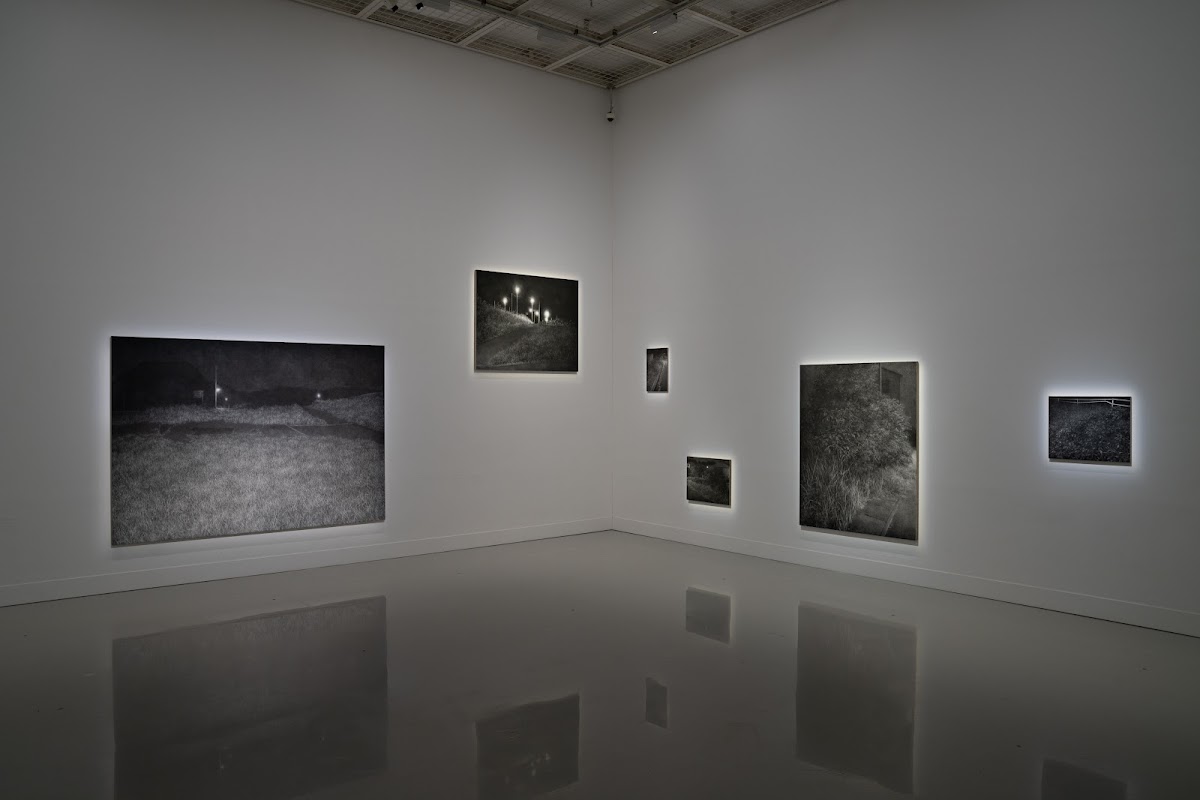
The current Tokyo Ginza Shiseido Building was completed in 2001 to a design by Spanish architect Ricardo Bofill. Its red exterior recalls Ginza's historic brick streets and stands apart from neighbouring glass towers. Below it, the gallery is restrained: tall white walls, open floor, stairs, and changing sightlines give artists a flexible but demanding volume.
Five metres of height alters how an exhibition can be made. Installations rise beyond ordinary eye level, works can be viewed from an upper rail, and empty air becomes part of the composition. The contrast between the decorated red facade and the austere underground room also gives a visit two distinct architectural moments.
More Than 3,100 Exhibitions and the Value of a Debut
Shiseido Gallery has hosted more than 3,100 exhibitions. Many offered artists an early public debut before they became important figures in Japanese art. Supporting that stage requires more than a statement of goodwill: it means providing space, curatorial attention, installation resources, and permission for a new work to remain unresolved.
The Shiseido Art Egg open-call programme, launched in 2006, continues that principle. Selected artists develop exhibitions with a curator under conditions comparable to the gallery's regular programme. The result may be beautiful, difficult, quiet, or resistant to easy branding. That independence is essential to the venue's credibility.
How to Read a Changing Space
There is no permanent display to guarantee the same experience. Walls, light, sound, and circulation can change completely between exhibitions, and installation periods may add temporary closures. Check the current programme before travelling, then spend a moment reading the room before turning to labels. Notice how the artist uses the unusual height, stairs, corners, and view from above.
After the exhibition, return to the street and look again at Bofill's red facade. The white basement you have just crossed sits beneath Ginza's rapid commerce. For more than a century, that small descent has created time for an unfamiliar work to meet a public. Shiseido Gallery's longevity is made from thousands of such temporary encounters.
Visit Info
- Address: Tokyo Ginza Shiseido Building B1F, 8-8-3 Ginza, Chuo-ku, Tokyo 104-0061, Japan
- Hours: 평일·토요일 11:00-19:00, 일요일·공휴일 11:00-18:00. 월요일 휴관. 전시 교체 휴관은 공식 일정 확인
- Fee: 무료
- Transport: 도쿄메트로 긴자역 A2 출구 또는 신바시역 1번 출구에서 도보 약 4분, JR 신바시역 긴자 출구에서 도보 약 5분
- Time needed: 약 45분-1시간 30분, 긴자 건축 산책과 함께 보면 2-3시간
- Website: https://gallery.shiseido.com/en/
Visitor Info
| Address | Tokyo Ginza Shiseido Building B1F, 8-8-3 Ginza, Chuo-ku, Tokyo 104-0061, Japan |
| Hours | Translating |
| Admission | Free |
| Getting There | Translating |
| Duration | Translating |
| Translating | https://gallery.shiseido.com/en/ |