An Old House and New Brick in Sorø, Joining Centuries of Danish Art
An Old House and New Brick in Sorø, Joining Centuries of Danish Art
Two Buildings in the Centre of Sorø
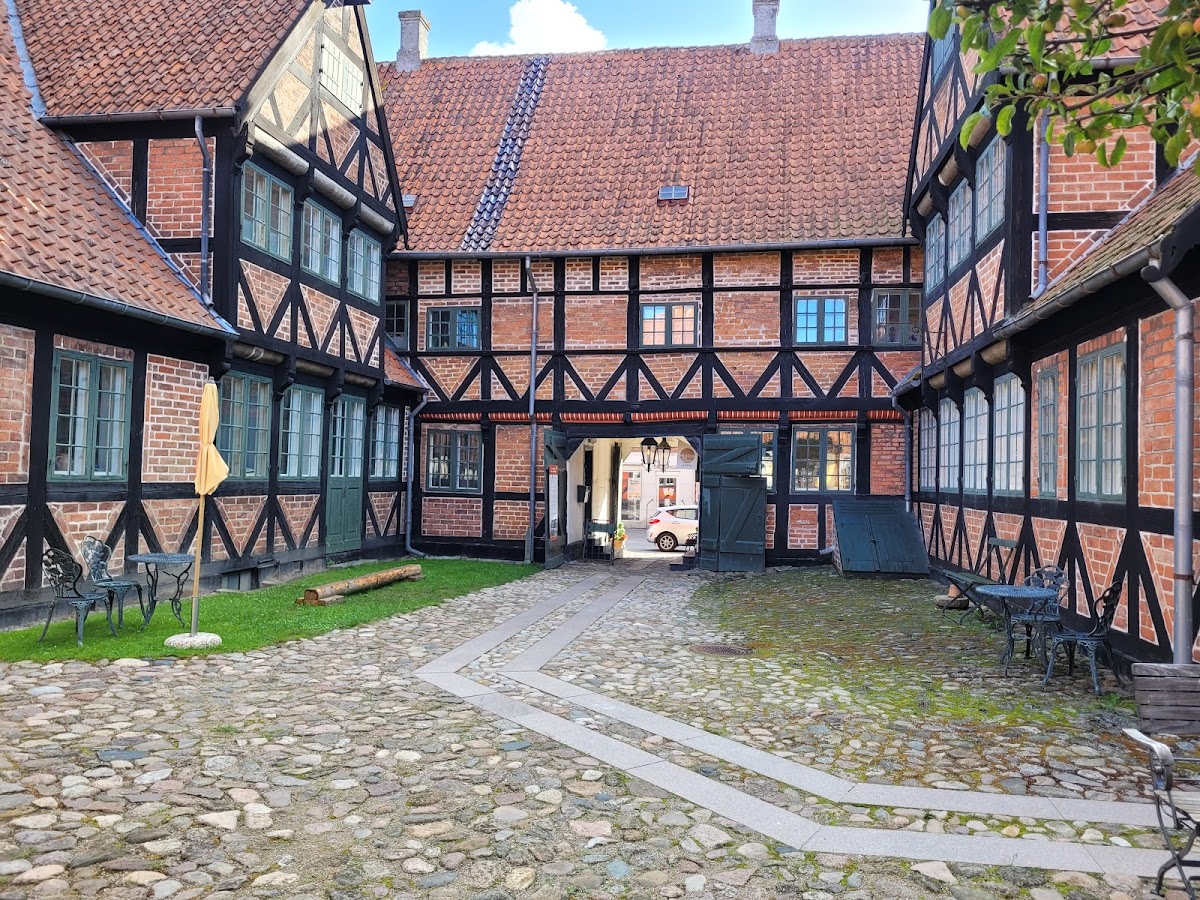
Sorø Kunstmuseum stands in a small Zealand town known for its lake, academy, and medieval church. The street building was constructed in 1832 as the residence of the estate manager for Sorø Academy. Its domestic rooms, windows, and scale create an intimate setting for eighteenth- and nineteenth-century art.
Behind the listed house is a markedly contemporary brick extension completed in 2011 by Lundgaard & Tranberg Architects. The two buildings do not pretend to belong to the same period. Visitors cross a visible architectural boundary while moving through more than 350 years of Danish art.
A Museum Founded in Four Rooms in 1943
Sorø Art Museum was founded on 29 May 1943 at the initiative of the Soran Society. It first opened in a four-room apartment at Priorgade 3, then moved to Storgade 9 in 1963. The collection grew through gifts from Sorø Academy, the museum's supporters, artists, foundations, and private collectors.
Using a historic house gave the museum a distinct atmosphere but limited space for large works, temporary exhibitions, conservation systems, and accessibility. The 2011 project addressed those needs without abandoning the building that had shaped the institution for almost half a century.
Lundgaard & Tranberg's New Brick
The award-winning extension responds to Sorø through material, roofline, and mass rather than imitation. Dark brick, deep openings, and a compact profile connect the new volume to the town's historic fabric. Up close, changes in brick pattern and depth give the apparently solid walls a more varied surface.
Modern and contemporary art and temporary exhibitions occupy the newer galleries, where larger walls and controlled light support different forms of display. The old and new sections preserve their own proportions. Architecture becomes a practical way to feel the difference between periods rather than a neutral container around them.
About 2,500 Works Across Danish Art History
The museum holds about 2,500 works spanning over 350 years. Its route reaches from eighteenth-century Classicism and Romanticism through the Danish Golden Age, modernism, postwar concrete art, Pop and Conceptual practices, the Wild Youth of the 1980s, and contemporary art.
The older collection is generally presented in the historic house, while work from later periods appears in the extension. Displays rotate, especially for art after the 1960s, because the collection is too large to show in full. Each visit therefore creates a different set of comparisons rather than a single permanent textbook sequence.
Collecting the Gaps
Sorø Kunstmuseum describes acquisition as an effort to deepen existing strengths while building transitions between areas that appear disconnected. It also aims to add women artists who were historically overlooked. A collection is treated as an argument that can be revised, not a finished inventory of established names.
Adding a missing artist does more than balance a list. It changes questions about access to education, professional networks, domestic labour, genre, and critical value. In a museum covering three and a half centuries, a new acquisition can alter how an older room is interpreted.
Hermod Lannung and Russian Art
Two Russian collections give the museum an unexpected geographical reach. Hermod Lannung donated Russian art dating mainly from 1870 to 1930, a period that crosses late Imperial society, revolution, Realism, Symbolism, and modernist experiment. These works can be viewed beside Danish developments from the same decades.
The comparison unsettles a simple national chronology. Artists across Europe encountered changing cities, political upheaval, print culture, and new approaches to colour and form. Sorø lets those histories face one another within a small building complex rather than isolating Russia as an exotic appendix.
Russian Icons from 1500 to 1900
The second special collection contains Russian icons dating from 1500 to 1900, donated by Per Schrøder, Hermod Lannung, and Lorentz Jørgensen. The museum describes it as Denmark's largest and finest collection of Russian icons. Gold grounds and frontal holy figures create a visual time very different from modern Danish painting.
Icons were made for devotion, ritual, churches, and homes. Repeated figures and gestures carried continuity rather than a modern ideal of individual invention. Looking closely at hands, garments, paint, and wooden panels reveals difference within tradition, while the objects' journey from Russia to Danish private collections and finally to a public museum adds another history.
How to Visit Sorø Kunstmuseum
Begin in the 1832 house and continue into the 2011 extension. Notice when room size, floor level, light, and wall surface change. Give the Russian icons time rather than treating them as a brief detour, and compare their social function with Danish works from related centuries.
After the galleries, continue toward Sorø Academy, the abbey church, and the lake. The town's brick, trees, and water extend the visual history encountered indoors. Sorø Kunstmuseum connects time by preserving differences: old house and new brick, Denmark and Russia, inherited collection and active revision.
Visit Info
- Address: Storgade 9, 4180 Sorø, Denmark
- Hours: 화요일-일요일 11:00-17:00, 월요일 휴관. 공휴일과 전시 교체 일정은 공식 사이트 확인
- Fee: 성인 110 DKK, 26세 미만 무료, 10인 이상 단체 95 DKK. 변동 가능
- Transport: 소뢰역에서 도심 방향 도보 약 20분 또는 지역 버스 이용. 소뢰 아카데미와 수도원 교회 인근
- Time needed: 약 1시간 30분-2시간, 소뢰 아카데미와 호수 산책까지 포함하면 반나절
- Website: https://sorokunstmuseum.dk/en/
Visitor Info
| Address | Storgade 9, 4180 Sorø, Denmark |
| Hours | Translating |
| Admission | Translating |
| Getting There | Translating |
| Duration | Translating |
| Translating | https://sorokunstmuseum.dk/en/ |