When a Forest Spa Became an Art Centre in Silkeborg
When a Forest Spa Became an Art Centre in Silkeborg
A Yellow Building Between Forest and Lake Ørnsø
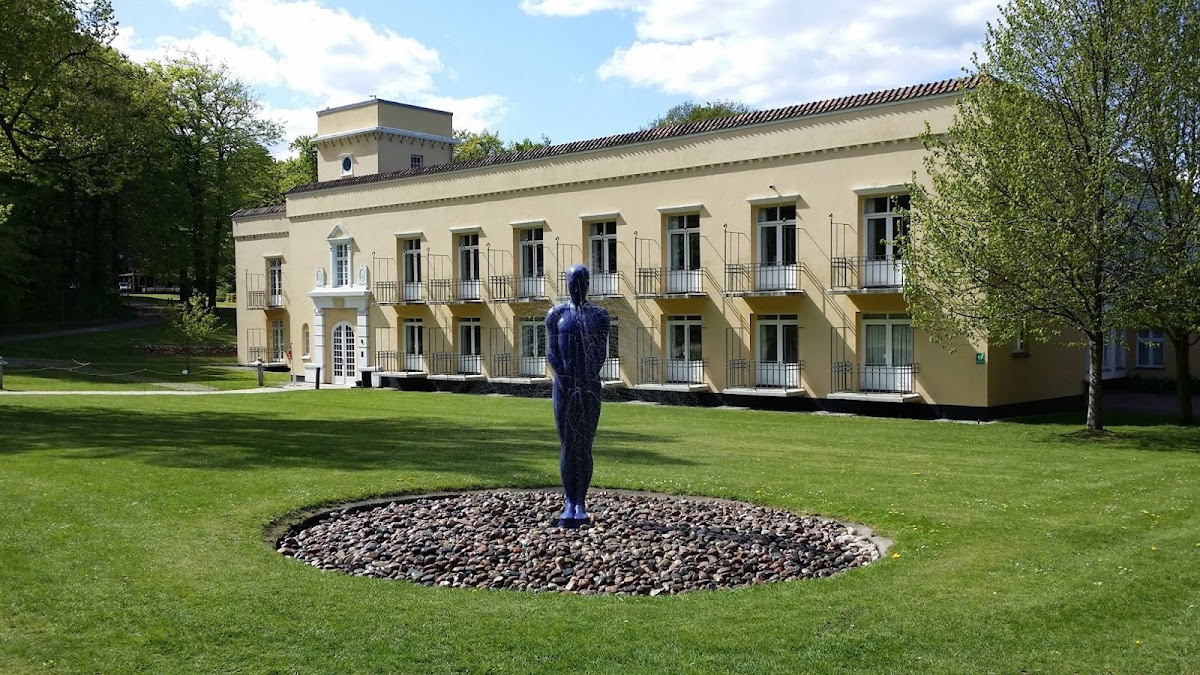
Art Centre Silkeborg Bad appears west of central Silkeborg as a pale yellow building surrounded by lawn, forest, sculpture, and Lake Ørnsø. The visit begins outdoors. Paths lead between art, former spa buildings, wartime traces, and the water before a ticket is presented.
Bad refers to bathing or spa. The site opened as a hydrotherapy health resort in 1883 and returned in 1998 as a contemporary art centre. Treatment rooms and social spaces became galleries, while the grounds retained the physical structure of an earlier way of living with health and nature.
Water, Air, and Movement as Treatment
The nineteenth-century spa used baths, exercise, diet, rest, fresh air, the Arnakke springs, and the surrounding forest as parts of a regulated programme. An outdoor sanatorium known as the Garden of Eden had separate areas for women and men, along with gymnastics, sun and wind treatments, tennis, croquet, and lawn games.
Some historical treatments no longer carry medical authority, and access reflected the social conditions of the period. Yet the attempt to connect recovery with environment, rest, and movement remains recognisable. Today, walking slowly between sculptures produces an unexpected echo of the site's former rhythm.
A Campus of Rooms, Gardens, and Paths
Silkeborg Bad was not a single hotel but a group of buildings and gardens. Guests moved outside for treatment, meals, social activity, and rest. That distributed plan still shapes the art centre. Visitors cross the grounds between galleries, the Forest Villa history display, sculpture park, and lake paths.
Rooms of different sizes create varied exhibition conditions. Large halls support installations and thematic projects, while smaller former rooms bring paintings and photographs closer. Windows regularly return the eye to trees and weather, preventing the galleries from becoming a sealed sequence.
War, Occupation, and the Bunkers
German forces took over the health resort during the Second World War, and bunkers remain around the grounds. The isolation and landscape once chosen for recuperation also served military control. This difficult layer is included in the site's audio guide and permanent spa-history display rather than removed from an attractive heritage setting.
Standing near a concrete bunker changes the experience of metal and stone in the sculpture park. Materials do not hold one meaning by themselves; purpose, power, and bodily access alter how a structure feels. At Silkeborg Bad, history is not background information but part of the physical route.
The 1998 Reopening and a Contemporary Mission
Local volunteers joined preparations before the main spa building reopened in 1998. The first major international thematic exhibition, Free as a Bird, gave the renewed venue an apt image of movement. The centre's charter defines it as a professional exhibition institution with changing shows and a permanent collection on the estate.
International and regional art are presented through both broad themes and focused projects. Reuse required more than preserving a picturesque exterior: the building needed conditions for conservation, lighting, installation, and access while allowing its former rooms to remain legible.
A Sculpture Park of Around Fifty Works
The park contains around fifty permanent works; official pages have listed more than forty-five and, more recently, fifty-two as installations change. Two sculptures have occupied the grounds since 1929, while most entered after the art centre's establishment. Classical figures, abstraction, land art, and site-specific installation share the landscape.
The park is free and open throughout the year. Visitors may touch the works but should not climb on them. Texture and temperature make stone, metal, and wood physically immediate. Trees grow, leaves hide forms, winter clarifies outlines, and weather continually changes the exhibition.
Volunteers and the Daily Life of the Centre
A group that began with about ten volunteers before reopening has grown to around eighty-five people. They assist with visitor service, exhibition changes, events, and the café, supported by introductions, advance exhibition viewing, internal programmes, and an annual excursion.
This participation makes the institution part of Silkeborg's cultural production rather than a heritage attraction maintained at a distance. The former spa also depended on many forms of care and labour. The tasks have changed, but reopening a place still means rebuilding the community that keeps it active.
How to Walk Silkeborg Bad
Begin with the indoor exhibitions, then use the remaining daylight for the sculpture park. Continue to the Forest Villa and wartime traces before walking toward Lake Ørnsø. Clothing and shoes for changing weather matter because the outdoor route is not an optional extra.
The lasting image may not be one masterpiece. A contemporary sculpture before the yellow spa building, a bunker at the edge of the forest, and trees reflected in the lake hold different periods in one view. Art has not erased the site's previous lives; it has created new paths through them.
Visit Info
- Address: Gjessøvej 40, 8600 Silkeborg, Denmark
- Hours: 4월-10월 화요일-일요일 10:00-17:00. 11월-3월 화요일-금요일 11:00-16:00, 토요일-일요일 11:00-17:00. 월요일 휴관, 공원은 연중 개방
- Fee: 성인 90 DKK, 65세 이상·학생 75 DKK, 25세 미만 무료. 통합권과 행사 요금은 공식 안내 확인
- Transport: 실케보르역에서 서쪽으로 약 3km. 지역 버스, 자전거 또는 택시 이용. 무료 주차 가능
- Time needed: 실내 전시 1시간 30분, 조각공원과 외른쇠 산책까지 포함하면 3-4시간
- Website: https://www.silkeborgbad.dk/en/
Visitor Info
| Address | Gjessøvej 40, 8600 Silkeborg, Denmark |
| Hours | Translating |
| Admission | Translating |
| Getting There | Translating |
| Duration | Translating |
| Translating | https://www.silkeborgbad.dk/en/ |