Everyday Hands Become Art in Komaba, Tokyo
Everyday Hands Become Art in Komaba, Tokyo
A Different Art History in Komaba
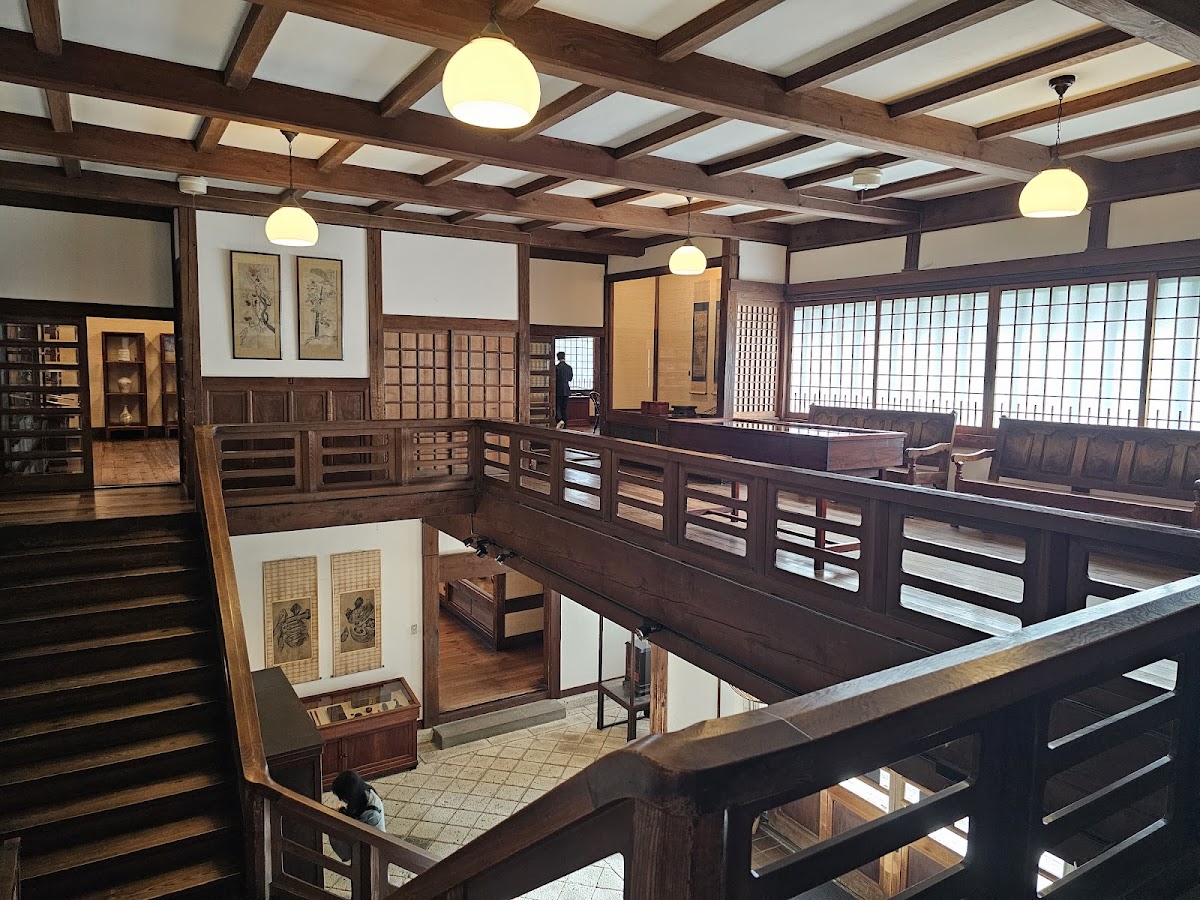
The Japan Folk Crafts Museum stands behind stone walls in Komaba, a quiet Tokyo neighbourhood of universities and houses. Its tiled roofs, timber gate, polished stairs, Oya-stone floor, and white plaster immediately slow the visitor down. The building does not merely contain folk craft; it establishes the domestic scale and material attention through which the objects can be seen.
Inside are bowls, clothes, popular paintings, toys, carvings, and tools whose makers were often not recorded. Their importance does not depend on royal patronage or a celebrated signature. The museum shifts attention towards use, repeated labour, local materials, and the small decisions that allowed an object to serve everyday life for years.
Soetsu Yanagi and Korean Craft
Soetsu Yanagi encountered Joseon ceramics in 1914 through the Asakawa brothers. The experience redirected a thinker associated with the Shirakaba group towards the forms made in ordinary life. In 1924, during Japanese colonial rule, he opened the Korean Folk Art Museum in Seoul. That act recognised Korean craft at a hostile historical moment, yet it must also be examined within the unequal conditions under which Korean objects were selected, interpreted, and moved to Japan.
The museum today holds highly regarded Korean ceramics, woodwork, and paintings. Looking closely means going beyond Yanagi’s admiration: a white porcelain jar or buncheong vessel also belongs to a specific place, purpose, maker, and social world. Appreciation and historical scrutiny are both necessary if the collection is to be understood as more than the record of one collector’s taste.
The Word Mingei
In 1925 Yanagi, Kanjiro Kawai, and Shoji Hamada coined the term mingei, an abbreviation meaning folk or common crafts. They sought beauty in useful objects produced repeatedly by unknown craftspeople rather than only in rare luxury goods and individual artistic genius. A prospectus for a folk-craft museum followed in 1926, and Yanagi travelled through Japan to research and collect regional work.
The idea remains productive but should not romanticise poverty or erase makers. A garment is shaped by access to cloth, climate, skills passed within a community, and the market in which it circulated. Mingei matters most when it widens the field of vision, allowing labour and use to enter art history without turning real working lives into an abstract ideal.
A Museum Designed as a Craft
The museum opened in 1936 with Yanagi as its first director. He led the design of the original two-storey timber wing, combining Japanese and Western elements and treating fittings, display cases, wall coverings, and light as part of the viewing experience. In 2021 the old wing and its street-side stone wall were designated Tangible Cultural Properties by the Tokyo Metropolitan Government.
The central stair hall connects the rooms while allowing objects to be seen from more than one level. A reinforced-concrete wing was reconstructed in 1982, but the overall route still feels closer to moving through a large house than a monumental museum. Architecture places vessels and textiles within bodily reach rather than presenting them as distant trophies.
Seventeen Thousand Objects Across Borders
The collection contains approximately 17,000 works from Japan and many other regions. Japanese ceramics from Tamba, Karatsu, Imari, and Seto appear with Tohoku sashiko garments, Okinawan pottery and dyed textiles, Ainu clothing and glass beads, Otsu-e paintings, Mokujiki sculpture, Taiwanese and Chinese craft, and old British slipware. Differences in soil, fibre, climate, and daily custom become visible through form.
International connections are fundamental rather than supplementary. Hamada worked in Britain with Bernard Leach, while Leach linked East Asian ceramics with British studio pottery. Korean, Okinawan, Ainu, and Taiwanese holdings also require careful attention to colonial histories. The galleries redraw geography through techniques and use while asking how objects entered the collection.
Named Artists and Anonymous Hands
Works by early Mingei figures such as Shoji Hamada, Kanjiro Kawai, Bernard Leach, Keisuke Serizawa, and Shiko Munakata form another strand of the museum. Their fame may seem at odds with an emphasis on anonymous production, but they helped carry regional methods into modern workshops, publishing, teaching, and exhibition culture.
Compare their work with older utilitarian objects instead of treating the artists as a separate canon. Hamada accepted changes produced by clay, glaze, and fire; Kawai pushed pottery towards sculptural form and colour; Serizawa developed stencil-dyed lettering and pattern; Munakata drew force from the carved woodblock. Tradition survives here as active judgement, not mechanical repetition.
The West Hall Across the Road
The West Hall is Yanagi’s former residence, completed in 1935 in the form of a nagayamon gatehouse. Furniture and craft were arranged within daily rooms, making it possible to see how his theories entered domestic space. It is currently open only on selected Wednesdays and Saturdays during each exhibition, so the museum calendar should be checked before travel.
A visit should not turn the house into a universal model of tasteful living; its scale and collection depended on resources unavailable to most makers Yanagi admired. Even so, the link between writing, collecting, displaying, and living becomes unusually concrete there. Objects seen in a case across the street regain the proportions of a shelf, table, doorway, and human hand.
How to Look Slowly
Displays change with each special exhibition, and famous holdings are not permanently on view. Begin in the stair hall, then choose one material to follow. On ceramics, compare rims, feet, glaze runs, and signs of firing. On textiles, notice thread, reinforcement, repair, and the relationship between pattern and construction. Labels offer facts, but use can often be inferred from form.
Photography is limited to designated areas, which suits a museum built around sustained attention. On its ninetieth anniversary, the institution still makes a demanding proposal: beauty is not added to life only by famous artists. It can already be present in a useful object, provided that the material, labour, history, and communities behind it are not reduced to atmosphere.
Visit Info
- Address: 4-3-33 Komaba, Meguro-ku, Tokyo 153-0041, Japan
- Hours: 본관 10:00-17:00, 입장 마감 16:30. 월요일(공휴일이면 개관), 전시 교체 기간, 연말연시 휴관. 서관 공개일은 공식 달력 확인
- Fee: 성인 1,500엔, 학생 800엔. 단체·장애인 할인은 공식 안내 확인
- Transport: 게이오 이노카시라선 고마바토다이마에역 서쪽 출구에서 도보 약 7분
- Time needed: 약 1시간 30분-2시간, 서관 공개일과 특별전을 함께 보면 2시간 30분
- Website: https://mingeikan.or.jp/?lang=en
Visitor Info
| Address | 4-3-33 Komaba, Meguro-ku, Tokyo 153-0041, Japan |
| Hours | Translating |
| Admission | Translating |
| Getting There | Translating |
| Duration | Translating |
| Translating | https://mingeikan.or.jp/?lang=en |