Two Canal Houses in Amsterdam Let Photography Cross Old Rooms
Two Canal Houses in Amsterdam Let Photography Cross Old Rooms
A Narrow Face on Keizersgracht
Huis Marseille can be easy to pass on Amsterdam’s Keizersgracht. Number 401 has the tall, narrow brick facade of a canal house, with steps, high windows, and a stone tablet depicting the port of Marseille. Nothing on the street announces the scale of the route behind that restrained frontage.
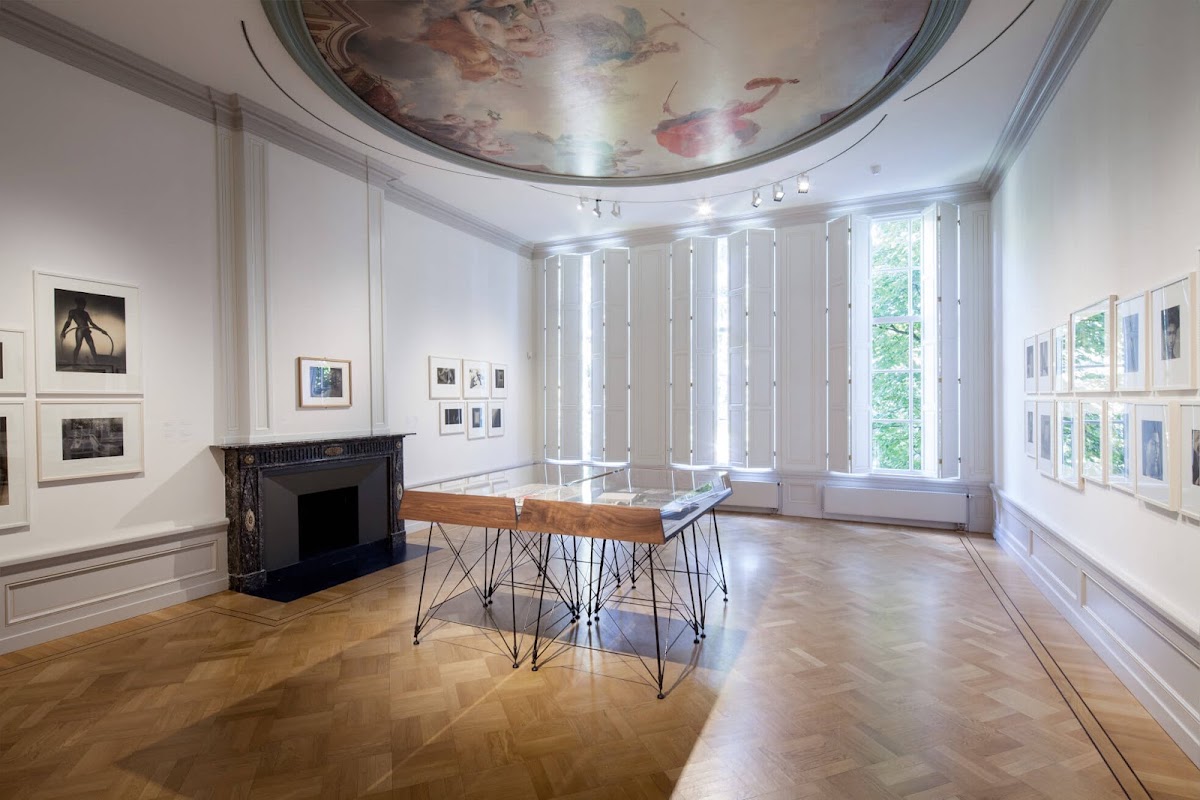
Inside, front house, courtyard, back house, garden, stairs, and rooms unfold in sequence. Photographs hang beside windows, fireplaces, timber floors, stucco, and painted ceilings. Amsterdam’s first photography museum, opened in September 1999, chose the proportions of a historic home rather than the neutrality of a newly built white cube.
Isaac Fouquier and the Marseille Tablet
The main house was built around 1665 for the French merchant Isaac Fouquier. Trade connected his Amsterdam home to cargo arriving from Marseille, and a carved tablet of the Mediterranean port gave the house its lasting name. The facade turns a commercial biography into a small image visible from the canal.
The prosperity of a seventeenth-century merchant house also belongs to wider maritime networks and unequal histories. Treating the tablet only as a romantic travel emblem would flatten that context. When contemporary exhibitions address migration, cities, landscape, or power, the trading past of the building remains a quiet and sometimes uneasy companion.
Photography at Domestic Scale
No two rooms offer exactly the same wall, ceiling, doorway, or light. Curators develop most exhibitions for these conditions, deciding not only which images follow one another but what visitors see through an open door. A large print can dominate a former reception room, while a small sequence fits between a window and fireplace.
The installation behaves a little like a photobook that must be crossed on foot. A staircase interrupts one series; another image appears framed by a doorway before it can be examined closely. Look once at the historic room, then return to the height and edge of each print. The choice of wall becomes part of the interpretation rather than interior decoration.
Fourteen Rooms Across Two Houses
In 2013 Huis Marseille expanded into neighboring Keizersgracht 399. The renovation connected two monumental canal houses and brought the museum to fourteen exhibition spaces, including a lightwell. Their slightly different levels and orientations remain visible, so the enlarged institution still feels like a succession of rooms rather than one continuous hall.
The route supports a long retrospective or several exhibitions at once. Thresholds and stairs make the boundary between projects important, though taking an unintended turn is not a failure. A photograph from another series may appear too early and create an unexpected comparison. The house permits that kind of productive disorientation.
Why the Collection Keeps Moving
Huis Marseille maintains a photography collection but does not present it as a fixed permanent display. Photographs are sensitive to light, and paper and printing processes require different conservation limits. Works come out for particular exhibitions and then rest, while loans and new commissions change the surrounding argument.
The museum changes its major exhibitions three or four times a year, presenting Dutch and international photography with attention to new visual languages and social questions. Documentary and art photography need not occupy separate rooms. A photograph can record a real condition while making deliberate choices about framing, sequence, color, and address.
Painted Ceilings, a Red Room, and a Garden
One room places contemporary photographs beneath a circular painted ceiling filled with figures and sky. Elsewhere, a red Louis XIV period room, marble, fireplaces, and stucco alter the temperature around an image. The interior is not a preserved single moment; centuries of ownership, change, restoration, and reconstruction have left several layers visible.
Behind the house lies a deep canal garden. A garden house reconstructed in 2003 used surviving remains and old photographs as evidence. It is fitting that a photography museum contains architecture partly rebuilt from images: the photograph records what disappeared while also guiding a new physical version in the present.
The Library Beyond the Gallery Wall
The library holds photographers’ monographs, histories, theory, technical publications, rare books, and material connected to exhibitions. Ticketed visitors can use it, making it possible to continue with an artist immediately after leaving the galleries. A print isolated on a wall regains sequence, page size, and neighboring images in a book.
Choose one title and locate a picture remembered from the exhibition. Its position in the book may change its pace or meaning. Comparing publication and installation makes curatorial selection visible: the gallery proposes one route through a body of work, while the photobook offers another.
Planning a Visit to the Two Canal Houses
Huis Marseille currently opens daily from 10 a.m. to 6 p.m. and until 9 p.m. on Thursday. It closes on January 1, April 27, December 25, and during exhibition installation periods; December 31 has an earlier closing time. Adult admission is €12.50, with reduced and free categories listed on the official site. Check both the visit page and exhibition dates before traveling.
The historic stairs mean the museum is not fully wheelchair accessible, so contact the institution ahead of time to discuss support and possible routes. Allow ninety minutes to two hours, longer for the library and garden. Back on Keizersgracht, the narrow facade seems too small for the fourteen rooms just crossed. That mismatch captures the museum: a thin photograph or townhouse can hold a surprising depth of time.
Visit Info
- Address: Keizersgracht 401, 1016 EK Amsterdam, Netherlands
- Hours: 매일 10:00-18:00, 목요일 21:00까지. 1월 1일·4월 27일·12월 25일과 전시 교체 기간 휴관, 12월 31일 17:00 마감
- Fee: 성인 12.50유로, 학생·65세 이상 6.50유로, 18세 미만 무료. Museumkaart 등 제휴 카드와 최신 요금은 공식 안내 확인
- Transport: 트램 2·12호선 Koningsplein 또는 13·17호선 Westermarkt에서 도보 약 8-10분, 암스테르담 중앙역에서 운하 지구 남쪽으로 도보 약 25분
- Time needed: 약 1시간 30분-2시간, 사진집 도서관과 정원까지 천천히 보면 2시간 30분
- Website: https://huismarseille.nl/en/
Visitor Info
| Address | Keizersgracht 401, 1016 EK Amsterdam, Netherlands |
| Hours | Translating |
| Admission | Translating |
| Getting There | Translating |
| Duration | Translating |
| Translating | https://huismarseille.nl/en/ |