A Long Gallery beneath Mount Bandai, Where Dalí’s Dream Reached Fukushima
A Long Gallery beneath Mount Bandai, Where Dalí’s Dream Reached Fukushima
First Seeing the Morohashi Museum beside the Water in Kitashiobara
The road into Kitashiobara is filled with lakes, marshes, and wooded slopes shaped by Mount Bandai. At the edge of this highland landscape, the Morohashi Museum of Modern Art appears as a long band of dark stone and pale walls. A broad pond doubles the facade, asking visitors to compare a building with its reflection before they reach the door.
The symmetry may recall Salvador Dalí’s double images, yet the architecture does not imitate Surrealism. Repeated arches, low stonework, and steep gables establish a measured horizontal line beneath the mountain. The museum is currently closed for renovation, however, and has announced a reopening around April 2027. Any future visit must begin by checking that date.
Teizo Morohashi’s 1975 Encounter in Figueres
Teizo Morohashi, founder of the Fukushima-based sporting-goods company XEBIO, encountered hundreds of Dalí works at the Dalí Theatre-Museum in Figueres in 1975. He later wrote that their dreams and illusions overturned familiar ways of thinking. He began collecting prints and paintings while studying Western modern art in museums and auction houses.
The sequence matters. A museum was not the starting premise of a corporate attraction; an absorbing experience of art came first. Collecting, securing land, constructing a building, and creating a foundation followed over many years. The institution in Kitashiobara is best understood as the public form eventually taken by one viewer’s sustained curiosity.
Thirty-Seven Dalí Sculptures and a Sudden Plan for a Museum
A 1991 Dalí exhibition organized by NHK in Tokyo presented 37 sculptures from the Stratton Foundation in Paris. Morohashi was struck by the physical force of motifs he had known in pictures. When the opportunity arose to acquire the group after the exhibition, he took it and began to imagine a museum capable of showing them together.
Dalí’s sculpture turns drawers, eggs, elongated limbs, soft time, and dream figures into objects with weight and backs. They require circling, distance, and high ceilings rather than a single frontal glance. Morohashi continued to add paintings, drawings, prints, and photographs, while also collecting Renoir, Cézanne, Matisse, Picasso, Chagall, and other artists around Dalí’s historical position.
Donating the Art, Land, and Building for the 1999 Opening
Construction began in June 1997 and finished in December 1998. The Morohashi Museum opened on 3 June 1999 after the formation of its nonprofit foundation. Morohashi donated not only the art but also the site, buildings, and facilities, turning a private collection into an institution with a responsibility beyond the founder’s lifetime.
Its purpose was to let a broad public experience major works of Western modern art. Choosing the Aizu-Bandai highlands rather than a metropolitan centre made the journey longer but gave the collection a distinct setting. The museum became a registered museum in its opening year and received a Fukushima architectural award in 2001.
A Hundred-Metre Hall Inspired by a Medieval Stable
Architect Kimio Shimizu and Teizo Morohashi developed a building inspired by the type of a medieval stable. The approximately 2,000-square-metre museum occupies a site of more than 55,000 square metres inside Bandai-Asahi National Park. Its central gallery extends roughly 100 metres and rises to a ceiling height of about nine metres.
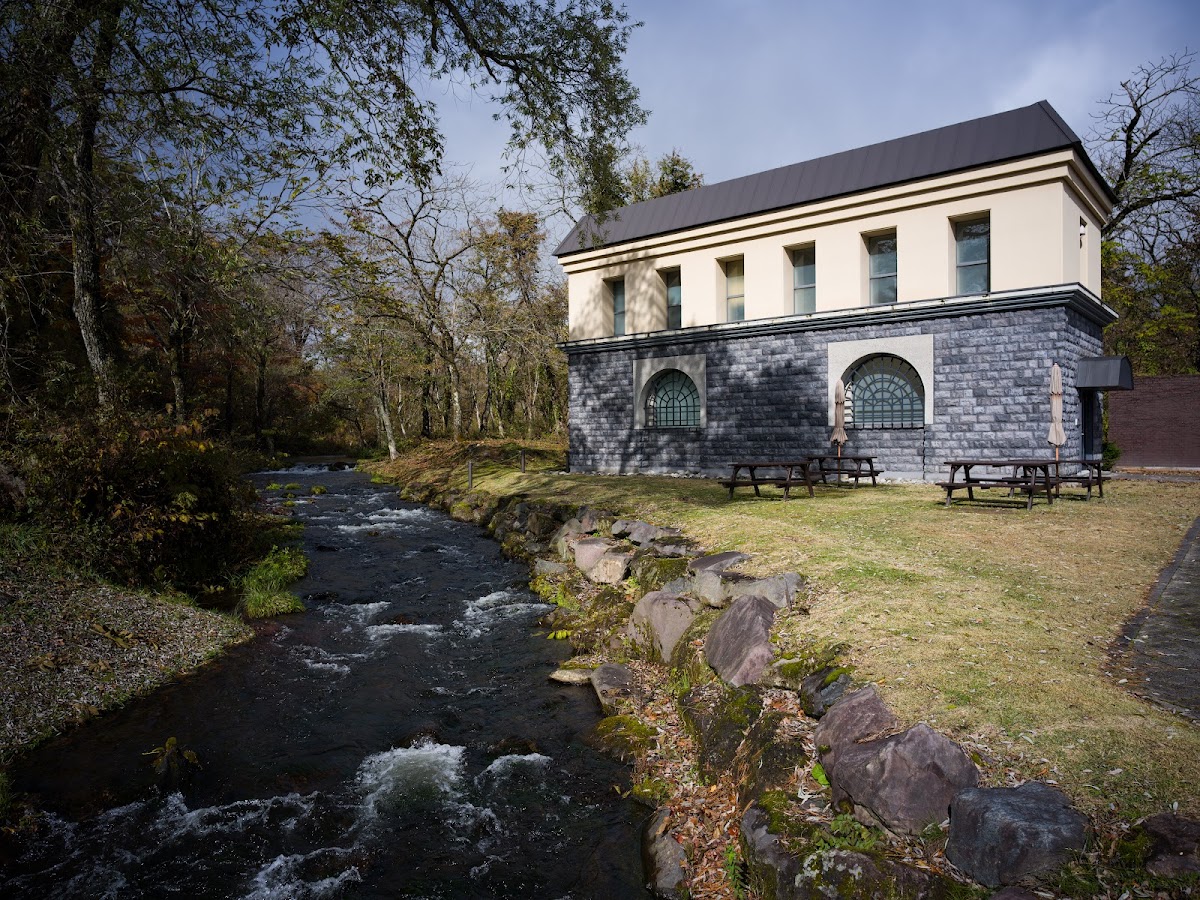
Local genshoseki slate anchors the pale upper walls with a dark, layered base. Natural light and a long sightline give large bronzes enough room to separate from one another. The hall feels linear, but it is not simply a corridor: visitors can step back, cross the axis, and circle sculptures before looking through windows toward Mount Bandai.
Approximately 330 Works by Salvador Dalí in Fukushima
The founding collection included about 330 works by Dalí across painting, sculpture, prints, and other media. The museum describes it as the world’s third largest Dalí collection after those in Florida and Figueres, and as Asia’s only museum with his work on permanent display. Rotation and conservation mean that no individual work should be assumed to be on view at every moment.
The strength of the collection is its range beyond melting watches. Early landscapes and family portraits lead to Gala, war, nuclear science, religion, vast history painting, graphic work, and sculpture. Seeing those phases together replaces the shorthand of an eccentric genius with a more complicated artist responding to Spain, exile, mass media, science, and his own public image.
The Three Sphinxes of Bikini and Three Versions of a Mushroom Cloud
In The Three Sphinxes of Bikini (1947), a human head seen from behind, a split tree, and an atomic mushroom cloud repeat a related silhouette across deep space. Hair, branches, and smoke pull the three forms into one visual thought. The title points to nuclear testing at Bikini Atoll rather than to swimwear.
Dalí’s interest in atomic structure intensified after the 1945 bombings of Japan. Here, optical ambiguity becomes a way to consider the danger within scientific progress. Viewing the painting in Fukushima inevitably adds memories the artist could not have anticipated, but the work should not be reduced to one local interpretation. Its uncertainty remains the source of its pressure.
Finding Gala inside the Four-Metre Battle of Tetuan
The Battle of Tetuan (1962) measures roughly three by four metres. Dalí drew on Mariano Fortuny’s nineteenth-century painting of Spain’s war in Morocco, then broke its orderly battle into rushing horses, unstable figures, white gaps, and gestural marks. The scale changes as a viewer moves between a distant composition and its dispersed surface.
Dalí and Gala both appear among the combatants. Gala, brandishing a sword, functions as a historical figure and as the partner who organized the artist’s career. Morohashi remembered applause when he secured the painting at auction. The anecdote does not determine its artistic value, but it explains why a hall for unusually large work became essential to his museum.
From Renoir and Cézanne to P. J. Crook
The museum name refers to modern art rather than to Dalí alone. Around forty Western paintings range from Impressionism through Surrealism and include more than twenty major nineteenth- and twentieth-century artists. Comparing Cézanne’s construction of landscape, Matisse’s colour, Picasso’s fractured forms, and Chagall’s floating figures makes Dalí part of a wider argument about how painting transforms reality.
Approximately thirty works by the British contemporary artist P. J. Crook form another distinctive group. Her crowded stages and painted frames complicate the border between image, audience, and surrounding space. They keep the collection from closing as a historical sequence that ends with Dalí and show that the foundation continued to acquire work after the museum opened.
Looking from the Gallery to Mount Bandai
Windows frame Mount Bandai’s crater and a garden that changes the colour of the museum through spring leaves, summer green, and autumn foliage. After close looking at bronze and paint, the eye can refocus on a distant ridge. The stream, stones, and quieter side elevation are as valuable as the formal pond in front.
Goshiki-numa and other Urabandai walks make a half-day itinerary possible after reopening. The connection should remain practical, not romantic: renovation boundaries, public paths, exhibitions, and seasonal transport may all change. The landscape is part of the experience only when the institution has officially reopened it to visitors.
Planning for the Reopening around April 2027
The museum has been closed since 10 November 2025 and currently plans to reopen around April 2027. Its previous schedule was 9:30 a.m. to 5 p.m., with admission of ¥1,300 for adults, ¥500 for high school and university students, and free entry for younger students. Treat all of those figures as historical until the new schedule is announced.
From JR Inawashiro Station, the official route is an Aizu Bus toward Goshiki-numa and Bandai-kogen, taking about 25 minutes to the museum stop; a taxi takes about 20 minutes. After reopening, allow two hours or more. Begin with Dalí across media, return to The Three Sphinxes of Bikini and The Battle of Tetuan, then connect the wider modern collection to the windows and garden.
Visit Info
- Address: 1093-23 Kengamine, Hibara, Kitashiobara, Yama District, Fukushima 969-2701, Japan
- Hours: Closed for major renovation since 10 November 2025, with reopening planned around April 2027. Confirm the reopening date and new schedule on the official site
- Fee: Before closure: ¥1,300 general, ¥500 high school/university, free for elementary and middle school students. Confirm post-renovation prices
- Transport: From JR Inawashiro Station, take the Aizu Bus toward Goshiki-numa/Bandai-kogen for about 25 minutes to the museum stop; a taxi takes about 20 minutes
- Time needed: After reopening, allow 2-2.5 hours for Dalí and Western modern art or half a day with the garden and Goshiki-numa area
- Website: https://dali.jp/
Visitor Info
| Address | Translating |
| Hours | Translating |
| Admission | Translating |
| Getting There | Translating |
| Duration | Translating |
| Translating | https://dali.jp/ |