A Cold Vault in Samcheong, Where 20,000 Photographs Endure Time
A Cold Vault in Samcheong, Where 20,000 Photographs Endure Time
A Water Garden before the Photographs
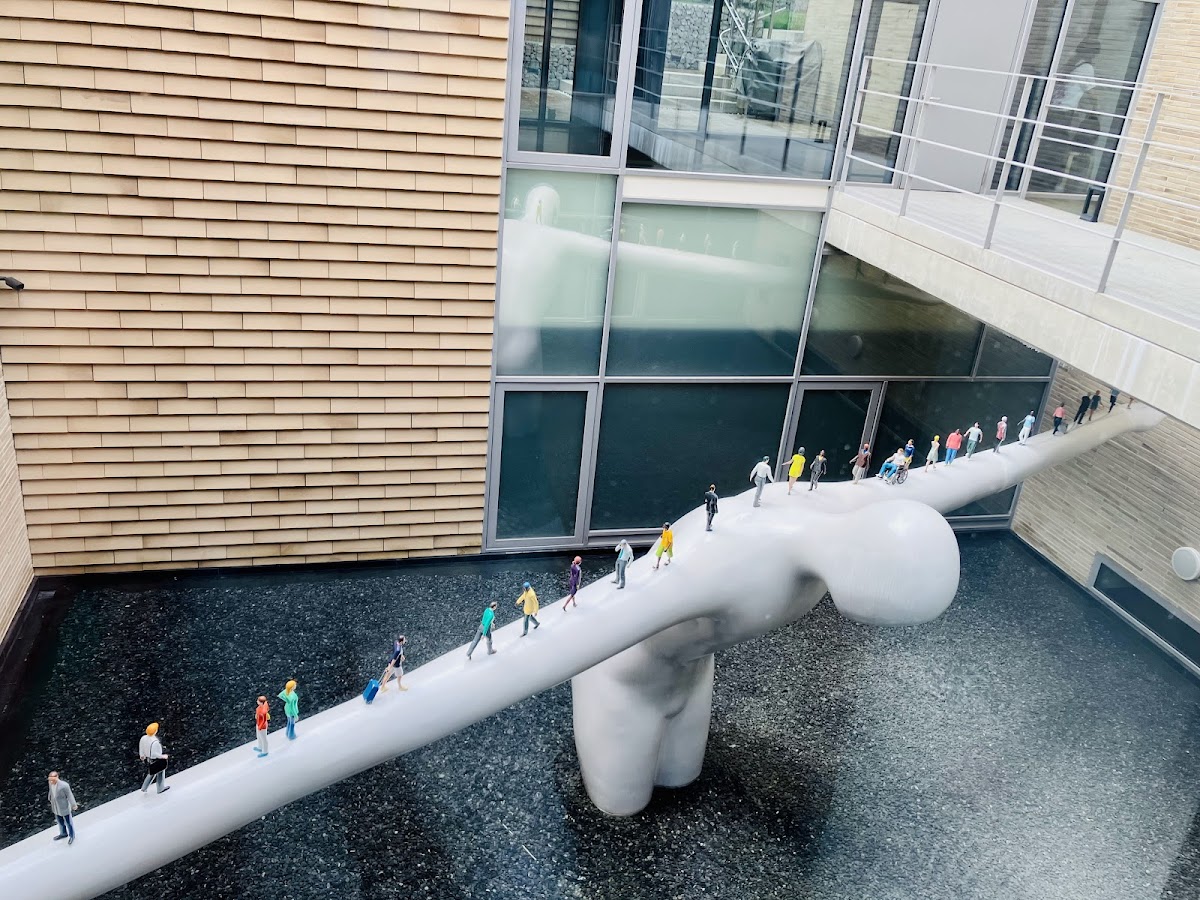
At the upper end of a Samcheong-dong lane, Museum Hanmi appears as several pale brick blocks gathered around a central Water Garden. Glass passages reveal other floors and reflections overlap with the courtyard, repeatedly calling attention to what lies outside a photographic frame.
The institutional core, however, occupies colder and darker rooms. Approximately 20,000 photographic works are protected behind the visible galleries. Museum Hanmi is best understood by beginning with the conditions that allow one sheet of paper or film to outlive its first exhibition.
Korea’s First Museum Dedicated to Photography Opens in 2003
The Gahyeon Cultural Foundation established the Museum of Photography, Seoul in November 2003. The institution describes it as Korea’s first museum dedicated to photography, founded when few specialised organisations supported photographic creation or systematically exhibited and collected the medium.
Exhibitions were joined from the beginning by publishing, education and international exchange. Narrowing the museum to one medium did not reduce its work. It created a reason to examine prints, negatives, archives, books and the decisions of photographers with far greater depth.
Research Is Needed to Keep Photographic History
Photographic history cannot be reconstructed from finished prints alone. Invitations, magazines, correspondence, group records and personal memories explain how images entered exhibitions and debate. When such material remains only in private homes, an entire period can disappear with a generation.
In 2009 the museum founded the Korea Photographic Culture Research Institute, now the Museum Hanmi Research Center. It collects, organises, preserves and studies Korean photography materials, conducts oral-history interviews with senior photographers and compares individual memory with documentary evidence.
Its sourcebooks and periodical Photography+Culture continue questions after exhibitions close. A title and date become part of a broader production context, allowing the slower labour of research to extend the public life of an image.
The 2012 Academy Joins Looking with Making
The Hanmi Photo Academy, now Museum Hanmi Academy, began in 2012. Practising photographers teach structured courses that move beyond camera operation into framing, editing and the formation of a coherent body of work.
This remains important in an age of constant smartphone images. Abundance makes selection and sequence more difficult, not less. Learning to edit personal photographs can also sharpen the way a visitor reads the choices embodied in a museum print.
A New Samcheong Home and a New Name in 2022
In 2022, approaching its twentieth anniversary, the institution opened a new Samcheong space and relaunched as Museum Hanmi. The change did not discard the history of specialist photography. It widened the field toward contemporary art using photography, moving image and digital technologies.
The museum’s phrase Preserve to Advance describes the relationship. Conservation is not the opposite of experimentation. Accurate knowledge of historic materials provides a standard for understanding what changes when images become screens, data, video or spatial installation.
Three Blocks around the Water Garden
The Samcheong main building is arranged as three blocks intersecting around the Water Garden. The basement contains a multi-purpose hall, garden, cafe and corridor gallery. Level one contains three exhibition rooms, collection storage and a showcase linked to the vault; the upper lounge supports talks and member programmes.
A seven-metre front wall in the multi hall can carry large images and moving-image work. Concert-hall-level acoustics support performance and lectures. Photography is therefore released from the assumption that it must remain a small silent object mounted at eye level.
Two Kinds of Cold for Approximately 20,000 Works
The vault holds approximately 20,000 photographs collected over two decades. Cool storage is maintained at 15°C and 35 percent relative humidity, while cold storage is held at 5°C and the same humidity. Different materials require different degrees of cold.
Interior materials are neutral, pH 7 archival-grade products. Museum Hanmi states that cold storage can extend the life of the collection to approximately 500 years. The number is less a promise of eternity than a measure of how decisively a few degrees and controlled moisture affect photographic survival.
Photography is created and viewed through light, but excessive light damages it. Movement between dark storage and illuminated display is the medium’s basic museum rhythm. Works rest because the institution intends them to be seen again.
A Storage Showcase Makes Conservation Visible
Most museum vaults remain entirely behind the scenes. Museum Hanmi places a showcase connected to the storage area within the visitor route. It offers a controlled view of conservation without exposing the collection to unnecessary risk.
Shelves, packaging and measured intervals may appear less dramatic than a masterpiece, yet they reveal the life of an object after it leaves the wall. Access and preservation remain in tension: more display creates more opportunity but also more light and handling. The showcase makes that ethical choice visible.
Three Sites and the Portable Space of Books
Museum Hanmi presents a three-site system across Samcheong, Bangi and Gimpo. Samcheong centres major exhibitions and academy activity; Bangi is conceived as a library-like exhibition and research environment; Gimpo emphasises collaboration with local artists, residents and students. Current access and opening status should be checked for each site.
Publishing connects the dispersed work. Collection books, catalogues and Korean photographic history sourcebooks carry exhibitions and research beyond the buildings. The museum treats books as its chronology, a record of Korean art and a practical form of support for artists.
A Visit Ordered from Display to Storage
Begin with the Water Garden, then enter the level-one galleries while noting print date, process, paper and scale. Continue to the storage showcase to imagine the time of works not currently displayed, then connect the multi hall and annex to the present programme.
Official hours are Tuesday-Sunday 10:00-18:00, closed Monday. A recent standard combined main-building and annex ticket is KRW 15,000 for adults and KRW 7,500 for students and seniors, but exhibition prices and concessions can change. Confirm current programmes and access for all branches.
Allow 1.5 to 2 hours. The lasting image is not only one celebrated photograph, but 20,000 works slowly enduring in a 5°C room while research, books and classes give them new language.
Visit Info
- Address: 45 Samcheong-ro 9-gil, Jongno-gu, Seoul, South Korea
- Hours: Tuesday-Sunday 10:00-18:00, closed Monday. Check official notices for installation and holiday changes
- Fee: Current standard guide: adults KRW 15,000; students and seniors KRW 7,500. Confirm combined main/annex tickets, exhibition pricing and free-admission eligibility
- Transport: From Gwanghwamun or City Hall station, transfer to Jongno 11 village bus, alight at Samcheong Park and walk
- Time needed: Allow 1.5-2 hours for main and annex exhibitions plus the storage showcase, or half a day with Bukchon and Samcheong-dong
- Website: https://museumhanmi.or.kr/en/
Visitor Info
| Address | Translating |
| Hours | Translating |
| Admission | Translating |
| Getting There | Translating |
| Duration | Translating |
| Translating | https://museumhanmi.or.kr/ |