A Signal Room in Shinjuku Turns a Century of Telephony into Media Art
A Signal Room in Shinjuku Turns a Century of Telephony into Media Art
Waiting for a Signal Beneath Three Letters
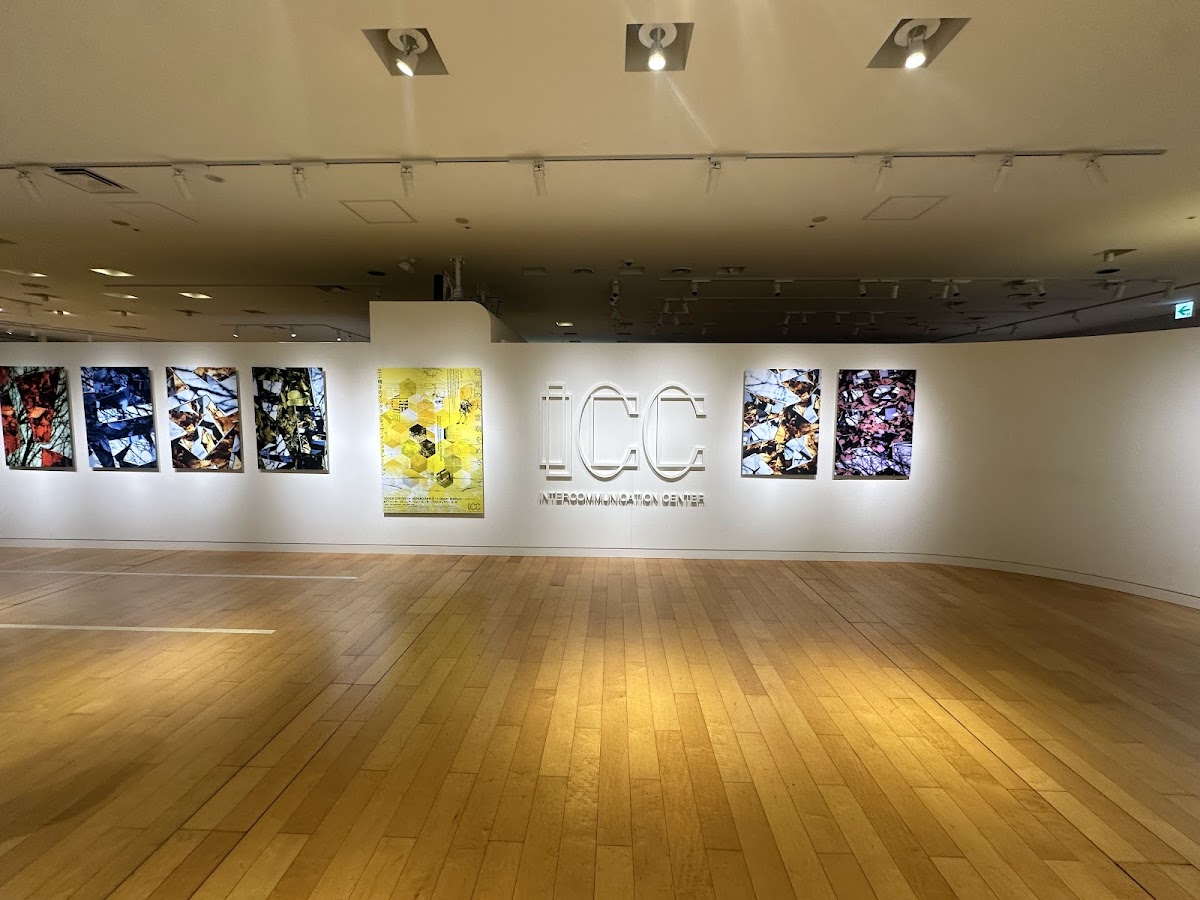
NTT InterCommunication Center is hidden inside Tokyo Opera City among routes to offices, shops, and performance halls. Visitors looking for a freestanding museum facade may miss it. Elevators and escalators lead to a fourth-floor entrance marked by the letters ICC.
White walls, wooden floors, screens, and speakers first resemble an ordinary contemporary gallery. Then sensors read a body, an image arrives late, or sound returns from an unexpected direction. Looking becomes an input rather than an activity outside the work.
The institution is not best understood as a showroom for new devices. Its history concerns how a telecommunications company turned connection into a cultural problem and gave artists room to test both the promises and failures of technology.
A Century of Telephony Becomes a Museum
ICC opened on 19 April 1997 in Tokyo Opera City, Nishi-Shinjuku, to commemorate the hundredth anniversary of telephony in Japan. Operated by NTT East, it was designed as a meeting place for science, technology, and artistic culture.
The telephone connected distant voices. By the end of the twentieth century, networks were also carrying images, data, and virtual environments into daily life. The term InterCommunication suggests many media and participants rather than a single successful transmission.
Corporate support offers access to infrastructure but also creates tension. The most useful exhibitions do not present technology as advertising. They ask who controls a system, what it measures, and how convenience reorganizes perception and power.
ICC Began in 1990 Without a Building
The conceptual and practical framework started in 1990, seven years before the facility opened. ICC organized art-and-science events and launched the journal InterCommunication before it possessed dedicated galleries.
This period did more than introduce media art as a new genre. Artists, researchers, engineers, and philosophers approached the same technologies through different languages. Questions and methods of collaboration had to exist before the equipment could produce meaningful work.
The 1997 opening therefore gave a physical centre to an existing network of publication, discussion, and experiment. Its archive still reveals preparation and failed trials behind displays that once appeared to be visions of a seamless future.
Virtual Reality Changes the Visitor’s Position
Since its founding, ICC has presented virtual reality, interactive multimedia, and other leading-edge forms. It began doing so when headsets and responsive screens were unfamiliar to most visitors and when a body altering an image felt newly strange.
Interaction is more than pressing a button. Meaning depends on what a sensor recognizes, what it ignores, and how a system reduces a participant to data. The visitor may appear to control the work while also becoming the object being measured.
Preservation becomes difficult as operating systems, cables, displays, and storage formats disappear. Media art requires care for software, interfaces, and execution environments as well as physical components. A work is an object and a set of conditions.
Open Space Makes a Free Entrance to Media Art
ICC launched the long-running Open Space programme in 2006. A gallery, mini-theatre, and the HIVE video archive were grouped around an annually changing exhibition and opened free of charge to a broad public.
Earlier editions also included a library and lounge. Visitors could move from artworks to documentation, watch longer recordings, or pause before returning. The setting encouraged repeated study rather than a rapid route between ticket gates.
Open Space continued through 2021. In 2022, ICC Annual extended the role of a long-term exhibition. The title changed, but the commitment to examining artistic expression within the contemporary media environment remained visible.
HIVE Reconnects Exhibitions After They Close
Media exhibitions can disappear when screens are switched off and installations dismantled. HIVE organizes videos of exhibitions, talks, interviews, and performances online, allowing distant visitors to trace how the institution’s questions developed.
The archive contains more than polished documentation. Artists explain decisions, installations reveal their operation, and audiences respond to technologies that once felt new. Each record preserves part of the social and technical context around a work.
HIVE cannot reproduce an obsolete interface or the physical scale of an installation. Its value lies partly in that difference. Watching past experiments on a current phone makes it possible to notice what vanished and what survived as an idea.
The Collection Preserves Ways of Communicating
ICC collects works that explore new possibilities in communication media from an international perspective. Permanent installations, video art, and interview series form related but distinct records. Artists represented in its video collection include Bill Viola and Gary Hill.
To collect such work is not simply to place hardware in storage. Software versions, projector brightness, speaker positions, audience movement, and network dependencies may all need documentation if the work is to function again.
Visitors can therefore look beyond the image on a screen and follow the route by which it arrives and changes. The meeting of telecommunications history and artistic experiment becomes clearer in the signal path than in a list of machines.
Algorithms Reframe History and Memory in 2026
ICC Annual 2026: What Is Left, What Remains, and What We Take on examined intersections among history, technology, and media. It addressed an environment in which generative AI and related systems produce and circulate information at unprecedented speed.
Online content does not flow neutrally. Algorithms select and reorganize it, while political and economic forces can reshape the frameworks of memory. The exhibition returned technological progress to a question of responsibility for what remains.
Asking whether an artwork used AI is insufficient. More revealing questions concern the chosen data, the people who review an output, and the context automation removes. Problems posed by communication in the 1990s return in a new algorithmic form.
Two Minutes from Hatsudai Opens Another Tokyo
ICC sits west of Shinjuku’s densest towers in Tokyo Opera City, connected to Hatsudai Station on the Keio New Line. The East Exit is roughly two minutes away, although checking the internal floor route prevents confusion among office entrances.
General hours are 11:00 to 18:00 from Tuesday through Sunday. Closures may include Monday, a Tuesday after a Monday holiday, year-end dates, maintenance days, and exhibition changeovers. Fees and reservations differ by programme.
Video and interactive works can extend a visit. Choosing several works for sustained attention and returning to HIVE later is often better than attempting every screen. Tokyo Opera City Art Gallery and performance venues maintain separate schedules.
Communication Appears When It Fails
A telephone seems successful when a voice arrives. Media art exposes delay, noise, failed translation, and missing data, showing that communication is never complete. A response that does not occur as expected may be part of an ICC work rather than a defect.
The path from 1990 preparation to the 1997 opening, Open Space, and ICC Annual is not merely a chronology of technologies. Each shift asks again how people perceive the world and understand one another through systems.
Back in signal-saturated Shinjuku, the exhibition continues through navigation, payment, and image sharing. The systems enabling those actions also record and select. ICC’s longest exhibition may be the communications environment visitors carry outside.
Visit Info
- Address: Tokyo Opera City Tower 4F, 3-20-2 Nishi-Shinjuku, Shinjuku-ku, Tokyo 163-1404
- Hours: Tue-Sun 11:00-18:00; closed Monday, selected holiday Tuesdays, year-end dates, maintenance days, and changeover periods
- Fee: Varies by exhibition; the Art & Science Chronology and HIVE corners in the fifth-floor lobby are free
- Transport: About two minutes from Hatsudai Station East Exit on the Keio New Line, connected to Tokyo Opera City
- Time needed: About 1.5-2 hours; allow longer for timed video or interactive works
- Website: https://www.ntticc.or.jp/en/
Visitor Info
| Address | Translating |
| Hours | Translating |
| Admission | Translating |
| Getting There | Translating |
| Duration | Translating |
| Translating | https://www.ntticc.or.jp/en/ |