Tbilisi TPMM Builds a South Caucasus Image Archive
Tbilisi TPMM Builds a South Caucasus Image Archive
A Photography Museum Inside a Former Publishing House
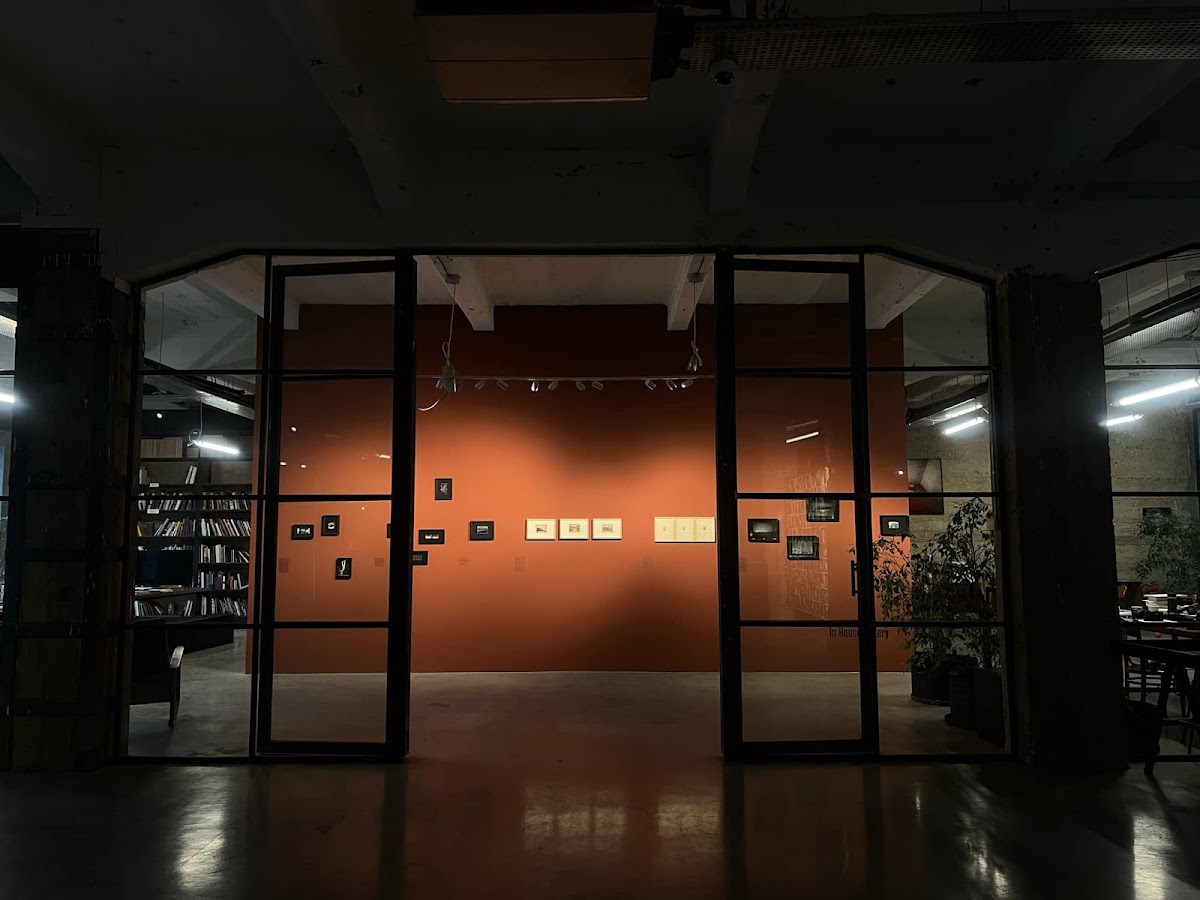
At 14 Merab Kostava Street, Stamba retains the concrete columns, exposed services, and generous floor heights of an industrial building. The complex was a Soviet-era publishing house before its conversion into a hotel in 2018. Tbilisi Photography & Multimedia Museum occupies part of this reused structure with galleries and working spaces.
There is no detached museum facade or ceremonial stair. Visitors move through a hotel and shared public areas before finding photographs behind glass and entering the gallery. The former production site is more than a picturesque shell. A building once devoted to printing and circulating images now hosts exhibitions, research, and education about how images are made and distributed.
Temporary walls and lighting sit between older columns rather than concealing them. Scale, sequence, wall colour, and viewing distance can change from one exhibition to the next. Checking the current programme is therefore more useful than expecting a fixed route through a permanent collection.
An Independent Nonprofit Founded in 2017
TPMM was founded in 2017 as a nongovernmental, not-for-profit organization. Its official profile describes it as the first institution in Georgia devoted entirely to the contemporary image in photography, new media, and video. Artistic director and co-founder Nestan Nizharadze has shaped a programme that joins exhibitions with research and education.
Its structure differs from a department of a national museum or a commercial gallery. Acquiring objects for permanent display is not the only way it builds an institution. Photographers, curators, filmmakers, researchers, and students meet in exhibitions and discussions, while projects in development receive training and production support before returning as public work or archive material.
The museum repeatedly places Georgia within the South Caucasus, including Armenia and Azerbaijan in its research and programmes. It also invites practitioners from other regions. The aim is not to collapse three countries into one culture, but to place their records within reach of one another while preserving names, locations, and differences.
Photography, Video, and New Media Share the Programme
Photography and Multimedia appear together in the institution's name. The scope is wider than prints hung on a wall. Video, slideshows, sound, and web-based records also enter the galleries. The programme treats the book, newspaper, screen, and online platform as different settings in which the same photograph may acquire a different meaning.
A photograph does not stop changing after exposure. Selection, order, title, caption, and display establish relationships around it. Grids of small prints or combinations of still and moving images make those editorial decisions visible. Visitors read not only individual scenes but also the gaps, repetitions, and changes of scale between them.
New media here need not mean a demonstration of new equipment. Digitising an old photograph, making it searchable, combining testimony with video, and publishing a project online are also technical choices. Exhibition and archive may use similar tools for different ends.
Researching South Caucasus Photographic Heritage Since 2018
TPMM began researching the photographic heritage of the South Caucasus in 2018. Its archive describes this as the first such initiative by a Georgian cultural institution. The work covers Georgia, Armenia, and Azerbaijan across three periods: the nineteenth century, seventy years of Soviet occupation, and the modern era.
Those periods contain very different technologies and institutions. Nineteenth-century photography required scarce equipment and specialized printing. During the Soviet period, state bodies, the press, studios, and families accumulated records under different rules. Digital cameras, phones, and online distribution later changed who could make photographs and how quickly they could disappear.
Archival work requires more than producing attractive scans. Names, dates, places, formats, and owners must be established where the evidence allows. Uncertainty also has to be recorded. The history of an image includes the route by which it reached the archive, not only the subject visible within its frame.
Separate National Records in One Online Archive
The archive keeps Armenia, Georgia, and Azerbaijan as separate entries. Their photographers and source records are not blended into one anonymous regional list. At the same time, a shared website allows visitors to move between them and compare how subject matter, photographic practice, and public access changed across borders and periods.
A further programme, XXI Century Portrait, treats contemporary portraiture as a record in progress. Historical material is not the only work that requires preservation. Photographs made today will also become research material, which makes names, circumstances, and metadata worth collecting at the point of production.
Online access creates a reading order unlike the gallery. A wall guides movement through a curatorial sequence, while the website lets a visitor switch among country, author, and project. The screen cannot reproduce an original print's scale or surface, but it makes the existence and basic context of material visible beyond Tbilisi.
Restoring Photographers' Names to the Record
The Georgian section lists photographers including Dina Oganova, Georgi Tsagareli, Giorgi Shengelia, George Nebieridze, and Guram Tsibakhashvili. The list does not ask one figure to represent a whole country. It begins with individual names and projects that can later be examined beside other generations and practices.
When photographic history is reduced to a few famous images, the names of photographers, editors, and custodians are easily lost. Author-based records with dates and project information make a period's visual culture more plural and more traceable. An exhibition brings selected works forward, while an archive leaves an address for the material that remains outside the room.
The museum's 2025 programme also recorded Guram Tsibakhashvili's exhibition Ascending. His appearance in both the archive and the exhibition calendar illustrates how research and public programming can meet. A photographer's work can return at several moments rather than being fixed in a single retrospective account.
Seven Women Photographers in the 2020 Multimedia Lab
The third Multimedia Lab Production Grant Programme took place in 2020. Seven emerging women photographers from Georgia, Armenia, and Azerbaijan joined a six-month process mentored by French photographer Grégoire Eloy. Each participant developed an existing social subject through photography and multimedia production.
The official record lists the COVID-19 crisis, LGBTQ communities, domestic violence, remote communities, women's emancipation, and relationships between people and the environment among the subjects. The programme did not compress them into a single campaign image. Each photographer worked from a different location and set of circumstances.
All seven completed projects entered the PHEI multimedia archive. The programme formed part of the Photography Hub for Education and Innovation and received support from the Swiss Agency for Development and Cooperation. The archive preserves the outcomes together with the names of participants, mentor, programme, and supporting body.
Learning the Stages of Image Production at TPMM School
TPMM School does more than interpret exhibitions. Its programme list includes Exploring the Language of Moving Images, the Multimedia Production Lab, and From the Idea of a Film to the Filming Set. Image reading, planning, shooting, editing, and collaboration are treated as distinct stages of work.
Moving-image study adds duration, cuts, sound, and sequence to the concerns of a still photograph. The cinema programme follows an idea as it becomes a shoot with defined roles and constraints. The multimedia lab brings together photographers, documentary filmmakers, journalists, and practitioners from related fields to plan collaborative projects.
When educational outcomes become exhibitions or online records, visitors can see some of the conditions behind finished work. Research choices, interviews, combinations of sound and image, and decisions to omit material all contribute to form. Building an audience and supporting the people who make images become connected parts of the museum's work.
A Small Institution Alternating Exhibitions and Discussion
TPMM's exhibition and event pages can be browsed by year from 2018 onward. Some periods are organized around photographic exhibitions, while others combine screenings, talks, open calls, and education. The contents of the rooms change more substantially than they would in a museum built around a stable display of canonical objects.
This rhythm creates both a requirement and an opportunity. A visitor should confirm dates before travelling to see a particular exhibition. In return, the available space can be reconfigured for an artist or subject, and forms that do not sit quietly on a wall can enter the programme on equal terms.
Past event pages are especially useful for understanding a small institution. Completed grants, exhibitions, and workshops remain searchable behind the current calendar. Reading those records after a visit reveals which regions, questions, and makers the museum has supported over several years.
Free Admission and a Visit Beginning at Stamba
The official website lists opening hours of noon to 7 p.m. from Monday to Friday and 2 to 8 p.m. on weekends. Admission is free. Holiday hours, exhibition changeovers, and separately registered events may alter access, so the current exhibition and events pages should be checked on the day of a visit.
The address is Stamba Hotel, 14 Merab Kostava Street. Visitors pass through shared hotel space and look for museum signs and glass-fronted galleries. A photography exhibition may take about an hour, although moving-image works and archive material reward additional time.
Opening the online archive after leaving places the prints seen on the wall within a longer South Caucasus photographic history. Nineteenth-century records, Soviet-period material, and current projects continue under country and author names. The visit ends concretely, with another image, date, and photographer to trace from the former publishing house.
Visit Info
- Address: Stamba Hotel, 14 M. Kostava St, Tbilisi 0108, Georgia
- Hours: Monday to Friday 12:00-19:00; weekends 14:00-20:00. Confirm holidays and exhibition changeovers
- Fee: Free admission; separate events and education programmes may require registration
- Transport: Enter Stamba Hotel at 14 M. Kostava Street and follow signs for the museum
- Time needed: About 1-1.5 hours; allow longer for video works and archive material
- Website: https://tpmm.ge/en/
Visitor Info
| Address | Translating |
| Hours | Translating |
| Admission | Translating |
| Getting There | Translating |
| Duration | Translating |
| Translating | https://tpmm.ge/en/ |