The Architecture Hidden in Aomori's Forest
The Architecture Hidden in Aomori's Forest
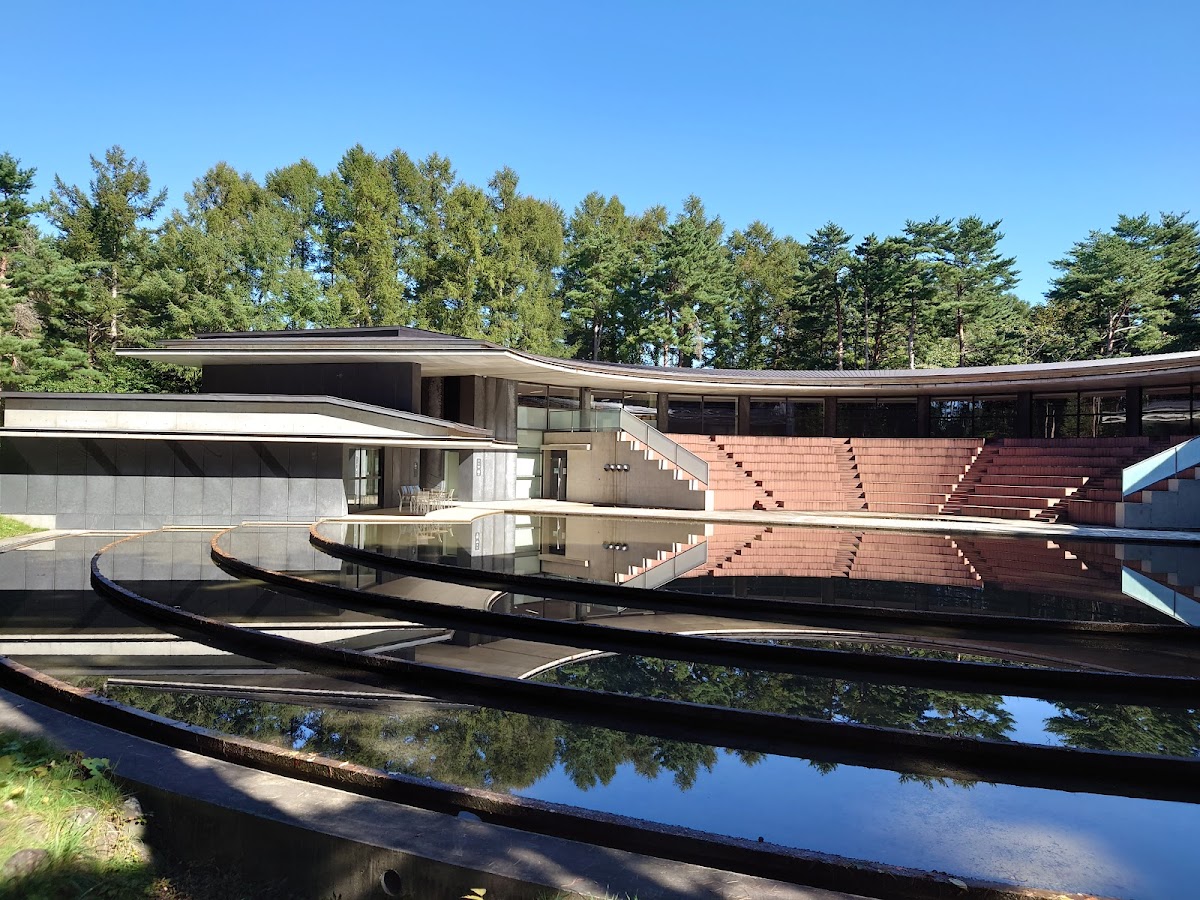
Travel south from central Aomori toward the foothills of Mount Hakkoda and the first thing you meet is not a grand museum facade but woodland. The Aomori Contemporary Art Centre, usually shortened to ACAC, was never meant to reveal itself at a glance. You follow the path and pass between concrete walls before the water terrace, outdoor amphitheater, and low buildings appear one after another.
That arrival explains much of the place. ACAC did not put a sealed box for art in the forest. Its architecture, woodland, weather, and resident artists were meant to act on one another. Tadao Ando named the design idea "unseen architecture."
A place for making art on Aomori's centennial
ACAC was established as a project commemorating the 100th anniversary of Aomori City and opened in December 2001. Aomori Public University now operates it. The institution differed from a collecting museum from the beginning. Its central activity was an artist-in-residence program, accompanied by exhibitions and education.
The residency was not conceived only as a closed studio for invited names. ACAC has supported artists through nomination, open calls, and self-funded stays, while arranging encounters with local residents and students. The emphasis is less on receiving finished objects for a permanent display than on what an artist can make while living and working in Aomori.
Keeping the contours of the mountain
Ando did not flatten the sloping site. He set the buildings into the woods and divided them into three structures that follow the existing changes in elevation. The Creative Hall and Residential Hall extend like bridges holding close to the mountainside. The Exhibition Hall curves into a horseshoe around galleries and an outdoor amphitheater. An open-air arcade links the buildings with paths through the trees.
Exposed concrete is familiar from Ando's other buildings, but concrete alone does not determine the experience here. Natural light enters the curved gallery. Walls and sky double in the water. Openings between trees keep shifting the view. A visit feels less like clearing a sequence of rooms and more like reading the distance between forest and building.
The marks left by empty space
The architecture was completed in November 2001, one month before the center opened. Its three buildings and outdoor arcade were planned as open spaces without permanently fixed functions. Artists could reinterpret them for each project. Winter snow, condensation, and seasonal light were also treated as exhibition conditions rather than disturbances outside the museum.
That freedom has left physical evidence. ACAC's own architectural guide points to holes in the polished gallery floor where sculptures were once anchored and traces of condensation on the ceiling. These are not simply blemishes waiting to be hidden. They record how artists have tested the building. Ando repeatedly used the word "nurture" when discussing the limits of the architect and the creative potential of the people who use a place. At ACAC, that idea is concrete. What happened after completion has become part of the architecture.
A museum without a permanent collection
ACAC has no permanent collection. Every exhibition therefore begins again. More than twenty outdoor sculptures are scattered through the grounds instead of being gathered in a permanent gallery. Some were made as outdoor works from the outset. Others were produced during residencies and remained after the artists left. The boundary between permanent object and temporary residue was not decided in advance.
Saburo Muraoka's SALT brings iron and salt together. Salt oxidizes the iron, changing its surface and form, so time in the forest enters the work directly. Tatsuo Kawaguchi, whose practice considers matter and things that cannot be seen, buried bronze canes in the ground and built a "Garden of Time" with trees, birdhouses, copper rings, and an acrylic staircase. Péter Pal's walkable anamorphic sculpture uses stones gathered mainly from shores in Aomori Prefecture. Nature is not borrowed as scenery for these works. Rain, snow, rust, and fallen leaves continue the process.
How the forest remakes the work
Lee Seung-Taek's Artificial Nature was selected for an outdoor sculpture exhibition held in Aomori in 1988 to mark the opening of the Seikan Tunnel. The work originally consisted of two forms and remained in Gappo Park. Thirteen years later it was moved to ACAC, where discussions with the artist led to its two sections being combined for the forest site. The present structure is seven meters high and four meters in diameter.
Crushed stone quarried near Aomori forms its tall body. Bronze cylinders at the top hold dead wood from the surrounding forest. Moving the work did not mean transporting an untouched original. The relationship between its pieces and materials was decided again in a different place.
Kei Tsuji's AOMORI: Circle 2005/2017 holds two moments at the same site. For the first version in 2005, she stretched brightly dyed thread around the inside of a cylinder. When she remade it in 2017, she painted over the thread with red bengala, a natural pigment made from iron oxide. Sounds made inside the cylinder return as complex echoes, opening an experience that cannot be found by looking at the surface alone.
Noe Aoki stacked cut pieces of iron to make Moya I. Light, shadow, and moving air pass between the solid pieces. Deeper in the woods, Keiji Uematsu placed a single stainless steel tree inside a spiral earthwork. His arrangement brings gravity, tension, and other barely visible forces into the balance between metal, soil, and living trees.
Kimio Tsuchiya's Landscape Recollection forms a winding fence from old railway sleepers. The material recalls Aomori's history as the former final station on Honshu. The sleepers no longer carry trains, but they have returned to weather and ground, holding another part of the region's time.
Yusuke Asai used the same white road-marking material found in crossings and stop signs. People who use the site helped cut the sheets into plant shapes. Asai arranged the pieces on paved surfaces and fixed them with a burner. The work grew out of the route people already walked rather than arriving in the woods as a self-contained object.
A residency shaped by its building
A resident artist receives more than a neutral room. Curved walls, natural light, workshops, accommodation, and the surrounding woods arrive together as working material. ACAC notes that a number of works were conceived precisely because of the gallery's arching surfaces and the daylight entering through its windows. The places for living, producing, and presenting art are close to one another. An artist stays in the Residential Hall, works in the Creative Hall, and can show the result in the Exhibition Hall or outdoors.
Visitors are not limited to looking at a finished product. Exhibitions and learning programs offer contact with the process, while a walk through the woods may reveal something left by an earlier residency. With no collection to accumulate, ACAC instead accumulates relationships, experiments, and ways of using the site. Its history resembles a record of occupation more than an inventory in storage.
The institution's three working pillars remain close to one another. A project begun in residence can continue as an exhibition and be interpreted again through a program with residents or students. International visits and local routines meet on the same grounds. A question formed in the studio can move through the gallery, amphitheater, and forest path.
What remains between exhibitions
At a collecting museum, the interval between installations can feel like empty time. ACAC's architecture and outdoor work fill that interval. The water terrace reflects concrete and sky. Inside the curve of the horseshoe-shaped Exhibition Hall, stepped seating opens toward the amphitheater. Programs may change, but the basic relationship among these spaces remains available to read.
There is no single correct route. You may enter the gallery first and cross toward the Creative Hall, or follow sculptures through the woods and discover the low roof only later. This is why one frontal photograph cannot adequately describe the building. The moments when it disappears from view and comes back are part of the design.
The amphitheater, water, and outdoor arcade do not feel blank when no work has been installed. Wind, shadow, and passing bodies keep measuring their scale. Snow can blur the line between roof and ground. Burying the buildings in the woods is not an idea that works only in the greenest season.
A visit therefore requires more than checking an exhibition title. Look at which buildings are open, whether the outdoor works are accessible, and what condition the forest paths are in. Calendar and weather divide the museum into different possible visits.
When snow hides the exhibition
The outdoor works can be explored with a forest walk from spring through autumn. In winter, paths may close and sculptures can disappear under the snow. The ground may be muddy after rain, and ACAC asks visitors not to enter the woods during strong winds because of falling branches. These limits belong to the same logic as "unseen architecture." Nature is not controlled landscaping here. It can decide whether part of the exhibition is visible at all.
ACAC is at 152-6 Yamazaki, Goshizawa, Aomori. Exhibition changes, construction work, and the season can alter which areas are available, so check the official website and current hours before traveling. If the museum seems hard to see when you arrive, do not assume you have missed it. The visit has already begun at that lowered line of sight.
Visit Info
- Address: 152-6 Yamazaki, Goshizawa, Aomori, Japan
- Hours: May vary with installation changes, construction, and season; check the official site
- Fee: Check each exhibition or program
- Transport: Check the official directions for the date of your visit
- Time needed: About 1.5 to 2 hours
- Website: https://acac-aomori.jp/
Visitor Info
| Address | Translating |
| Hours | Translating |
| Admission | Translating |
| Getting There | Translating |
| Duration | Translating |
| Translating | https://acac-aomori.jp/ |