Mexico City: Frida Kahlo's Blue House and the Murals of Revolution
Mexico City: Frida Kahlo's Blue House and the Murals of Revolution
Mexico City, a vibrant metropolis, serves as a dynamic crossroads where ancient civilizations, revolutionary fervor, and contemporary artistic expression converge. This report details a journey through two of its prominent modern art institutions: the Museo Universitario Arte Contemporáneo (MUAC) and the Museo de Arte Moderno (MAM), offering a distinct perspective on Mexico's rich artistic heritage beyond the iconic works of Frida Kahlo and the monumental murals of Diego Rivera.
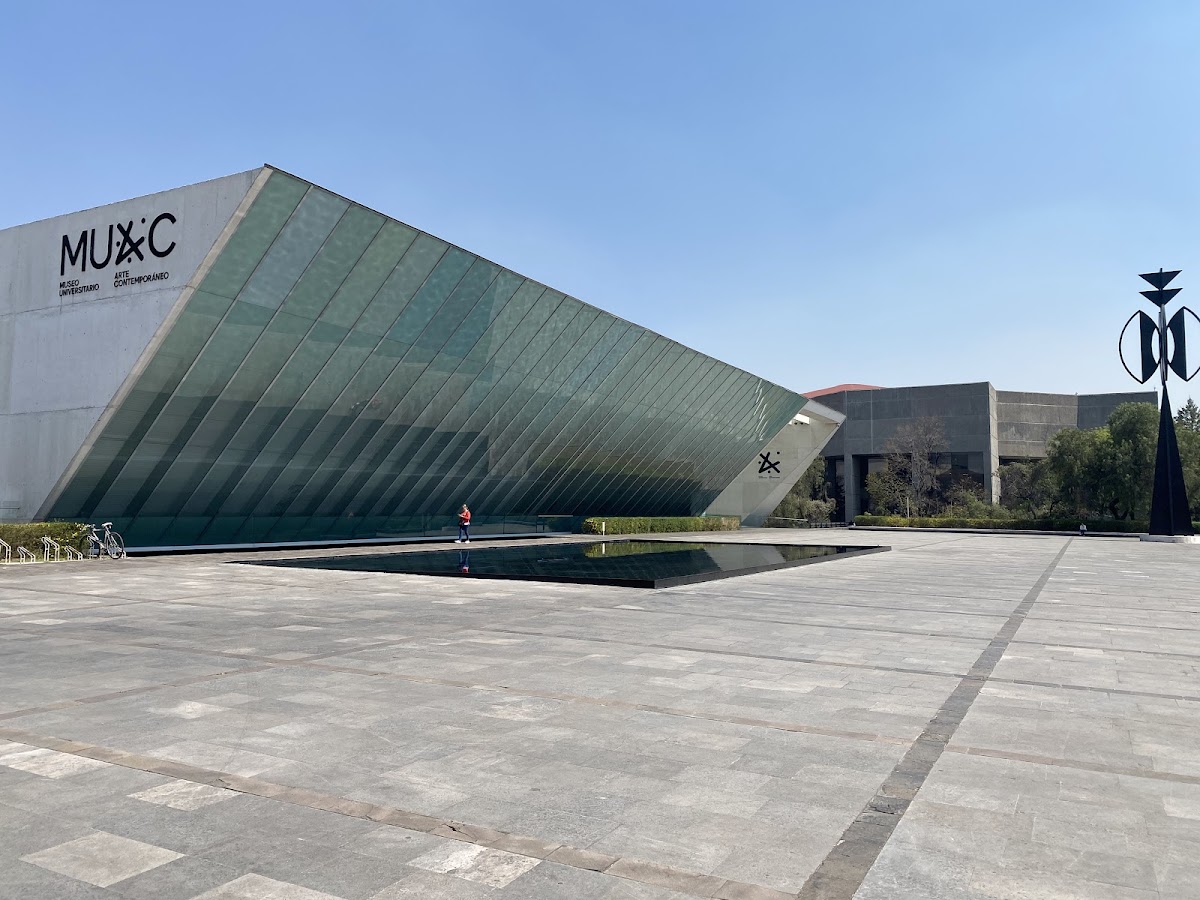
MUAC: A Contemporary Architectural Statement in Coyoacán
Located within the UNESCO World Heritage-listed campus of the National Autonomous University of Mexico (UNAM) in Coyoacán, MUAC stands as a significant work of contemporary architecture. Designed by the acclaimed Mexican architect Teodoro González de León, the museum's brutalist aesthetic harmonizes with the surrounding volcanic rock landscape. Its design emphasizes a dialogue between robust concrete forms and expansive glass, allowing natural light to sculpt the interior spaces and connect the museum with its environment.
MUAC's collection focuses on contemporary art from the mid-20th century to the present, with a strong emphasis on Mexican and Latin American artists. The museum plays a crucial role in fostering critical discourse and understanding of contemporary art, offering flexible exhibition spaces that adapt to diverse artistic expressions. The central atrium, bathed in natural light, provides a contemplative space that enhances the visitor's engagement with the artworks.
MAM: A Portrait of 20th-Century Mexican Art in Chapultepec Park
The Museo de Arte Moderno (MAM) is situated within the expansive Chapultepec Park, a vital green lung of Mexico City. Opened in 1964 and designed by architect Pedro Ramírez Vázquez, MAM houses a comprehensive collection of 20th-century Mexican art. The museum's architecture, characterized by its use of natural light, provides an ideal setting for its diverse exhibits.
A highlight of MAM's collection is Frida Kahlo's powerful painting, 'Las Dos Fridas' (The Two Fridas). This iconic work, created after her divorce from Diego Rivera, vividly portrays her divided self and emotional pain through its symbolic imagery of two figures connected by hearts and veins. MAM also features significant works by the Mexican muralists, including Diego Rivera, David Alfaro Siqueiros (such as 'Dos Montañas'), and José Clemente Orozco, showcasing their revolutionary ideas and experimental techniques. Furthermore, the museum explores Mexican Surrealism, presenting dreamlike and mystical works by artists like Leonora Carrington and Remedios Varo, whose 'Música Vegetal' exemplifies the unique magical realism prevalent in Mexican art.
Planning Your Artistic Journey
Exploring Mexico City's art scene can involve visits to both MUAC and MAM. MUAC is located at Av. Insurgentes Sur 3000, C.U., Coyoacán, 04510 Ciudad de México, CDMX, Mexico, and MAM at Cto. Interior Melchor Ocampo 469, Anzures, Miguel Hidalgo, 11590 Ciudad de México, CDMX, Mexico. Both are accessible via public transport.
- MUAC Visiting Information: Closed Mondays. Open Tue-Wed 10:00-18:00, Thu 10:00-20:00, Fri 10:00-16:00, Sat 11:00-20:00, Sun 11:00-18:00. General admission $40 MXN.
- MAM Visiting Information: Closed Mondays. Open Tue-Sun 10:15-17:45. Admission is free.
Visitors are encouraged to check official websites for the most current operating hours and admission details. These two museums offer invaluable insights into Mexico's rich artistic landscape, from its revolutionary past to its vibrant contemporary scene.
Visitor Info
| Estimated Visit | Translating |
| Translating | Translating |
| Recommended Route | Translating |