Sydney and Melbourne: Meeting the Twin Stars of Southern Hemisphere Art
At the southeastern tip of the Australian continent, Sydney and Melbourne are not merely Australia's representative cities but have established themselves as two shining stars of art in the Southern Hemisphere. Each city possesses a unique cultural heartbeat, which reverberates most vividly through their world-class art institutions: the Art Gallery of New South Wales (AGNSW) and the National Gallery of Victoria (NGV). This journey was an exploration of these two colossal cultural treasures, experiencing firsthand the vast spectrum of Australian art, from the soul-stirring echoes of ancient Indigenous art to the brilliant hues of European Impressionism. It was more than just viewing artworks; it was an immersive expedition into the history, spirit, and future held within Southern Hemisphere art.
Sydney, Artistic Harmony of Light and Sea: Art Gallery of New South Wales
Nestled between the sparkling waters of Sydney Harbour and the lush greenery of the Royal Botanic Garden, AGNSW itself felt like a living painting. The sun-drenched, open spaces blended naturally with the outdoor scenery, making the building feel like an organic part of its surroundings. My first encounter here was with the Indigenous art collection. It was a powerful and overwhelming experience, far beyond my expectations. The bark paintings and dot paintings, imbued with the wisdom of ancestors and the spirit of the continent, were not mere pictures. Each line, dot, and color was an epic poem of tens of thousands of years of history, seemingly pulsating with timeless stories and the breath of ancient spirits.
The rugged yet delicate bark paintings held ancient myths and life's wisdom, while vast canvases made of colorful dots magically unfolded the secrets of the cosmos and the landscapes of the desert. Standing before these works, even the passage of time seemed to halt, and with deep reverence, I realized with every fiber of my being who the true custodians of the Australian continent were, and how profoundly rich and deep their culture truly is. It was a moment where sorrow and wonder intertwined. AGNSW's Indigenous art eloquently demonstrated that art could be the most potent medium for conveying history and spirit, transcending mere beauty.
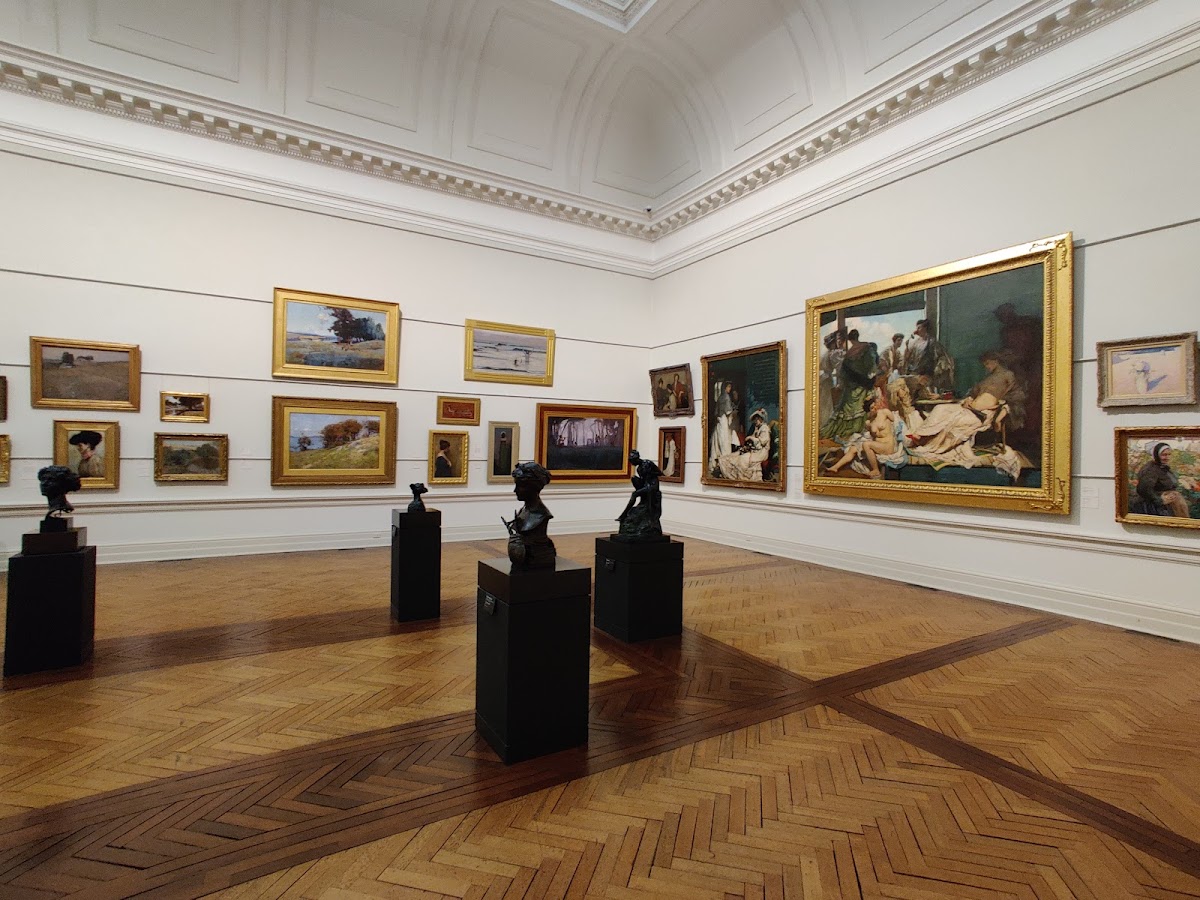
The subsequent sections on European Impressionism and contemporary art offered a different kind of moving experience. From Monet's luminous landscapes to Matisse's vibrant colors, the works of European masters shone even brighter under Sydney's brilliant sun. Notably, in the works of Australian landscape painters, one could observe how European techniques merged with Australia's intense sunlight and vast natural beauty to create a unique aesthetic. AGNSW presented an artistic spectrum where past and present, East and West, and Indigenous and immigrant cultures harmoniously coexisted, deeply impressing upon me the multilayered identity of Australia.
Melbourne, Heart of Culture and History: National Gallery of Victoria
The journey from Sydney to Melbourne felt like crossing into another artistic continent. True to its reputation as 'Australia's cultural capital,' the entire city of Melbourne seemed like one grand gallery. The majestically situated NGV in the city center proudly showcases its extensive collection across two buildings: NGV International on Flinders Street and The Ian Potter Centre: NGV Australia in Federation Square.
The moment I entered NGV International, the rainbow-colored sunlight pouring through the stained-glass ceiling created an illusion of stepping into a sacred hall of art. This venue houses an extensive international collection spanning ancient to modern art from Europe, Asia, and America. From Rembrandt's classical portraits to Picasso's cubist works, and Egyptian artifacts to Roman sculptures, significant moments in human art history unfolded like a panorama. In particular, NGV's Impressionist collection boasted a different depth and scale compared to AGNSW. Degas' ballerinas, Renoir's bright colors, and Cézanne's still lifes vividly conveyed the breath of masters who defined an era, leaving a deep artistic resonance within me.
Next, my visit to The Ian Potter Centre, which focuses solely on Australian art, showcased the essence of Australian art in a distinct way from NGV International. Here, too, Indigenous art played a crucial role, but while AGNSW concentrated on spiritual depth, NGV Australia broadly illuminated the diverse forms and modern interpretations of Indigenous art, as well as its evolution through interaction with white settlers. Here, I traced the dynamic flow of Australian contemporary art, along with the footsteps of unique Australian art movements like the Melbourne School and the Heidelberg School, appreciating how Australian artists captured the vast continent on canvas with their own distinct palettes. The works of the Heidelberg School, often called Australian Impressionists, particularly impressed me with their interpretation of Australian light and landscape in a way distinct from European Impressionism, creating their own unique visual language. The Indigenous art exhibitions in both museums, by having different perspectives and emphases, allowed me to understand the diverse facets of Indigenous culture and its intersection with contemporary art more richly. It was like viewing the same subject through two different lenses, gaining a more three-dimensional perspective.
Dialogue of Southern Hemisphere Art: Comparison and Emotion from Two Galleries
After experiencing both Sydney's AGNSW and Melbourne's NGV, I realized that these two museums are not mere competitors but rather the two main pillars of Australian art, complementing and enriching each other. AGNSW, as a spiritual epicenter of Indigenous art brimming with the vitality of light, sea, and the ancient continent, directly conveys the foundational energy of the land to its visitors. The art there offers an emotion that blossoms at the intersection of magnificent nature and the human spirit. NGV, on the other hand, embraces the flow of world art history with a broader vision, systematically demonstrating how Australian art has developed its unique voice within that context. Amidst Melbourne's intellectual and multicultural atmosphere, NGV was a treasury clearly showing how Australia communicates with global art trends while building its own identity.
The Indigenous art collections in both museums were particularly striking points of comparison. AGNSW focused on the deep-rooted spirituality and traditional values of Indigenous art, drawing visitors into their worldview and spirit. NGV, conversely, illuminated Indigenous art as a thread within Australian art history, examining its historical context and interaction with contemporary art from a broader perspective. These two approaches clearly revealed the distinct personality of each museum while providing an excellent educational experience that encompassed both the importance and diversity of Indigenous art.
European Impressionist works also offered an intriguing basis for comparison. AGNSW's collection felt even more vibrant under Sydney's bright, intense sunlight, showcasing how European Impressionist techniques were reinterpreted within an Australian context in the works of local landscape painters. NGV, on the other hand, more extensively covered the Impressionist masters, focusing on the impact of their artistic revolution on global art history. Like playing the same melody on different instruments, each museum interpreted the theme of Impressionism in its own unique way.
Through these two museums, I became convinced that Australian art is not merely a periphery of European art but a powerful and captivating art world with its own distinct vitality, built upon unique historical and cultural backgrounds. Sydney and Melbourne, as twin stars showcasing the past, present, and future of Southern Hemisphere art, illuminated the diverse soul of the Australian continent with their distinct lights. This journey was more than just a museum visit; it was an unforgettable experience that deepened my understanding of culture and history and rekindled my awe for the creative potential of the human spirit. Art, ultimately, is another language for understanding the world, and these two museums spoke that language most richly and beautifully. Feeling the artistic heartbeat of the Southern Hemisphere with my entire being, I returned with a broader, deeper perspective and a heart full of emotion.
Visitor Info
| Duration | 약 7Sun (각 도시 3Sun 이상 권장) |
| Budget | 중상 (항공권, 숙박, 미술관 입장료, 식비 포함 시) |
| Route | 시드니 (AGNSW) → 멜버른 (NGV International, The Ian Potter Centre: NGV Australia) |
