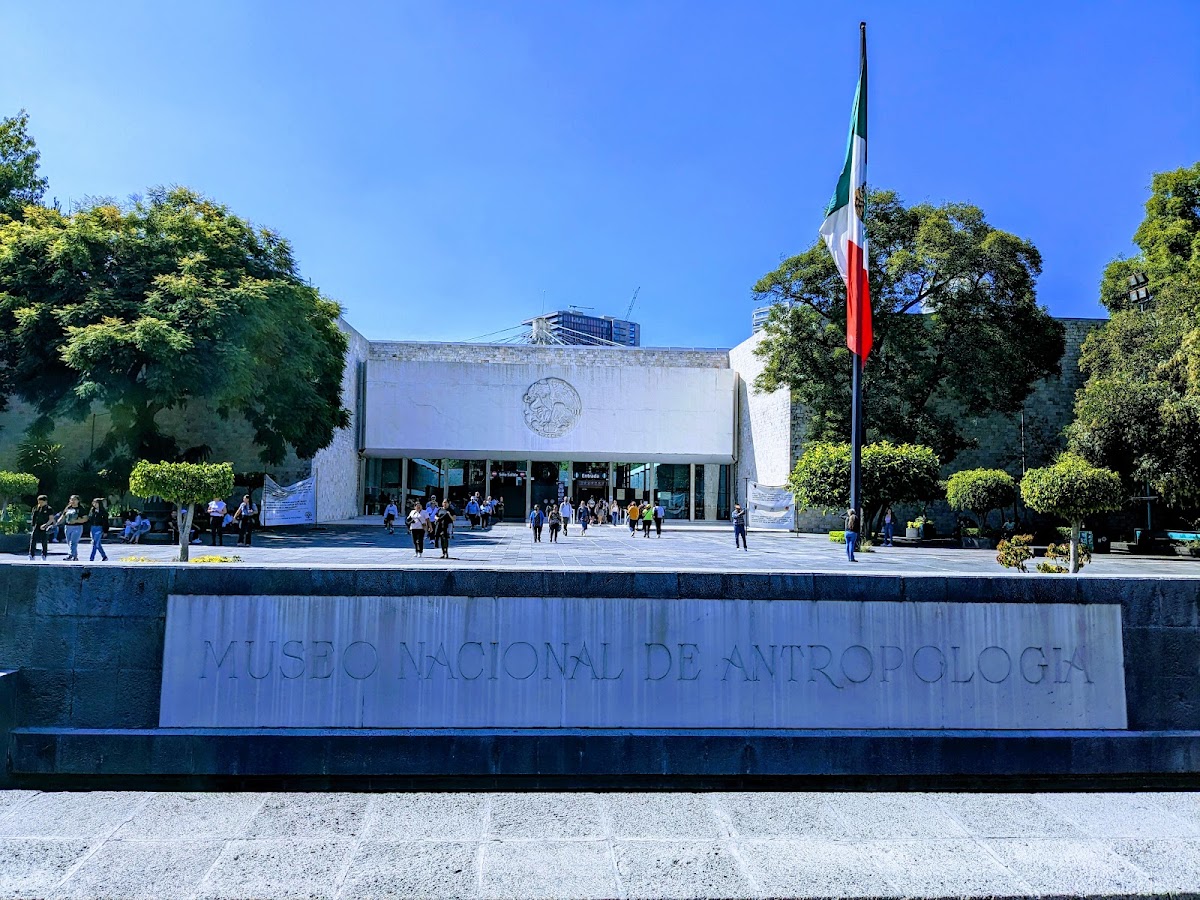
Museo Nacional de Antropología — The Treasury of Aztec and Maya Civilization in Mexico City
Deep within the verdant heart of Mexico City’s sprawling Chapultepec Park, a magnificent testament to human ingenuity and ancient civilizations quietly asserts its grandeur. This is the Museo Nacional de Antropología, a place I return to again and again, finding new layers of wonder with each visit. It isn't merely a museum; it is a profound journey, a portal that transports you through millennia, allowing the echoes of Aztec, Maya, Olmec, and countless other Mesoamerican cultures to resonate within your very soul. The sheer scale of its collections and the meticulous care with which they are presented evoke a reverence that few other institutions can match.
Approaching the museum, one is immediately struck by its imposing yet elegant modernist architecture. A long, stately path of polished marble leads to the main entrance, imbuing the walk with a ceremonial gravitas, as if one is entering a sacred precinct rather than a public building. The anticipation builds with every step, preparing you for the historical immersion that awaits. Once inside, the central courtyard unfurls, dominated by the iconic "El Paraguas" – The Umbrella. This colossal concrete structure, supported by a single, towering column that appears to pierce the very sky, shelters a mesmerizing artificial waterfall. The water cascades gracefully, creating a soothing murmur that accompanies your initial exploration. This masterful blend of brutalist strength and fluid natural element isn't just an architectural marvel; it feels like a deliberate statement, a bridge between the ancient world's awe-inspiring structures and contemporary design, suggesting that the spirit of creation endures through all ages.
The ground floor is where the heart of ancient Mesoamerica beats strongest, a labyrinth of halls each dedicated to a distinct pre-Hispanic culture. Moving through these spaces is like turning the pages of an epic history book, each chapter unfolding with breathtaking artifacts. In the Olmec hall, the colossal stone heads, with their enigmatic features and palpable sense of primordial power, seem to gaze back at you across thousands of years, their silent presence both humbling and mesmerizing. The Teotihuacan exhibit recreates the grandeur of its sun-drenched pyramids, while the Maya section captivates with intricate jade masks, elaborate stelae carved with glyphs that whisper ancient narratives, and the awe-inspiring recreation of Pakal’s tomb from Palenque. One can spend hours deciphering the delicate artistry of Mixtec goldwork or pondering the cosmological complexity of Zapotec funerary urns, each piece a fragment of a lost world.
Yet, for many, the true climax of the museum lies within the sprawling Mexica (Aztec) hall. Here, amidst a trove of ritualistic objects, warrior regalia, and agricultural tools, resides the undisputed star: the Aztec Sun Stone, or Piedra del Sol. It is not merely a calendar; it is a universe in stone, a monumental disc of basalt, intricately carved with symbols representing cosmic cycles, deities, and the very structure of their world. Standing before its immense form, tracing the concentric circles of its design, one can almost feel the pulse of a civilization that meticulously charted the heavens and understood the profound interconnectedness of all things. Its sheer size and detailed craftsmanship are overwhelming, a testament to the Aztec’s sophisticated astronomical knowledge and artistic prowess. It’s an object that demands silent contemplation, a reminder of the cyclical nature of time and the enduring human quest for meaning. The upper floor, dedicated to ethnography, then beautifully connects this ancient past to the vibrant indigenous cultures of present-day Mexico, illustrating the living legacy of these civilizations. The Museo Nacional de Antropología doesn't just display artifacts; it resurrects a past, making it tangible, breathable, and profoundly relevant.
Practical Tips
The Museo Nacional de Antropología is situated in Chapultepec Park, easily accessible via Mexico City's efficient Metro system (Auditorio or Chapultepec stations on Line 7 and Line 1 respectively) or ride-sharing services. I highly recommend dedicating a substantial portion of your day to your visit; a quick tour might take three to four hours, but to truly absorb the wealth of information and art, a full day is not an exaggeration. The museum is typically open Tuesday through Sunday, though it's always wise to check their official website for current hours and admission fees before planning your trip. Arriving shortly after opening on a weekday is your best bet to avoid the largest crowds, particularly if you wish to spend ample time in the more popular halls like the Mexica exhibit.
For navigation, I suggest starting your exploration on the ground floor, which houses the pre-Hispanic archaeological collections. Proceed clockwise through the halls, each dedicated to a different Mesoamerican culture. The upper floor, which focuses on Mexico’s contemporary indigenous cultures and ethnography, offers a fascinating counterpoint to the ancient world below and can be visited as a continuation or a separate, more focused exploration depending on your interest and time. The museum offers amenities such as a cafe, a more formal restaurant, and a well-stocked gift shop where you can find excellent books and reproductions. Comfortable shoes are a must, as you’ll be doing a lot of walking. Most areas are wheelchair accessible, with elevators available to reach the upper floor.
Visitor Info
| Admission | 95 MXN (~$5). Sun요Sun 멕시코 시민 Free |
| Hours | Tue-Sun 09:00-19:00 (Closed Mon) |
| Location | Av. Paseo de la Reforma, Chapultepec, CDMX |
| Getting There | 메트로 7 Line AuditorioStn walk 5min |
| Estimated Visit | 3-4hr. 23개 전시실 |
| Tips | 1층 중앙 아즈텍 태양석 방 → 마야 방 → 2층 민속학 순서. Tue요Sun 이른 오전이 한산. |
Featured Works
Aztec
Sun Stone (Piedra del Sol)
아즈텍 문명의 상징인 태양의 돌로, 직경 3.6m, 무게 24톤의 거대한 원형 석판입니다. 중앙에 태양신 토나티우의 얼굴이 새겨져 있으며, 아즈텍의 우주관과 달력 체계를 담고 있습니다. 1790년 멕시코시티 중앙광장에서 발굴되었으며, 멕시코 국립인류학박물관의 가장 소중한 유물입니다.
Maya
Mask of Pakal
마야 문명 팔렝케 왕 파칼 대왕의 옥(비취) 장례 가면입니다. 200개 이상의 비취 조각을 정교하게 이어 만든 이 가면은 파칼 왕의 석관 안에서 발견되었습니다. 마야 문명의 뛰어난 세공 기술과 사후 세계에 대한 믿음을 보여주며, 멕시코에서 가장 유명한 고고학 유물 중 하나입니다.