Oslo: The Fjord's Canvas, Where Munch's Scream Echoes Through Art's Heart
The air in Oslo is crisp and clear, as the distant, deep blue waves of the fjord intermingle with the city's breath. In the early morning, the mysterious Nordic sunlight, slowly emerging above the faint silhouettes of docked ships in the harbor, paints the entire city in enchanting hues. At sunset, the harbor, awash in the glow of dusk, possessed a peculiar charm where ancient history and modernity coexisted. This is not merely a Scandinavian capital. This is the very heart of Nordic art, where Edvard Munch's scream echoes, Viking spirit breathes, and a fervent artistic soul blossoms amidst the embrace of cold nature. As an art magazine editor, I embarked on a long journey to explore Oslo's profound artistic spirit. My destination for this quest, pulsating with artistic inspiration, comprised two main venues: first, the new home of 'The Scream' that shook the world – the MUNCH Museum, where Munch's artistic essence can be profoundly encountered; and second, the National Museum of Norway, boasting a vast collection that spans a millennium of Norwegian art. I had no doubt that these two spaces would perfectly and deeply narrate the artistic saga held within the city of Oslo. I instinctively felt that encountering art in the fjord city of Oslo would be more than just an aesthetic appreciation; it would be an awe-inspiring, soul-stirring experience.
MUNCH Museum: The Echo of The Scream, Painting the Landscape of the Soul
The newly opened MUNCH Museum stands tall in Oslo's vibrant Bjørvika district, right beside the fjord, an enormous work of art in itself. The 13-story building, with its irregularly tilted structure, seemed to embody Munch's complex and tormented inner world. The varying light of Oslo's skies and the blue hues of the fjord, reflected off its sleek yet rugged gray exterior, gave it a different impression moment by moment, stirring my heart even before I stepped inside. It seemed to showcase the essence of Norwegian architectural aesthetics, highly modern yet striving for harmony with nature. The clear, bright Nordic light pouring in through massive glass windows softly enveloped the exhibition halls, highlighting the colors and forms of Munch's works with greater clarity. I took a deep breath and, with a reverent heart, as if entering a grand sanctuary, stepped into the museum.
Upon entering, I immediately sought out Munch's most iconic work, The Scream, which embodies universal human angst. Here, several versions of The Scream painted by Munch himself are exhibited on a rotational basis. During my visit, one of the most famous tempera and oil versions, alongside a delicate lithograph, were displayed side-by-side. Standing before the artwork, what enveloped me was not merely visual appreciation but a profound thrill. Below a sky distorted with fiery orange and blood-red hues, a ghost-like pale figure with hands covering ears screams. Behind it, two elongated figures and a blue sea served as a backdrop that intensified all this anxiety and solitude. Though the scream of the figure in the painting is not heard, its visual energy awakened all my senses, making it feel as if my own soul was wailing in unison. Munch recorded in his diary in 1892, "I was walking along a path with two friends—the sun was setting—suddenly the sky turned a blood-red—I stopped, feeling exhausted, and leaned on the fence—there was blood and tongues of fire above the blue-black fjord and the city—my friends walked on, and I stood there trembling with anxiety—and I felt an enormous, infinite scream through nature." This painting was not merely a landscape. Through this work, Munch visually embodied existential human anguish, modern anxiety, and the inevitable despair of life. This painting was not just the scream of one individual but a universal representation of the extreme pain and alienation that anyone might experience at some point. Munch's life was marred by illness, the death of loved ones, and mental anguish, but he did not evade this suffering; he sublimated it into art. His painting was a record of that suffering, and simultaneously, a silent comfort offered to all who seek to understand and empathize with it. Gazing at the work for a long time, I had an experience of deeply connecting with Munch's inner world, transcending time and space.
Beyond The Scream, the MUNCH Museum vibrantly illuminates Munch's extensive artistic universe. His profound perspective, exploring universal themes of life such as love, anxiety, and death through the 'The Frieze of Life' series, captivated me. The poignant sense of loss and the chilling atmosphere of the sickroom felt in The Sick Child, stemming from the death of his younger sister Sophie in childhood; the sensual yet sacred aura of Madonna; the anxiety and personal isolation lurking behind the intertwined lovers in The Kiss—his works boldly reveal the complex spectrum of human emotions. Particularly noteworthy are his numerous self-portraits. From the confident appearance of his youth to the detached gaze contemplating old age and death, Munch dedicated his entire life to exploring himself and completely devoted himself to art. Like looking into a mirror, his self-portraits vividly display the trajectory of an artist's life, prompting viewers to reflect on their own lives and mortality.
The museum chronologically presents Munch's life and artistic evolution floor by floor, allowing visitors to glimpse his experimental spirit and continuous challenge through various media (paintings, prints, drawings, photographs). From his early Impressionistic attempts to his unique artistic world built through Symbolism and Expressionism, it delivered the emotion of walking through the spiritual journey of an artist. Quietly placed explanatory notes beneath each work helped to deepen the understanding of Munch's thoughts and emotions. In particular, Munch's own writings and diary fragments provided crucial insights into his artistic world. Wandering through the serene exhibition halls, I could fully feel the atmosphere of the era Munch lived in, and the solitude, passion, and noble dedication to art that filled his inner world. The MUNCH Museum was not merely a space for displaying paintings; it felt like a monumental tribute, an enormous monument where Munch's life and art were condensed. His art transcends time, offering deep resonance and comfort to us living today.
National Museum of Norway: From Vikings to Modernity, An Odyssey Through Norwegian Art
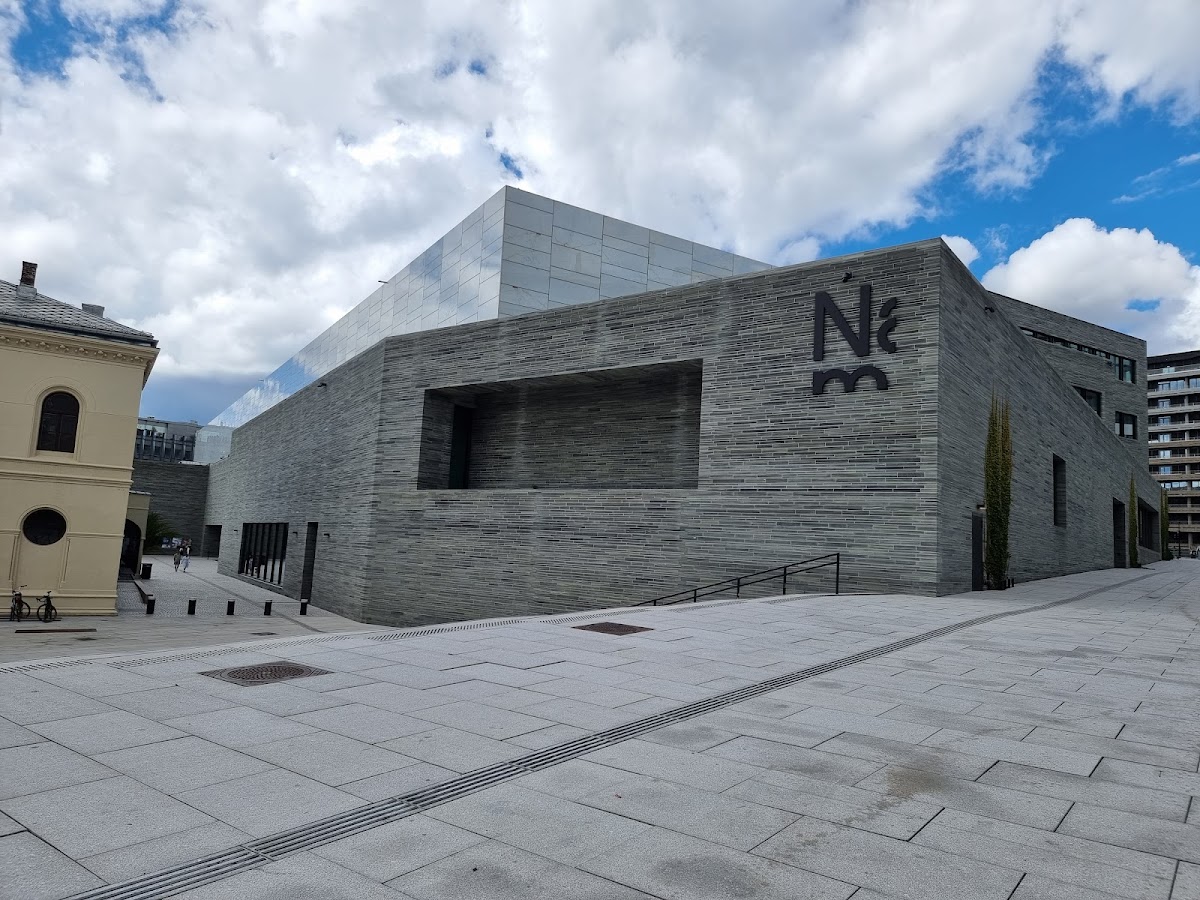
Carrying the deep emotional resonance from the MUNCH Museum, I headed to the National Museum of Norway, located in the heart of Oslo. Opened in 2022, this museum boasts the largest scale in Northern Europe and houses a vast collection of art spanning Norway's past, present, and future. The massive yet refined gray building resembled Oslo's robustness and quiet steadfastness, and upon entering, an overwhelming sense of space and a grand yet calm aura enveloped me. The curation was exceptionally meticulous, offering an experience where artworks spanning thousands of years connected like a single, organic story.
The National Museum unveiled a panorama of a millennium of Norwegian art, from mysterious Viking artifacts to the solemnity of medieval religious art, the grandeur of Norwegian Romantic painting, and the provocative experimental spirit of contemporary art. Particularly striking were the works of 19th-century Norwegian Romantic painters. Paintings depicting ice-covered glaciers, deep blue fjords, majestic mountain ranges, serene forests, and stormy seas authentically showcased the overwhelming beauty of Norwegian nature, while simultaneously conveying the resilient spirit of the people living within it and their reverence for nature. Works by artists such as Johan Christian Dahl and Carl Wilhelm Holsoe captured the vitality that blossoms amidst rugged nature and Norway's unique lyrical sensibility. Their paintings, distinct from Munch's internal struggles, evoked a humble awe and quiet introspection in the face of nature, offering viewers a peaceful yet unforgettable emotional experience. Through these paintings, I could deeply feel how Norwegians understood and loved their natural environment.
And here, I encountered Edvard Munch's The Scream once again. The version of The Scream housed in the National Museum was part of a section featuring other works by Munch. If the version seen at the MUNCH Museum vividly displayed the pinnacle of pain and anxiety, the Scream at the National Museum seemed to express internal turmoil with a more delicate brushwork and subdued coloration. The experience of comparing these two works was a precious moment to witness how an artist explored and expressed the same theme in such diverse ways, revealing his fierce contemplation and artistic journey. The National Museum helped to understand Munch's work within the broader context of Norwegian art history. It made me realize that he was not an isolated genius but an artist who grew from Norway's unique natural environment and cultural soil. Furthermore, observing Viking-era wooden crafts and tapestries, lavish altarpieces from medieval churches, and realist works reflecting the changes in Norwegian society at the end of the 19th century, I was once again impressed by how diverse and rich the spectrum of Norwegian art truly is. The contemporary art section showcased experimental and thought-provoking works by Norwegian contemporary artists, as well as internationally renowned figures like Olafur Eliasson, offering a glimpse into the dynamic present and future of Norway's art scene, where tradition and innovation coexist. Each artwork served as a bridge connecting Norway's past and present, providing visitors with profound inspiration and opportunities for contemplation. As I wandered through the exhibition halls, I realized that Norway is not merely a country with beautiful natural landscapes but a place with a deep artistic tradition that has continuously contemplated, created, and explored the essence of humanity.
Oslo, A City of the Soul Where Art and Nature Breathe
After exploring both museums, I strolled through the streets of Oslo, discovering traces of art woven into the city itself. The Vigeland Sculpture Park, with its monumental sculptures depicting the cycle of human life, death, and rebirth, transformed the entire city into an open-air museum. In the Ekebergparken Sculpture Park, modern sculptures harmonized with the breathtaking views of the fjord, creating a majestic landscape. Oslo, beyond its architecture and paintings, was a city where the entire urban fabric was a source of artistic inspiration and a colossal canvas. The uniquely Nordic blend of restrained beauty and harmony with nature made Oslo an exceptional art city, incomparable to any other. It is a place where warm human emotions thrive even in the cold air. Here, I felt with my whole being how deeply art is connected to human life and what infinite inspiration nature offers artists. It felt as if Munch's scream would echo forever on the winds of the Oslofjord. Norway's capital, Oslo, is not just a destination. It is a sanctuary where art, nature, and the deep human soul intersect, promising every visitor unforgettable moments of emotion and contemplation.
Visitor Info
| Duration | 3~4Sun (오슬로 주요 미술관 탐방 기준) |
| Budget | 높음 (항공권, 숙박, 식비 등 전반적으로 물가 높은 편) |
| Best Season | 봄/가을 (쾌적한 날씨, 적은 인파), 여름 (백야와 활기찬 min위기) |
| Route | 뭉크 미술관 → 국립미술관 → 비겔란 조각 공원 (혹은 에케베르크 조각 공원) |