The Heart of Art Reborn from War's Ashes: Encountering Raphael in Dresden's Old Masters Picture Gallery
The Heart of Art Reborn from War's Ashes: Encountering Raphael in Dresden's Old Masters Picture Gallery
June 16-20, 2026: European Art Expedition Log
This expedition log details visits to major European art museums from June 16 to 20, 2026. The journey focuses on the Alte Nationalgalerie in Berlin, the Vatican Museums in Vatican City, and the Kunsthistorisches Museum in Vienna. The objective is to document the architectural characteristics, historical collections, and visitor experiences of each site, observing how art transcends time and interacts with human life.
Alte Nationalgalerie, Berlin: Neoclassical Grandeur on Museum Island
Located at Bodestraße 1-3, 10178 Berlin, the Alte Nationalgalerie stands majestically on Museum Island, a UNESCO World Heritage site in Berlin's Mitte district. Designed by Friedrich August Stüler and completed in 1876, its neoclassical facade evokes an ancient Roman temple, featuring grand columns, arches, and the equestrian statue of Friedrich Wilhelm IV. Inside, high ceilings and ample natural light create an ideal setting for 19th-century German Romantic, Impressionist, and early Modernist art. The museum houses significant works, including Caspar David Friedrich's 'Wanderer Above the Sea of Fog,' which resonates deeply within the classical architecture.
Vatican Museums, Vatican City: A Repository of Faith and Art
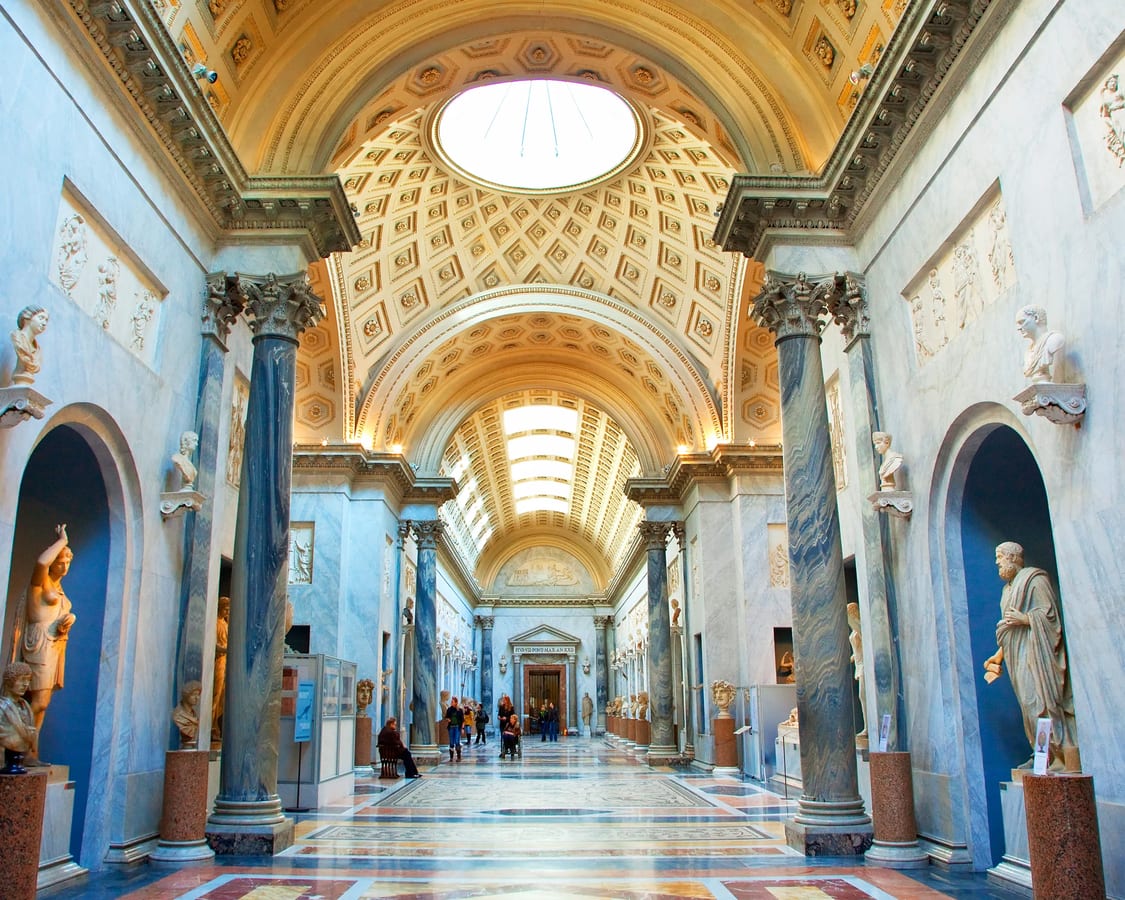
On June 18, 2026, the Vatican Museums in Vatican City (WF42+7WV, Viale Centro del Bosco, 00120 Città del Vaticano) are explored. This vast collection, accumulated since the 16th century by the Popes, is a monumental treasury of human art and faith. The Sistine Chapel, with Michelangelo's 'Creation of Adam' and 'The Last Judgment,' presents an overwhelming display of artistic and spiritual depth. Raphael's Rooms, particularly 'The School of Athens,' exemplify Renaissance humanism, depicting ancient philosophers and scientists in intellectual discourse. The 'Laocoön Group,' a Hellenistic sculpture, dramatically portrays the tragic narrative of the Trojan War, showcasing intense emotion and masterful detail. The Vatican Museums offer a profound journey through art, faith, and history.
Kunsthistorisches Museum, Vienna: The Splendor of the Habsburgs
On June 20, 2026, the Kunsthistorisches Museum Wien (Maria-Theresien-Platz 1, 1010 Wien, Austria) is visited. This grand museum, opened in 1891, showcases the extensive art collection of the Habsburg dynasty, reflecting centuries of their patronage and power. From Rudolf II to Empress Maria Theresia, the Habsburgs supported leading artists and acquired invaluable works. The collection spans from the Renaissance to the Baroque period, featuring masterpieces by Bruegel, Velázquez, Rembrandt, and Rubens. Pieter Bruegel the Elder's 'The Tower of Babel,' 'Peasant Wedding,' and 'Hunters in the Snow' vividly depict Flemish life. Velázquez's 'Infanta Margarita Teresa in a Blue Dress' offers insight into royal portraiture and European dynastic ties. Beyond paintings, the museum also holds ancient Egyptian, Greek-Roman artifacts, and precious crafts, providing a comprehensive view of the Habsburgs' artistic legacy and European history.
Visitor Information
Alte Nationalgalerie (Berlin, DE)
- Admission: Adult €10, reduced €5. Under 18 free. Museum Island Card €19.
- Hours: Tue-Sun 10:00-18:00. Closed Mon.
- Location: Bodestraße 1-3, 10178 Berlin, Germany.
- Transportation: S-Bahn Hackescher Markt or U-Bahn Friedrichstraße (10 min walk). Bus 100/200 stops directly at Museum Island.
- Estimated Visit: 1.5-2 hours.
Vatican Museums (Vatican City, VA)
- Admission: Adult €17 (online €21, student €8).
- Hours: Mon-Thu 08:00-18:00, Fri 09:00-17:00, Sat 08:00-18:00. Closed Sun.
- Location: WF42+7WV, Viale Centro del Bosco, 00120 Città del Vaticano, Vatican City.
- Transportation: Metro A line Ottaviano station (10 min walk).
- Estimated Visit: 3-4 hours.
Kunsthistorisches Museum Wien (Vienna, AT)
- Admission: Adult €21, student €18. Under 19 free.
- Hours: Closed Mon. Tue-Wed 10:00-18:00, Thu 10:00-21:00, Fri-Sun 10:00-18:00.
- Location: Maria-Theresien-Platz 1, 1010 Wien, Austria.
- Transportation: U2 Museumsquartier station (3 min walk).
- Estimated Visit: 3-4 hours.
Visitor Info
| Estimated Visit | Translating |
| Translating | Translating |
| Translating | Translating |
| Recommended Route | Translating |