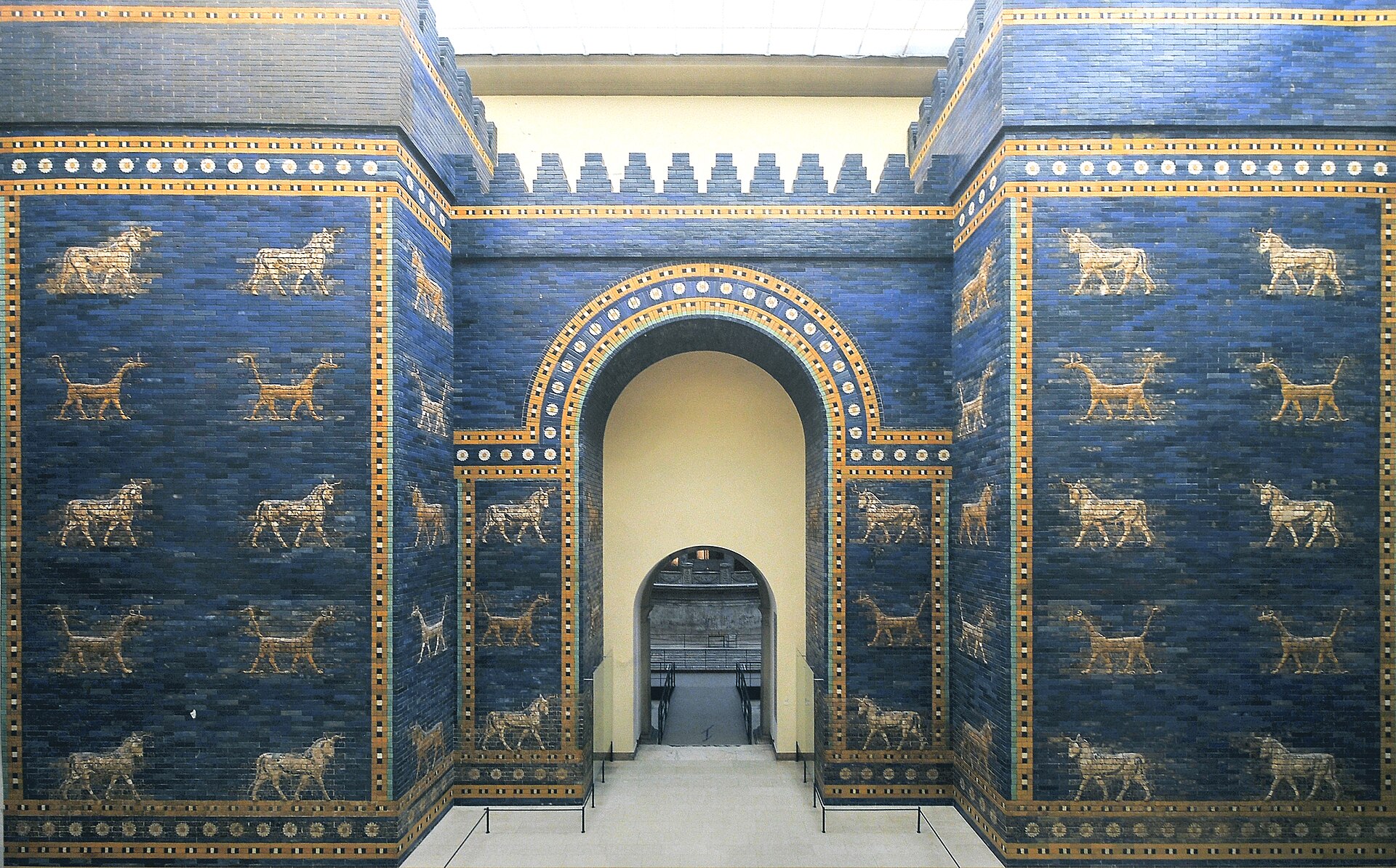

Babylonian (Neo-Babylonian Empire) · c. 575 BC
Ishtar Gate
Babylonian (Neo-Babylonian Empire)
Ishtar Gate
c. 575 BC
Commissioned around 575 BC by the Neo-Babylonian king Nebuchadnezzar II, the Ishtar Gate was the eighth gate of the inner wall of Babylon and the culmination of the Processional Way. Its deep cobalt-blue glazed bricks are set with relief images of the dragon-like sirrush of Marduk, lions sacred to Ishtar, and bulls associated with Adad — a triple dedication of royal power to the city's chief deities. Excavated by Robert Koldewey's German mission between 1899 and 1917 and painstakingly reassembled in Berlin's Pergamon Museum, the 14-metre-high reconstruction is one of the most spectacular displays in any museum of ancient Near Eastern art.
Exhibition Venue
Image source: Added by operations team