Beyond Manhattan's Icons: Discovering New York's Hidden Art Sanctuaries
Beyond Manhattan's Icons: Discovering New York's Hidden Art Sanctuaries
Beyond Manhattan's Icons: Exploring New York's Diverse Art Sanctuaries
Beyond the iconic skyline and bustling avenues of Manhattan, New York City harbors unique art spaces that offer distinct narratives and experiences. This travelogue, compiled between June 16-20, 2026, documents visits to four such institutions, each presenting a different facet of art: the tranquility of medieval Europe, the innovation of contemporary craft, the spirituality of Himalayan art, and the architectural flexibility of urban design.
The Met Cloisters: A Medieval Retreat in Upper Manhattan
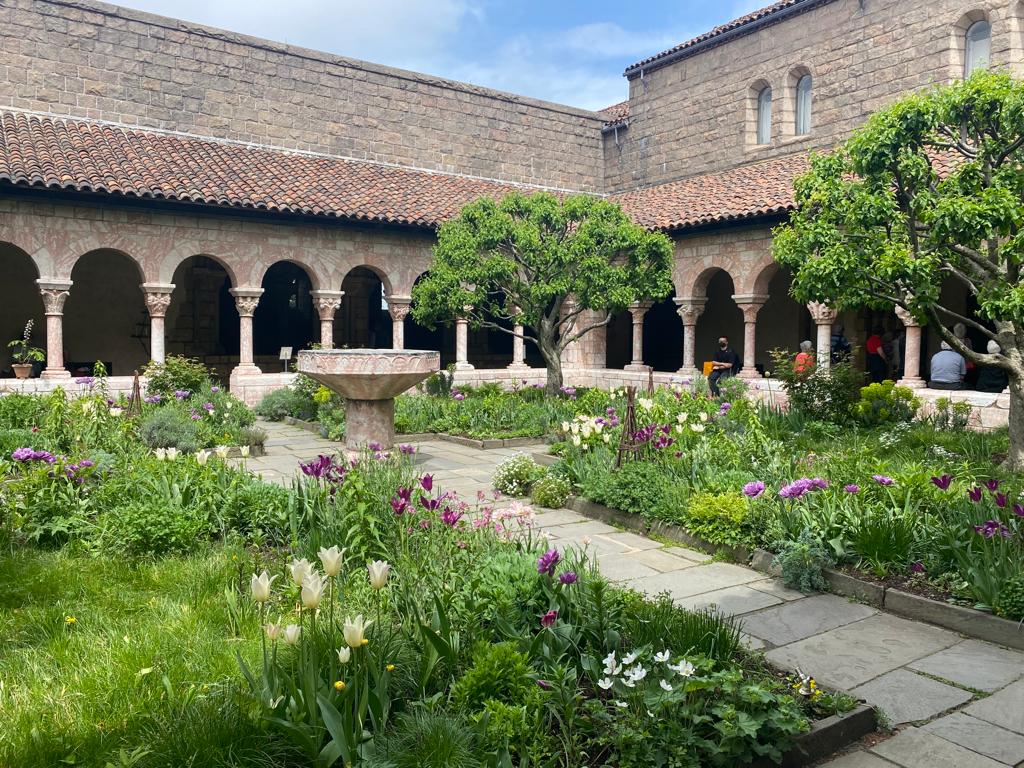
The Met Cloisters, a branch of The Metropolitan Museum of Art, is situated on a bluff within Fort Tryon Park in Upper Manhattan, offering serene views of the Hudson River. Opened in 1938 with a donation from John D. Rockefeller Jr., its architecture is a marvel, meticulously reassembled from four French cloisters (Saint-Guilhem, Saint-Michel de Cuxa, Bonnefont en Comminges, Trie-sur-Baïse) and a Spanish chapel. Visitors can experience the authentic ambiance of a medieval monastery, complete with tranquil herb gardens within its courtyards. The collection of approximately 5,000 objects spans 12th to 15th-century European art, including the famous Unicorn Tapestries, Robert Campin's Merode Altarpiece, and various stained glass, sculptures, and illuminated manuscripts.
Museum of Arts and Design (MAD): Craft, Art, and Design at Columbus Circle
Located at 2 Columbus Circle, the Museum of Arts and Design (MAD) champions innovative works across contemporary art, design, and craft. Established in 1956 as the Museum of Contemporary Crafts, MAD evolved to explore the intersection of materials, techniques, and social contexts. The museum occupies the landmark 'Lollipop Building' (1964, Edward Durell Stone), which was dramatically reclad in 2008 by Allied Works Architecture. Its collection of roughly 3,000 objects from 1950 to the present encompasses ceramics, glass, textiles, metal, wood, jewelry, and new media. A highlight is the Artist Studios on the sixth floor, where visitors can observe artists at work, fostering a deeper understanding of the creative process.
Rubin Museum of Art: Himalayan Art in Chelsea (Physical Space Closed)
The Rubin Museum of Art, formerly located at 150 W 17th St in Chelsea, was a prominent institution dedicated to the art and culture of the Himalayan region. Founded in 2004 by Donald and Shelley Rubin, it housed approximately 3,800 objects from Tibet, Nepal, Bhutan, Mongolia, and the Indian subcontinent, dating from the 2nd to the 20th century. The collection featured thangkas, sculptures, ritual implements, and textiles. The museum's physical building, a renovated Barneys department store, offered a unique circular central staircase that guided visitors through thematic exhibitions. In October 2024, the Rubin Museum closed its physical location and transitioned into a 'global museum,' focusing on lending its collection to partners worldwide and continuing its scholarly and digital programs from a new New York base. This record reflects the experience of visiting its physical space when it was operational.
The Shed: A Dynamic Cultural Hub at Hudson Yards
The Shed, a non-profit cultural arts center that opened in 2019 at 545 W 30th St in Hudson Yards, is an architectural marvel designed by Diller Scofidio + Renfro in collaboration with Rockwell Group. Its most distinctive feature is a retractable ETFE-cushioned outer shell that can slide along tracks, extending to cover an adjacent plaza and create a 4,000㎡ temporary event hall known as 'The McCourt.' This flexible, adaptable structure allows The Shed to commission and present a wide array of multidisciplinary art forms, including visual arts, performance, music, opera, film, and technology-infused works, blurring the lines between traditional museums and theaters. It serves as a dynamic platform for experimental creative activities, contributing to urban regeneration and artistic revitalization in New York City.
Visitor Information: Exploring New York's Hidden Art Gems
Practical information for visitors exploring these unique New York art spaces is provided below. It is always recommended to check the official websites of each museum for the most current operating hours and exhibition schedules before planning a visit.
The Met Cloisters
- Admission: Approx. $30 (integrated with Met main branch ticket); Pay-What-You-Wish for NY residents and students from NY, NJ, CT.
- Hours: Thursday-Tuesday 10:00-17:00 (Closed Wednesday).
- Location: Fort Tryon Park, 99 Margaret Corbin Dr, New York, NY 10040.
- Transportation: A Line to 190 St Station, then approx. 10-minute walk through Fort Tryon Park or M4 bus.
Museum of Arts and Design (MAD)
- Admission: $18; Pay-What-You-Wish on Thursdays after 18:00.
- Hours: Tuesday-Sunday 10:00-18:00; extended to 21:00 on Thursday & Friday (Closed Monday).
- Location: 2 Columbus Cir, New York, NY 10019.
- Transportation: Subway A/B/C/D/1 to 59th St-Columbus Circle Station.
Rubin Museum of Art (Physical Space Closed Oct 2024)
- Admission: Was $19; Free admission on Friday evenings.
- Hours: Monday & Thursday 11:00-17:00, Friday 11:00-21:00, Saturday & Sunday 11:00-18:00 (Closed Tuesday & Wednesday).
- Location: 150 W 17th St, New York, NY 10011.
- Transportation: Subway 1/2/3 to 14th St Station, approx. 5-minute walk.
The Shed
- Admission: Varies by exhibition/program (typically $10-$30).
- Hours: Wednesday-Sunday 12:00-20:00 (Closed Monday & Tuesday). Operating hours are program-dependent; checking the official website is recommended.
- Location: 545 W 30th St, New York, NY 10001.
- Transportation: Subway 7 to 34th St-Hudson Yards Station.
Visitor Info
| Estimated Visit | Translating |
| Translating | Translating |
| Recommended Route | Translating |