The Giant's History, The Dwarf's Dream: Two Perspectives on Observing the World
The Giant's History, The Dwarf's Dream: Two Perspectives on Observing the World
Two Perspectives on Observing the World: A Journey Through History and Miniatures
This expedition log, recorded between June 16 and 20, 2026, explores two contrasting ways of observing the world: the grand historical narrative at the National Museum of Romanian History in Bucharest and the intricate miniature recreation at Miniatur Wunderland in Hamburg, Germany. While vastly different in scale and approach, both museums offer profound insights into human creativity and historical understanding.
Miniatur Wunderland: Hamburg's Miniature World
Miniatur Wunderland is located at Kehrwieder 2, 20457 Hamburg, Germany, within the historic Speicherstadt district, a UNESCO World Heritage site. This area is characterized by 19th and early 20th-century red-brick warehouse buildings, now repurposed for cultural institutions. The museum is easily accessible, approximately a 5-minute walk from the U-Bahn U1 Meßberg station.
Opened in 2000, Miniatur Wunderland originated from the vision of two brothers, Frederik and Gerrit Braun, to create a vast miniature world that meticulously replicates reality. It has since become one of Hamburg's most popular attractions, continuously expanding with new sections and details.
Scale and Detail: A World in Miniature
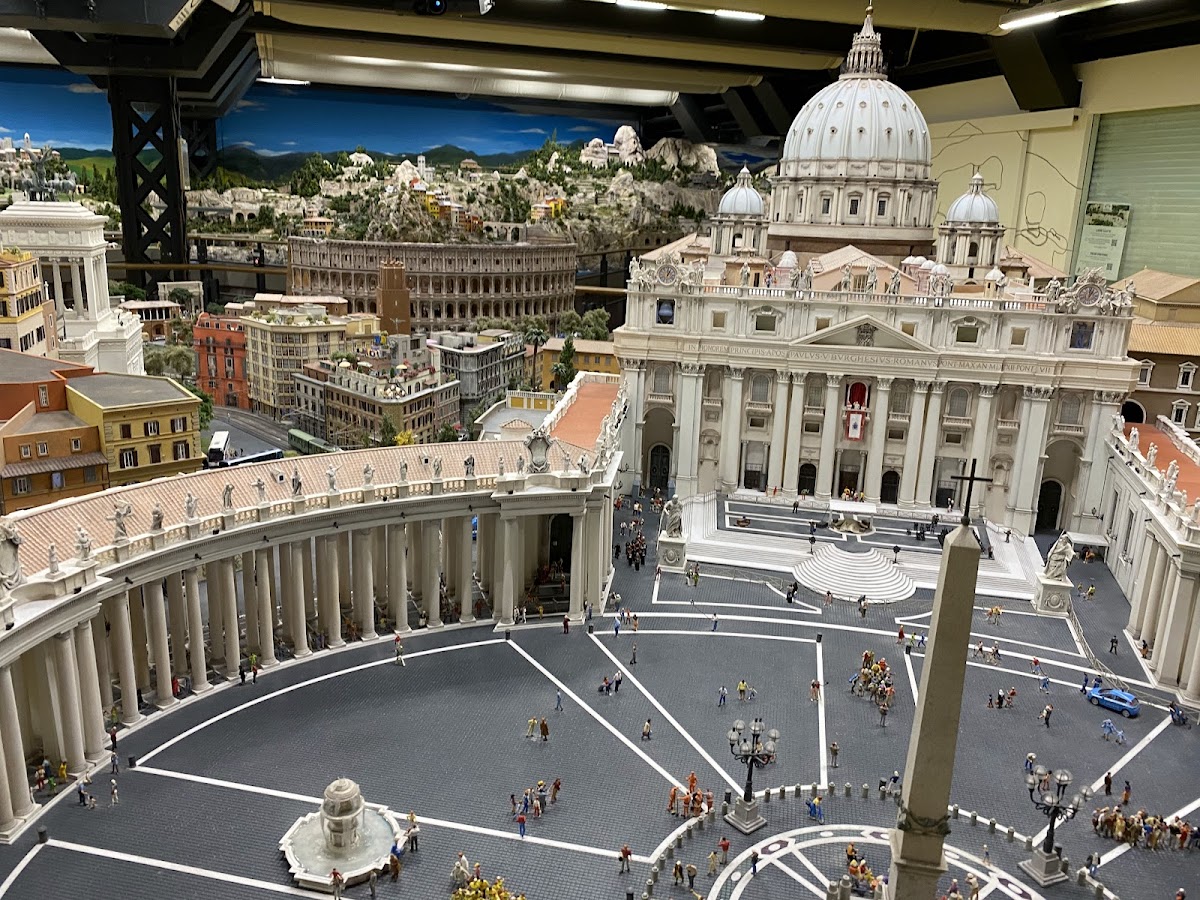
As the world's largest model railway exhibition, Miniatur Wunderland features over 15 million individual parts, more than 15,000 meters of railway track, and over 1,000 operational trains. These figures underscore the immense scale of the exhibition, where trains navigate complex routes, tunnels, and bridges across diverse landscapes.
Every element is rendered with lifelike precision, from individual trees and buildings to the expressions on tiny figures. Recreated scenes include the bustling Hamburg harbor, the majestic Swiss Alps, the serene Scandinavian fjords, and the vibrant nightscapes of Las Vegas. The attention to detail provides visitors with an immersive experience.
Key Exhibits and Visitor Experience
A highlight of Miniatur Wunderland is the "Knuffingen Airport," where miniature planes realistically take off and land, complete with taxiing, flashing control tower lights, and baggage handling. Other sections depict various countries and cities, inviting visitors to explore freely. The museum also features a dynamic day-night cycle, where the exhibition darkens periodically, illuminating thousands of streetlights and building windows to create a magical nocturnal landscape.
Interactive buttons placed throughout the exhibition allow visitors to trigger events, such as fire trucks responding to emergencies, amusement park rides operating, or chocolate being produced in a miniature factory. These interactive elements transform passive viewing into an engaging, participatory experience, particularly popular with younger visitors.
National Museum of Romanian History: Bucharest's Grand Narrative
The National Museum of Romanian History is situated at Calea Victoriei 12, București 030026, Romania, in the heart of Bucharest. It is housed in a monumental Neoclassical building completed in 1900, originally designed as a postal palace by architect Alexandru Săvulescu. The museum's central location on Calea Victoriei makes it easily accessible from Universitate or Piața Unirii metro stations.
Established in 1864, the museum serves as Romania's principal institution for preserving and showcasing the nation's history and culture, contributing to the formation of Romanian national identity. It systematically collects, preserves, and researches archaeological artifacts and historical documents from Romania, covering a vast period from prehistory to the modern era.
Extensive Collections: Dacian Gold and Roman Legacy
The museum's extensive collection includes over 650,000 artifacts, with a strong focus on precious archaeological finds from the Thracian, Dacian, and Roman periods. The "Pietroasele Treasure" is a prime highlight, featuring exquisitely crafted gold jewelry, vessels, and ceremonial objects that attest to the flourishing Dacian kingdom around the 1st century BC.
Another significant exhibit is the life-size plaster cast of Trajan's Column, originally erected in Rome to commemorate the Roman victory in the Dacian Wars. The detailed reliefs on the column depict Emperor Trajan's Dacian campaigns, battles, and the ultimate conquest of Dacia, symbolizing the origins of the Romanian people and the introduction of Latin culture. The museum's layout guides visitors through a chronological journey of Romanian history.
Medieval Principalities and Modern History
The medieval galleries present artifacts from the three Romanian principalities: Wallachia, Moldavia, and Transylvania. Exhibits include Byzantine-style icons, intricate silver crosses, and weaponry used by the nobility, illustrating their efforts to maintain identity amidst the Ottoman and Habsburg empires. Artifacts related to Vlad Țepeș, the historical figure behind Dracula, are also displayed.
The modern history section covers Romania's path to independence and unification, the monarchy, the tumultuous communist era, and its development into a democratic state. Documents from the establishment of the Romanian Kingdom in the late 19th century, period costumes, communist propaganda posters, and everyday items convey the struggles, resilience, and aspirations for freedom of the Romanian people.
Visitor Information: Miniatur Wunderland
Miniatur Wunderland operates daily from 09:00 to 18:00 on weekdays, and from 09:00 to 20:00 on weekends. Extended hours may apply during peak seasons; visitors are advised to check the official website for current information. Admission is €21 for adults and €16 for children under 16. Advance online booking via the official website is highly recommended, especially during weekends and holidays, to avoid long queues and secure timed entry.
Visitor Information: National Museum of Romanian History
The National Museum of Romanian History is open from Wednesday to Sunday, 10:00 to 18:00, and is closed on Mondays and Tuesdays. Visitors should consult the official website for the latest operating hours. The entrance fee is 20 RON (approximately €4). Discounts for students and seniors should be confirmed locally. The museum is accessible by metro (Universitate or Piața Unirii stations) or various bus and tram lines. General exhibitions do not require advance booking, but special exhibitions or group visits may necessitate reservations.
Visitor Info
| Estimated Visit | Translating |
| Translating | Translating |
| Recommended Route | Translating |