Where Architecture Dances, and Art Breathes: A Pilgrimage to the World's Most Extraordinary Museums
Architecture That Breaks Boundaries, Becoming Art Itself
Beyond merely housing art, there exist architectural marvels that are, in themselves, colossal works of art. The metaphysical beauty woven from stone, steel, and glass sometimes delivers a message more profound than any piece displayed within. These structures shatter conventions, push the limits of imagination, and challenge visitors to contemplate the very essence of architecture and art. From the Kunst Haus Wien in Vienna, which rejects straight lines and breathes with organic vitality, to the Dalí Theatre-Museum in Figueres, a direct architectural translation of a surrealist master's boundless inner world, and the Guggenheim Museum Bilbao, whose deconstructivist aesthetics reshaped a city's destiny – today, we embark on a journey to three of the world's most fantastical and captivating museums, where architecture dances and art truly breathes.
Vienna, Kunst Haus Wien: The Organic Aesthetics Rejecting Straight Lines
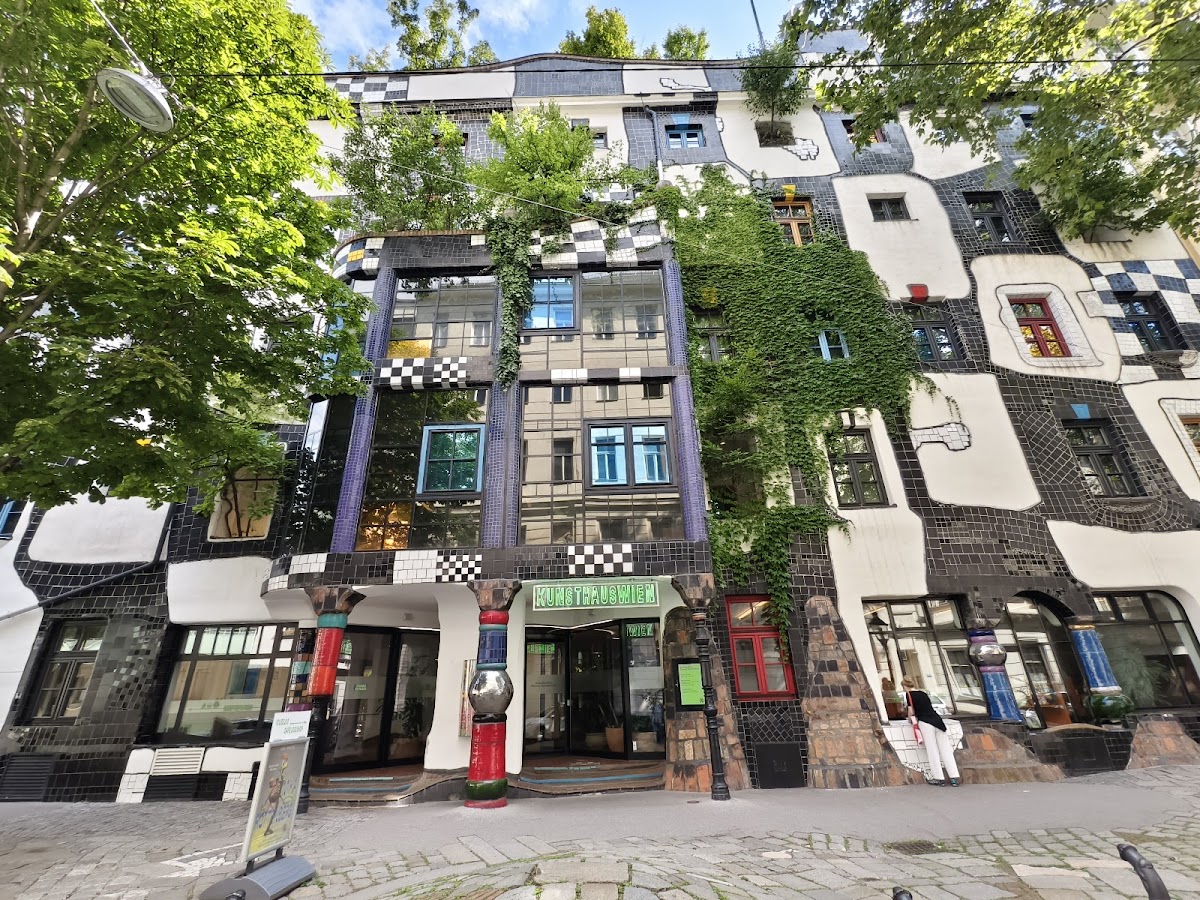
Located in the heart of Vienna, the Kunst Haus Wien presents itself like a painting. Or perhaps, it makes one feel as if the canvas itself has become the architecture. The extraordinary artist Friedensreich Hundertwasser, whose name was as unique as his vision, proclaimed, 'The straight line is godless,' advocating for harmony with nature. The resulting Kunst Haus Wien is replete with crooked windows, vibrant tiles, curvilinear walls, and trees gracefully growing on its roof. It feels whimsical and joyful, like a scene from a fairy tale or a child's pure doodle.
The building's exterior is a grand abstract painting in itself. Irregularly placed, rainbow-colored tile fragments shimmer subtly with every change in light, while lush greenery and trees create an oasis-like landscape within the concrete jungle. Hundertwasser believed that humans are part of nature and that architecture should also be a living organism. He infused life into this building, allowing everyone who visits to escape the oppressive world of straight lines and experience freedom and imagination.
The moment one steps inside, the floor undulates in unexpected waves. This imbalance, challenging our inherent desire for stability, evokes the sensation of standing on a gentle swell, stimulating artistic inspiration. The spaces within the galleries reject fixed forms, connecting organically. No single part is perfectly vertical or horizontal, constantly urging the viewer's gaze to move, to discover new angles. Even the walls displaying his works flow in continuous curves, creating an experience where paintings merge with architecture, and architecture dissolves into the paintings. This is not merely an exhibition space but an immersive artistic experience that invites you to walk directly into Hundertwasser's philosophy.
Figueres, Dalí Theatre-Museum: The Grand Dream of a Surrealist Maestro
In Figueres, a small town in the Spanish region of Catalonia, stands the Dalí Theatre-Museum, a place where a single artist's wild imagination has been realized in architectural form. With golden bread sculptures embedded in its red fortress-like walls and giant eggs whimsically perched on its roof, this building is as singular and surreal as Salvador Dalí himself. Converted from a 19th-century theater, it serves as the grandest and most perfect gateway into Dalí's artistic universe.
Approaching the museum's entrance, visitors are greeted by yellow bread decorations and black mannequins embedded in the red facade. This creates a striking first impression, as if a scene from Dalí's paintings has leaped into reality. The monumental egg sculptures dominating the roof symbolize fertility and rebirth, representing Dalí's unique way of thinking. From the outside, the architecture already begins to draw the viewer into Dalí's subconscious and dream world.
Inside, spaces designed by Dalí himself unfold endlessly. The colossal central hall retains the original stage and ceiling that inspired him in his youth, now adorned with his works ranging from early pieces to late masterpieces. One of the most striking installations is arguably the 'Rainy Taxi' in the central courtyard. First exhibited at the 1938 International Surrealist Exhibition in Paris, this installation features mannequins seated inside a black Cadillac, and when a coin is inserted, it 'rains' inside the car, offering an extraordinary experience. Dalí, in this way, employed every medium—architecture, sculpture, painting, and objects—to perfectly embody his surrealist vision in a physical space.
This museum is not just an exhibition space; it is a monumental surrealist artwork that Dalí himself designed and completed to perfectly showcase his creations. Even the crypt where his remains lie is part of the art, and all of it is a grand riddle and invitation that Dalí extends to us. To walk through this place is to float through Dalí's mind, directly experiencing his dreams, nightmares, and genius.
Bilbao, Guggenheim Museum: The Titanium Wave That Changed a City's Fate
Bilbao, an industrial city in Spain's Basque Country, once in decline, experienced a complete transformation in 1997 with the erection of a single building whose titanium skin shimmered in the sunlight. This was the Guggenheim Museum Bilbao, designed by Frank Gehry. More than just a museum, it became an icon of urban regeneration and a quintessential example of deconstructivist architecture, marking a significant milestone in architectural history.
Situated on the banks of the Nervión River, which flows through Bilbao, the museum boasts an organic form, resembling a colossal metal fish or scattered flower petals. Thirty-three thousand thin titanium panels constantly change color and texture with the wind and sunlight, harmonizing perfectly with their surroundings. Gehry utilized computer modeling and aerospace technology to realize these complex curvilinear forms, an innovative endeavor for its time.
The monumental sculptures adorning the museum's exterior, such as Jeff Koons' 'Puppy' and Louise Bourgeois' 'Maman,' further accentuate the museum's inherent artistry, transforming the outdoor spaces into vibrant galleries. 'Puppy,' in particular, changes its floral attire with each season, asserting its presence as a living work of art.
Upon entering, visitors are overwhelmed by a 55-meter-high atrium. Natural light pouring in through this enormous skylight adds a mysterious and majestic atmosphere to the space. The exhibition galleries reject traditional rectangular forms, instead featuring unpredictable curves and asymmetry. The colossal 'Boat Gallery,' spanning 130 meters, serves as an ideal space for large-scale installations, feeling like a sculptural work in itself. The boundaries of art dissolve, with architecture embracing the artworks, and visitors experience a unique sensation of floating within.
The Guggenheim Museum Bilbao is more than just an exhibition space; it is a living testament to how art can transform a city and inspire its people. Visiting this place is to experience the magnificent symphony created by architecture and art with your entire being.
Opening New Horizons for Art
Across the globe, such extraordinary spaces exist where architecture becomes art, and art breathes life into architecture. From the organic curvilinear aesthetics experienced at Vienna's Kunst Haus Wien, to the explosion of surrealist imagination encountered at the Dalí Theatre-Museum in Figueres, and the grandeur of deconstructivist architecture felt at the Guggenheim Museum Bilbao – these three museums offer a special experience that transcends mere knowledge transfer, awakening the senses and the soul.
These places ask us: 'What is art?' and 'What is architecture?' And they teach us that the answers can sometimes be found in the most unpredictable forms and colors. Rejecting the ordinary and ushering in new eras, these architectural masterpieces continue to impart deep inspiration and emotion to countless individuals today, constantly expanding the boundaries of architecture and art. For your next journey, why not direct your footsteps towards these fantastical museums? There, you will undoubtedly experience your own new artistic discoveries.
Visitor Info
| Duration | 총 4~6Sun (각 미술관 방문 1~2Sun 소요) |
| Budget | 항공권 및 숙박 별도. 미술관 입장료 및 현지 경비 약 $300~$500 |
| Route | 빈(오스트리아) -> 피게레스(스페인) -> 빌바오(스페인) |


